Warning signs of thyroid cancer: A clinical guide to symptoms and evaluation
The warning signs of thyroid cancer most often involve a new change in the neck, voice, throat, or breathing. A painless lump is a recognized presenting feature, but many thyroid cancers are discovered during an examination or imaging performed for another reason, so the absence of symptoms does not exclude the disease. 1
The most recognizable neck warning sign
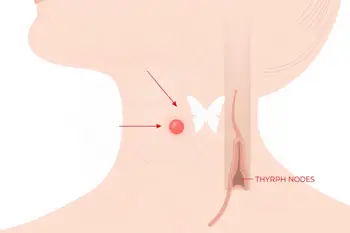
A new lump or swelling in the front of the neck is the symptom most closely associated with thyroid cancer. The thyroid sits low in the front of the neck, and a nodule may be felt through the skin or noticed as fullness around the gland. Memorial Sloan Kettering Cancer Center reports that nearly all thyroid nodules are benign, with only about one in 10 described as malignant, so a lump is a reason for assessment rather than proof of cancer. 2
- A painless lump or nodule in the lower front of the neck
- Neck swelling that becomes more visible over time
- A collar or shirt neckline that begins to feel unusually tight
- A firm mass that appears fixed or grows quickly
Voice and throat changes
Persistent hoarseness or a progressive change in voice can occur when a thyroid growth affects nearby tissues involved in voice production. Coughing may also develop when a larger tumor presses on structures in the neck. These symptoms have many possible explanations, including respiratory or throat conditions, but an unexplained change that does not resolve warrants clinical attention, particularly when it occurs alongside a neck lump. 3
Difficulty swallowing can feel like food or tablets are catching, or like there is a persistent lump in the throat. CommonSpirit Health lists voice changes and swallowing discomfort among symptoms that can be gradual and easy to overlook. The symptom does not identify the cause by itself, because benign nodules, autoimmune thyroid disease, and other throat conditions can produce similar sensations. 4
Breathing difficulty, cough, and pain
As a thyroid tumor enlarges, pressure on the windpipe may contribute to breathing difficulty, while pressure on nearby tissues may cause coughing. A persistent cough without an apparent cold or respiratory infection is therefore a symptom that may require evaluation, especially if it occurs with neck swelling, hoarseness, or swallowing problems. These symptoms are not specific to thyroid cancer and should not be interpreted as a diagnosis without examination and testing.
- Shortness of breath or a sense of airway pressure
- A cough that persists without an identifiable respiratory illness
- Neck or throat discomfort that continues or worsens
- Pain that may be felt in the neck or, in some accounts, toward the ears
Lymph nodes and signs of local spread
Swollen lymph nodes in the neck can occur when thyroid cancer extends beyond the thyroid. A newly enlarged node may feel like a separate lump along the side of the neck, under the jaw, or near the thyroid region. Memorial Health System includes swollen neck lymph nodes, neck or throat pain, swallowing difficulty, and voice changes among symptoms that may appear as the disease grows. 5
Clinical context matters when interpreting lymph-node swelling. Infections commonly enlarge lymph nodes, and a painful or rapidly changing area may have causes unrelated to cancer. A clinician generally considers the duration, location, firmness, mobility, and relationship to any thyroid nodule. The combination of a persistent neck mass with voice, swallowing, or breathing changes is more concerning than any isolated symptom, but symptoms alone cannot establish malignancy.
Why early thyroid cancer may be silent
Most thyroid cancers do not cause symptoms early in the disease. Professional guidance from Merck Manual states that many cancers present as asymptomatic nodules, and some are found incidentally during imaging or a physical examination. This pattern helps explain why symptom-based screening can miss small tumors and why an unexpected thyroid finding on a CT scan, MRI, or ultrasound may still require structured assessment. 6
The absence of pain is not reassuring enough to dismiss a new mass. A painless, solitary, nonfunctioning nodule is a common presentation, while rapidly growing, hard, or fixed nodules have features associated with higher concern. However, these characteristics indicate the need for investigation, not certainty. Most nodules remain noncancerous, and thyroid function can be normal even when a nodule requires further examination.
How clinicians investigate concerning symptoms
Evaluation usually begins with a medical history and examination of the thyroid and neck. Thyroid blood tests commonly measure thyroid-stimulating hormone and thyroxine, while ultrasound helps characterize a nodule and nearby lymph nodes. The National Cancer Institute identifies physical examination, ultrasound, and fine-needle aspiration biopsy as tools used when a neck mass or thyroid nodule appears suspicious. 7
| Evaluation step | Purpose |
|---|---|
| Neck examination | Assesses thyroid size, nodules, mobility, and lymph nodes |
| Blood testing | Measures thyroid function, including TSH and T4 |
| Ultrasound | Examines nodule structure and regional tissues |
| Fine-needle aspiration | Samples selected nodules for laboratory assessment |
Risk context and appropriate follow-up
Risk assessment includes prior radiation exposure involving the head, neck, or chest, particularly during childhood, as well as family histories such as familial medullary thyroid cancer or multiple endocrine neoplasia type 2. Medscape also lists age, sex, iodine intake, goiter history, and Asian ancestry among reported risk factors. Risk factors can increase concern, but people without them can still develop thyroid cancer. 8
Medical review is appropriate for a new or enlarging neck lump, persistent hoarseness, unexplained swallowing difficulty, breathing problems, ongoing cough, or enlarged neck lymph nodes. Breathing difficulty that is severe or rapidly worsening requires emergency assessment because airway compromise can have multiple serious causes. The central limitation is that symptoms overlap with benign nodules, infections, autoimmune disease, and other neck disorders, making examination and appropriate testing essential.
Sources
- Memorial Sloan Kettering Cancer Center, Thyroid Cancer: Symptoms, Causes, Risk Factors, and Nodule Biopsy
- Memorial Health System, Thyroid Cancer Health Library
- MSD Manual Consumer Version, Thyroid Cancer
- CommonSpirit Health, Understanding Thyroid Cancer: Signs, Diagnosis, and Care
- Merck Manual Professional Edition, Thyroid Cancers
- Acibadem Hospitals Group, Symptoms of Thyroid Cancer: Signs and Red Flags
- National Cancer Institute, Thyroid Cancer Treatment and Diagnosis Information
- Medscape Reference, A Lump in the Throat: Thyroid Cancer
Authored by MyTrendSpot team