Health Support Devices for Men Ireland: A Complete Informational Guide for 2025
Men across Ireland are increasingly seeking out health support devices that address conditions ranging from urinary incontinence and venous disorders to erectile function, hormonal imbalance, and pelvic floor weakness. Research from the Medical Independent highlights a significant public health challenge: Irish men live, on average, four years less than women and experience higher rates of premature death from cardiovascular disease, cancer, and suicide, yet remain less likely to engage with preventive health services or seek timely medical advice. 1 Understanding the landscape of available devices is an important first step toward informed, proactive health management.
Regulatory Framework and Device Classification in Ireland
All medical devices available to the Irish public are subject to oversight by the Health Products Regulatory Authority (HPRA), which manages market compliance and authorisation requirements for devices sold within the state. 2 Irish guidance distinguishes between regulated medical devices and consumer wellness products, a distinction that directly affects how items are marketed, prescribed, and reimbursed. Products classified as medical devices must meet EU MDR (Medical Device Regulation) standards, which govern everything from clinical evidence requirements to post-market surveillance obligations.
For men navigating this landscape, the classification of a product determines whether it can be accessed through the HSE, covered by private insurance, or is only available as a self-purchase consumer item. The HPRA maintains a public register of authorised devices, and men or their GPs can verify device status before clinical use. Understanding this distinction prevents confusion between evidence-backed medical aids and unregulated consumer goods that may carry different risk profiles.
HSE Access Pathways and Financial Support Schemes
The Health Service Executive (HSE) provides information on medical aids and appliances for eligible patients in Ireland, including hearing aids, mobility aids, and respiratory equipment. 3 Eligibility for HSE-funded devices is typically determined through clinical assessment by a GP, consultant, or allied health professional. Men holding a Medical Card or GP Visit Card may access a broader range of prescribed devices at reduced or no personal cost, depending on clinical need and scheme criteria.
For men with diabetes, the HSE's Long-Term Illness scheme supports access to continuous glucose monitoring systems and insulin pumps, recognising the chronic management burden placed on this population. 4 Private health insurers operating in Ireland, including VHI, Laya Healthcare, and Irish Life Health, offer varying levels of cover for orthopedic supports, braces, and specialized rehabilitative equipment, with policy terms differing substantially across plans. 5 The Citizens Information Board operates an online portal detailing eligibility criteria for assistive technology grants, and local authorities administer a Technical Aid Grant for individuals with disabilities requiring essential mobility or home-based health support equipment. 6
Pelvic Floor and Incontinence Devices for Men
Bladder weakness and faecal incontinence affect a meaningful proportion of Irish men, particularly those who have undergone prostatectomy or who experience age-related pelvic floor changes. Devices such as the TensCare Perfect PFE Men pelvic floor exerciser send gentle electrical stimulation directly to pelvic floor muscles through an anal probe with stainless steel electrodes, or through optional surface electrode pads, producing muscle contractions that progressively improve tone and bladder control. 7 The same device offers programmes specifically designed to address chronic prostatitis and chronic pelvic pain syndrome, conditions that are frequently underdiagnosed in the male population.
The HSE provides guidance on incontinence products including absorbent pads and pull-up pants, penile sheaths and drainage systems, urinal collection devices, and washable bed protection systems. 8 For mild to moderate incontinence, discreet absorbent pads and pull-up pants are available through pharmacies and supermarkets across Ireland. For more severe presentations, public health nurses can supply prescribed incontinence pads through community health services. Suspensory jockstraps, manufactured from 100% cotton with detachable mesh pouches and available in five sizes (XS through XL), are also used clinically to relieve scrotal pressure following fractures or surgery, and are stocked by Irish medical supply retailers at accessible price points. 9
Circulatory and Compression Support Devices
Compression hosiery represents a well-established category of health support devices for men managing venous disorders, varicose veins, and thrombosis risk. Products such as Mediven for Men compression stockings, available through Irish pharmacies including Phelan's Pharmacy at approximately €49.50 per pair, combine medical-grade compression with anatomically shaped footwear designed for all-day comfort. 10 These stockings incorporate Clima Comfort moisture-regulating technology, are dermatologically tested for sensitive or atopic skin, and are indicated for primary and secondary varicose veins, chronic venous disorders classified under CEAP stages C0s to C3, superficial thrombophlebitis, and thrombosis prophylaxis in mobile patients.
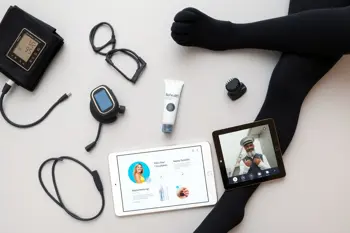
Proper fit is critical for compression hosiery to deliver therapeutic benefit without causing harm. Irish pharmacies offering compression stocking fitting services typically charge a measurement fee, with Phelan's Pharmacy listing this service at €15.00, and advise that measurements should be taken before midday as leg volume increases throughout the day. 10 Men with peripheral arterial disease or certain skin conditions should seek GP clearance before using compression hosiery, as inappropriate compression levels can exacerbate rather than alleviate circulatory problems.
Intimate Wellness and Regenerative Devices
A growing segment of the Irish men's health device market addresses erectile function, sensitivity, and intimate tissue quality through both clinical and consumer-grade products. Clinic-based regenerative treatments, such as Intimate Exosome Therapy offered at Refine Clinic in Ireland, use a solution called Purasomes IRC100+ containing bioactive exosomes, 20 functional growth factors, anti-inflammatory cytokines, and regenerative molecules derived from organic bovine colostrum, with Amplex+ technology covering 14 patented innovations. 11 When applied topically alongside dermarolling, this formulation is intended to stimulate new blood vessel formation, improve microcirculation, and support collagen and elastin production in penile tissue.
Non-hormonal bioregenerative gels designed for daily use represent a less invasive category of intimate support, formulated to assist with microcirculation, nerve responsiveness, skin hydration, and reduction of irritation without requiring prescription or clinical administration. 12 Consumer-grade devices including vibrating penile rings, which restrict venous outflow to maintain firmer erections, and masturbatory stimulation devices with medical-grade silicone construction and IPX7 waterproof ratings are commercially available through Irish adult retail outlets. Men considering any device for erectile dysfunction management are encouraged to first seek medical assessment, as ED can be a marker of underlying cardiovascular disease, hormonal imbalance, or metabolic dysfunction requiring clinical attention.
Hormonal Assessment and Digital Health Consultation Pathways
Hormonal imbalances in men are frequently underdiagnosed but can significantly affect confidence, mental health, physical performance, and overall quality of life. 13 Specialist online consultation services operating within Ireland, such as DrClinic.ie which lists Dr. Aamir Shehzad (IMC registration 409423) as a consultant endocrinologist, offer video-based assessment for conditions including low testosterone, hypogonadism, male infertility, andropause, thyroid-related concerns, and mood changes linked to hormone imbalance, at a consultation fee of €99 with follow-up appointments at €60. 13
The Irish Independent reported in July 2026 that men's health specialist Dr. Jeff Foster has raised concerns about significant misinformation surrounding testosterone, noting that many men in their 30s, 40s, and 50s experiencing fatigue, reduced libido, brain fog, and mood changes may have an underlying hormonal basis for their symptoms that remains unaddressed due to cultural stigma around help-seeking. 14 Men pursuing device-based or supplement-based health support should ensure that self-directed interventions do not substitute for clinical evaluation, particularly when symptoms could indicate serious endocrine, cardiovascular, or urological conditions requiring professional diagnosis and management.
Practical Considerations, Barriers, and Risk Factors
Research published in the Medical Independent in May 2026 identified several consistent barriers preventing Irish men from accessing health support, including stigma around masculinity, lower health literacy, work commitments, and limited primary care access. 1 Healthcare professionals including GPs, nurses, and pharmacists are positioned to provide early interventions such as blood pressure and cholesterol checks alongside information about appropriate support devices, normalising these conversations within community health settings.
Men evaluating health support devices should be aware that not all products marketed as health-supporting meet the evidentiary standards required for CE or HPRA-regulated medical device classification. The HPRA's public register and HSE guidance resources provide reference points for verifying device legitimacy. 2 Neural stimulation patches, such as those represented by independent brand ambassadors in Ireland from companies like The Super Patch Company, cite clinical studies showing improvements in mobility (31%), stability, sleep quality, and anxiety reduction, and hold FDA-registered Class 1 Medical Device status, though men should review the underlying clinical evidence independently and discuss with a healthcare professional before integrating any device into a care plan. 15
Sources
- Medical Independent - Addressing the Gap in Men's Health (medicalindependent.ie)
- HPRA - Health Products Regulatory Authority, Medical Devices (hpra.ie)
- HSE - Medical Aids and Appliances (hse.ie)
- HSE - Long-Term Illness Scheme and Diabetes Devices (hse.ie)
- Irish Life Health - Private Insurance Cover for Medical Appliances (irishlifehealth.ie)
- Citizens Information - Assistive Technology Grants and Technical Aid Grant (citizensinformation.ie)
- TensCare - Perfect PFE Men Pelvic Floor Exerciser (tenscare.co.uk)
- HSE - Urinary Incontinence Products (hse.ie)
- MobilityGenie Ireland - Suspensory Jockstraps (mobilitygenie.ie)
- Phelan's Pharmacy - Mediven for Men Compression Stockings (phelans.ie)
- Refine Clinic - Intimate Exosome Therapy for Men (refineclinic.ie)
- Refine Clinic - Intimate Bioregenerative Gel for Men (refineclinic.ie)
- DrClinic.ie - Male Health Online Hormone and Wellness Consultation (drclinic.ie)
- Irish Independent - Low Testosterone in Men: Symptoms, Risks and What to Do (independent.ie)
- Super Patch Company via LinkedIn Ireland - Neural Stimulation Patches (linkedin.com)
Authored by MyTrendSpot team