Ex-military field tents for sale: A Buyer's Research Guide to Surplus Shelter Systems
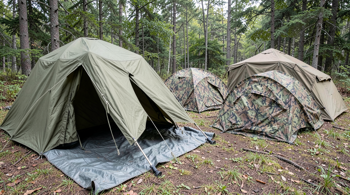
Ex-military field tents for sale appear across a wide spectrum of origins, sizes, and construction standards, from compact two-person polycotton shelters originally issued to French Army soldiers to large-span modular command post systems used by NATO forces. Understanding the specific design lineage, material properties, and condition grading of each type is essential before any acquisition decision, as quality and fitness for purpose vary considerably across the surplus market.
Categories and Origins of Surplus Military Field Tents
The ex-military field tent market is defined by several distinct national and organizational lineages. French Army F1 and F2 polycotton tents represent two of the most commonly encountered European surplus items, with the F2 model weighing approximately 3.4 kg and packing to a 20 x 9 inch bundle, designed to shelter two persons with a sewn-in waterproof groundsheet, poles, pegs, and a nylon carry case.1 The Dutch Army KL94 one-man tent offers a contrasting profile: a heavy-duty canvas shelter with a rubber bathtub floor, measuring 225 x 90 x 117 cm and weighing 7.4 kg, notable for its DPM camouflage fabric and the ability to zip multiple units together for larger coverage.2
American military tents span several eras and roles. The U.S. Issue Extreme Cold Weather 4-Person Tent (ECWT) represents the modern performance end of the spectrum, engineered for arctic-level deployment, while the U.S. Army General Purpose (GP) series in Small, Medium, and Large configurations, constructed from olive drab cotton duck canvas, was used extensively from World War II through the Vietnam era.3 The USMC 2-Man Combat Shelter in Woodland camouflage, manufactured by contractors including Eureka and Diamond Brand, is described as a 4-season tent designed for all-weather performance, reflecting the durability standards imposed by military procurement requirements.4
Construction Materials and Structural Specifications
Canvas and polycotton dominate the older surplus inventory, valued for their breathability and natural condensation resistance. The French Army F1 tent uses a polycotton blend with a sewn-in groundsheet, while the Dutch KL94 relies on heavy-duty canvas reinforced with a rubber-sealed floor.5 Modern military tents increasingly use high-tenacity nylon ripstop fabrics. The USMC MARPAT Shelter Half, for example, uses 1.9 oz/sq yd waterproof non-reflective nylon ripstop, measuring 90 x 80 inches with 8 rubber grommets and 24 nylon snaps for modular connection to other shelter halves.6
Large-scale command and logistics structures employ entirely different engineering. The HDT Base-X Model 505, a surplus military command post tent, provides an interior clear span of 25.25 feet (7.7 m) wide and a total area of 625 square feet (58.1 m²), featuring six entry and egress points and six windows.7 Its patented folding frame design and dual-layer system, with an outer PVC-coated cover and an inner liner containing an integrated floor, electrical wiring harness, and air plenum, create a thermal barrier through an enclosed air gap. At the individual-use end, the Catoma Burrow IBNS, a U.S. Military-issued Berry Compliant pop-up shelter with National Stock Number 3740-01-543-5652, demonstrates the range from high-tech personal bivouac systems to large-format infrastructure tents available in the surplus market.8
Condition Grading and What It Means for Buyers
Surplus military tents are sold under standardized grading frameworks that significantly affect both expected performance and typical pricing. Common grading terminology used by specialist retailers includes Super Grade or Grade A, indicating unissued or unused condition with like-new functionality, Grade 1 or Grade B reflecting previously issued, lightly used items that remain fully functional, and Grade 2 covering heavier signs of use with possible visible defects such as small rips, staining, or minor damage to zips and fastenings.9 Some vendors describe Grade B items as requiring small repairs, as noted with the French Army F1 polycotton tent, where a Grade B example is characterized as used and potentially needing minor remediation.10
Buyers must treat grading as an estimate rather than a guarantee. Tents graded as serviceable by one retailer may present wear patterns not fully disclosed in a brief condition summary. Inspection on receipt is standard practice in the surplus trade, and many specialist retailers operate explicit return or grading dispute policies. The Polish Army Lavvu dome tent, listed in genuine green configurations at approximately £125, illustrates how authentic surplus items can command higher prices than their cosmetic condition alone might suggest, reflecting historical and functional value.11
Typical Price Ranges Observed Across the Surplus Market
Pricing across the ex-military field tent category spans several orders of magnitude depending on type, origin, and condition. The data gathered from active surplus retailers reflects the following historical market averages and reference points:
| Tent Type | Origin | Approx. Price Reference | Capacity |
|---|---|---|---|
| French Army F1 Polycotton Tent | France (surplus) | ~£39.99 | 1-2 person |
| French Army Single Skin 2-Man Tent | France (surplus) | ~$57.00 | 2 person |
| Dutch Army KL94 One-Man Tent | Netherlands (surplus) | ~€70.00 | 1 person |
| USMC 2-Man Combat Shelter | USA (surplus) | ~$99.99 | 2 person |
| British Army Mosquito Net Tent | UK (surplus) | ~$58.00 | 2 person |
| Polish Army Lavvu Dome Tent | Poland (surplus) | ~£125.00 | 2+ person |
| HDT Base-X Model 505 | USA (military-grade) | ~$2,995.00 | Command post / large group |
Bell tents and canvas military-style tents broadly range from $300 to over $2,000 depending on size, material quality, and condition, while high-specification systems like the Nemo CODA 1.5 SE, developed through collaboration with the U.S. Army Natick Soldier Research, Development, and Engineering Center and adopted by U.S. Special Operations units, carried a government procurement price of approximately $1,300 and a secondary market price of around $2,000 at time of documentation.12
Where Surplus Military Field Tents Are Generally Found
The ex-military field tent market operates through several distinct channel types. Specialist surplus retailers such as MilitaryMart, GoArmy, KommandoStore, Venture Surplus, and Army Navy Outdoors maintain curated inventories of graded surplus stock sourced from decommissioned military holdings across multiple nations. General auction platforms including GSA Auctions and GovDeals provide access to government surplus disposals, where tent and shelter items may appear in lot-based formats with timed bidding windows.13 Broad consumer marketplaces such as eBay list large volumes of military surplus tents from both institutional and individual sellers, with condition and provenance varying widely.14
Specialty retailers focused on specific national surplus, such as vendors concentrating on Dutch, French, or British Army equipment, often provide the most detailed condition assessments and historical context for each item. Some vendors operate wholesale or bulk inquiry systems, particularly relevant for organizations, event managers, or preparedness groups seeking multiple units. Shipping logistics for surplus tents depend heavily on packed dimensions and weight; the French F2 tent packs to 20 x 9 inches at 3.4 kg, while the Dutch KL94 weighs 7.4 kg, placing them in different freight cost brackets that materially affect total acquisition cost for international buyers.15
Practical Considerations, Risks, and Maintenance Realities
Acquiring ex-military field tents involves several practical friction points that prospective buyers should evaluate objectively. Canvas tents require proofing or re-waterproofing if they have been stored for extended periods, as original coatings degrade over time. Polycotton and cotton duck canvas are susceptible to mold and mildew if packed wet, a risk heightened by uncertain storage histories in surplus stock. The 1956 U.S. Army Field Manual FM 20-15, republished in civilian reference format, documents assembly, takedown, site selection, and care procedures for historic canvas military tent types, representing a practical resource for maintaining older surplus shelters.16
Buyers of large-format tents such as the Base-X 505 must account for transport logistics, storage space, and the availability of appropriate heating or HVAC attachments if the structure is to be used in cold environments. Regulatory considerations apply in some jurisdictions for permanent or semi-permanent erection of large military-style structures on private or public land. Grading disputes, missing components such as stakes, guy lines, or carry bags, and the absence of manufacturer warranties are inherent features of the surplus trade. Some retailers do offer limited return windows, but these vary significantly by vendor and region, making pre-purchase specification verification a necessary step for high-value acquisitions.
Sources
- OutdoorGearNet.com - French Army F2 2 Man Tent product description
- MilitaryTravelAndOutdoor.eu - Dutch Army One Man Tent KL94 product description
- Replicaters.com - WW2-Cold War U.S. Army GP Tent series description
- OneShear.com - USMC 2-Man Combat Shelter Woodland product description
- MilitaryMart.co.uk - French Army F1 Tent Polycotton product description
- KommandoStore.com - USMC MARPAT Shelter Half product specifications
- GeneralJims.com - BASE X 505 Tent product description
- ThriftFinder.com - Catoma Burrow IBNS Bed Net System description
- GoArmy.co.uk - Grading Explained section, British Army surplus product pages
- MilitaryMart.co.uk - French Army F1 Tent Grade B condition notes
- MilitaryMart.co.uk - Polish Army Lavvu Dome Tent product listing
- TheOutdoorGearReview.com - Nemo CODA 1.5 SE Military Tent review and pricing
- GSAuctions.gov - Government surplus auction platform for shelter and tent items
- eBay.com - Military surplus field tent search listings
- General LLM research data - shipping dimensions and weight specifications
- NextChapterBooksellers.com - FM 20-15 U.S. Army Field Manual Tents and Tent Pitching (1956 Civilian Reference Edition)
Authored by MyTrendSpot team