Evaluating Used speed boats for sale: Technical Performance and Valuation Guidelines
Historical Performance and Stepped-Hull Evolution
When researching Used speed boats for sale, marine analysts focus heavily on hull dynamics and structural engineering to assess long-term viability. The high-performance segment relies extensively on advanced hull forms, such as the twin-stepped hull engineered by legendary builder Reggie Fountain, which increases efficiency by reducing drag 1. Stepped designs introduce air under the running surface to increase speeds, as demonstrated by the Fountain 34 Center Console achieving 75 MPH 1, or the Formula FASTech stepped-hull technology utilized in the Formula 292 3. This physical architecture allows vessels to maintain superior tracking and control even in choppy offshore waters.
However, these hulls require precise operational experience, as the aerated boundary layer alters traditional turning characteristics. Prospective buyers examining pre-owned inventories must verify that the hull structure remains free from stress fractures or internal delamination. Early performance models sometimes incorporated wood stringers, whereas modern iterations, such as post-2000 Scarab tournament designs, utilize composite, wood-free construction to eliminate rot risks 2. Identifying these structural differences is a key step in evaluating any performance boat.
Comparative Analysis of Marine Propulsion Systems
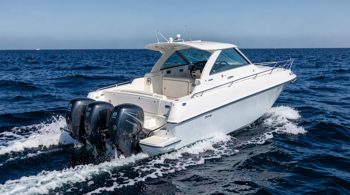
The choice of powerplant directly determines a speed boat's operating cost, maintenance schedule, and overall velocity. Triple outboard configurations, utilizing setups such as triple Mercury Verado 300s producing 900 horsepower, deliver intense offshore speed and shallow-draft versatility 1. Conversely, twin sterndrive configurations, such as the twin MerCruiser 350 MAG MPI setups yielding 600 combined horsepower, are favored for their low center of gravity and stable weight distribution in rough waters 3. Jet propulsion systems present an alternative path, utilizing twin engines to achieve responsive handling through articulating keels 4.
Below is an objective comparison of historical vessel configurations and performance parameters recorded in pre-owned inventories:
| Vessel Model | Propulsion Type | Total Horsepower | Top Speed | Key Features |
|---|---|---|---|---|
| 2008 Fountain 34 CC 1 | Triple Mercury Verado Outboards | 900 HP | 75 MPH | Twin-stepped hull, low hours |
| 2008 Wellcraft 35 Scarab 2 | Triple Suzuki Outboards | 900 HP | 59-60 MPH | No wood construction, 370 gal tank |
| 2004 Formula 292 FASTech 3 | Twin MerCruiser Sterndrives | 600 HP | Mid-60s MPH | FAS3Tech stepped hull, 24-degree deep-V |
| 2016 Yamaha 242 Limited S 4 | Twin 1.8L High Output Jet | 360 HP | 40-45 MPH | Articulating keel, low draft |
National Market Valuations and Sourcing Channels
Sourcing pre-owned performance vessels involves navigating both localized listings and nationwide specialized platforms. Inventories are maintained across brokerage websites such as Boat Trader 9 and YachtWorld 10, alongside iBoats 11 and Boats.com 12. These platforms allow buyers to compare pricing models across regional US markets, where values vary depending on freshwater exposure and maintenance history.
Historical transaction values reflect a wide price spectrum based on size, age, and engineering complexity. High-end offshore center consoles with modern re-rigging investments can command prices around $189,000 1, while classic fiberglass deep-V models from the early 2000s regularly exchange hands between $24,900 and $49,999 depending on overall condition 3 8. Mid-size jet-powered sport boats typically range from $38,000 to $65,000 depending on hours and regional freshwater history 4 5.
Assessing Engine Hours and Mechanical Refits
When evaluating a pre-owned speed boat, engine hours and mechanical history serve as critical indicators of future operational expenses. A low-hour example, like a 2008 hull with 265 original hours, shows minimal wear but may require seal replacements due to inactivity 1. Conversely, engines with higher hours, such as older outboards showing 900 to 1,700 hours, demand rigorous service logs to prove proper internal maintenance and cooling system care 2.
In some cases, buyers will encounter high-quality classic hulls that have undergone extensive re-power procedures. For instance, classic Downeast and performance hulls are sometimes retrofitted with modern electronic common-rail diesels, which can require capital investments exceeding $300,000 to modernize machinery and drivetrains 6. These repowered vessels offer modern reliability with vintage hull strength, though they command a significant price premium compared to original factory setups.
Structural Risk Factors and Marine Surveys
High-performance marine operations subject hulls to significant physical forces, making structural integrity the primary risk factor for buyers. A professional marine survey is highly recommended to examine the transom, stringers, and hull laminates for signs of stress, water intrusion, or delamination. This is critical in harsh saltwater environments, where structural stress and galvanic corrosion degrade steering gear and mechanical outdrive units over time.
Additionally, buyers must inspect specialized performance components, such as high-performance propellers, trim tabs, and engine computer upgrades. Upgraded computer chips and lab-finished props can optimize power 1, but they also place greater strain on the engine's internal components. Verifying whether a speed boat was utilized primarily in freshwater or saltwater is also vital, as freshwater use on lakes or rivers generally preserves aluminum components and heat exchangers far better over time 4 5.
Regulatory Compliance and Transaction Protocol
Completing a transaction for a pre-owned vessel requires meticulous administrative steps to ensure legal compliance. Buyers must secure a clear title, verify the Hull Identification Number against state registration records, and confirm that there are no outstanding marine liens on the asset. Transferring ownership involves paying local sales taxes, obtaining decals, and registering trailer systems through regional transportation offices.
Furthermore, insurance represents a major operational friction point for high-performance vessels. Marine underwriters assess risk based on top speed, hull design, engine horsepower, and the operator's boating credentials. Vessels capable of exceeding 50 MPH frequently require specialized high-performance policies, and some carriers may mandate formal operator training or a positive marine survey report before granting coverage. Understanding these hidden overhead costs is essential for maintaining long-term financial viability.
Sources
- South Jersey Yacht Sales (Fountain 34 Listing)
- South Jersey Yacht Sales (Scarab Sport Listing)
- Marine Tech Concepts
- Rhode River Boat Sales
- JetBoaters.Net Forum
- Palm Beach Motor Yachts Brokerage
- Woodard Marine
- Used Boat Listings Blog
- Boat Trader Marketplace
- YachtWorld Brokerage
- iBoats Classifieds
- Boats.com Marine Directory
Authored by MyTrendSpot team