Analysis of Patient Lifts for Home Use on Sale: Market Pricing, Types, and Safety Standards
Clinical Utility and Market Dynamics of Residential Transfer Systems
The marketplace for medical devices has shifted significantly toward residential care, rendering patient lifts for home use on sale highly relevant for families seeking to facilitate aging in place. These mechanical transfer systems serve as the primary defensive line against caregiver back injuries and patient falls, which frequently occur during manual movement between beds, chairs, and toilets. Clinicians and occupational therapists emphasize that using specialized assistance technology is critical to maintaining patient dignity and minimizing skeletal alignment stress during routine daily transitions.
Historically, residential medical equipment has ranged from several hundred to several thousand dollars depending on structural composition and power integration. General market data shows that simple manual hydraulic lifts are priced from $300 to $800, whereas sophisticated electric models can easily exceed $3,000. Analyzing these systems requires evaluating structural weight capacities, lift mechanisms, folding capabilities for limited room layouts, and the relative complexity of accompanying transfer slings.
Power Mechanisms: Electric versus Manual Patient Lifts
Power configurations represent the primary distinction in operational efficiency and physical demands placed on the operator. Electric options utilize motorized actuators controlled via hand pendants to manage patient elevation. For example, the CostCare L400C Electric Patient Lift, featuring a rechargeable battery and a 360-degree swivel hanger, represents this category at a historical market cost of approximately $1,176.00 1. Similarly, the Lumex LF1050 Battery-Powered Floor Patient Lift, constructed with heavy-gauge steel and a 400-pound load capacity, has historically retailed around $1,622.01 2. These systems practically eliminate physical lifting strain, though they demand regular battery maintenance.
Manual hydraulic lifts utilize a traditional hand pump to pressurize fluid and elevate the boom. While these models require greater manual effort from the caregiver, they remain popular due to lower upfront costs. For instance, the non-powered hydraulic Freedom Boost Patient Transfer Lift features a unique split-seat design supporting up to 265 pounds 3. These manual configurations are highly reliable for environments where battery charging is inconvenient, though they may pose a greater physical burden during daily transitions.
Specialized Sit-to-Stand and Active Transfer Technologies
Sit-to-stand lifts represent an active class of transfer devices designed specifically for individuals who retain some degree of lower-body strength and trunk stability. Rather than suspending the patient completely in a sling, these devices assist the patient in rising from a seated position to a standing posture, promoting muscle preservation. The Arjo Sara Stedy Sit-to-Stand Lift, which is available in a standard version for $3,273.20 and a compact version for $2,952.40, uses a pivoting split seat to support active transfers 4. Another notable entry is the WHLICKS Sit-to-Stand Lift, offering a 400-pound capacity, priced near $449.99 5.
| Model Designation | Weight Limit | Mechanism Type |
|---|---|---|
| Arjo Sara Stedy 4 | 400 lbs | Manual Active Pivot |
| WHLICKS Sit-to-Stand 5 | 400 lbs | Manual Swivel Seat |
| Lumex LF2020 Easy Lift 6 | 400 lbs | Powered Actuator |
Sling-Free Mobility and Alternative Patient Transfer Devices
A growing segment of the home-care market features innovative designs that eliminate traditional fabric slings altogether, reducing preparation time. Devices such as the Shield Innovations EZ Lift Assist operate as multi-purpose electric transfer chairs, allowing users to sit directly on a split seat that can roll directly over standard home toilets or fit beneath household furniture, with pricing ranging from $1,999.00 to $2,228.00 7. This class of device minimizes skin shear and discomfort occasionally associated with tight fabric slings, offering a more direct and dignified transfer sequence.
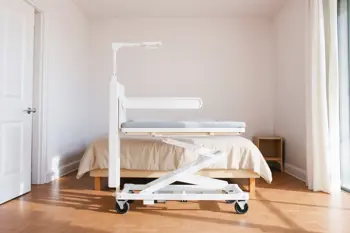
Alternatively, portable hybrid systems bridge the gap between sling reliance and rigid chair designs. The Freedom EveryLift Powered Sling Seat Patient Lift utilizes an adjustable sling seat with padded back support, engineered to fold down for transport or storage, and is valued at $1,499.99 8. In the compact electric sub-category, the VOCIC AY05 Electric Patient Lift features a foldable frame and a dual-power setup including an emergency manual crank handle, with a pricing benchmark of $889.00 9. These varying form factors demonstrate the diverse engineering pathways available to accommodate different home layouts.
Weight Capacities and Structural Specifications
When selecting medical equipment, understanding structural specifications is paramount to ensuring user safety and equipment longevity. Standard consumer lifts are engineered to accommodate weight thresholds ranging from 300 to 450 pounds, which covers the majority of adult users. For example, the Verpal Caregiver-friendly Heavy-Duty Electric Lift Chair Y0A supports up to 440 pounds and has an adjustable seat height from 3.9 to 21.1 inches, offering a specific structural envelope for $349.99 10.
Beyond weight capacity, base dimensions and caster designs dictate whether a lift can successfully navigate a domestic environment. Lifts like the Lumex LF1050 require adequate clearance under beds, often solved by an ultra-low profile base or low-base legs to protect furniture 2. Many advanced units also feature adjustable base widths, operated via foot pedals or manual shifters, which allow caregivers to widen the frame to fit around wide chairs or narrow it to pass through standard doorways.
Technical Risk Management, Maintenance, and Financial Access
Operating a mechanical patient lift at home introduces specific operational risks that require consistent caregiver vigilance and strict adherence to manufacturer guidelines. Lift systems require routine inspections of structural welds, caster locks, hydraulic cylinders, and emergency stop systems. Fabric slings must be inspected before every transfer for frayed stitching or degraded fabric, and washed according to strict parameters to prevent material breakdown. Furthermore, battery-operated units require disciplined charging regimens to ensure the system does not lose power mid-transfer, although models like the VOCIC AY05 include manual override cranks 9.
Acquiring these vital healthcare devices involves navigating various financial pathways and regulatory requirements. Under standard United States healthcare protocols, Medicare Part B may provide coverage for patient lifts as Durable Medical Equipment when deemed medically necessary and formally prescribed by a treating physician 11. When insurance coverage is unavailable, families often look to peer-to-peer equipment sharing platforms like LittleWins to find used or donated transfer aids 11.
Sources
- Alto Med Supply
- MediDepot
- Shop Home Med
- Recover At Home
- WHLICKS
- NewLeaf Home Medical
- EnhDme
- Shop Home Med
- VOCIC.com
- Verpal
- LittleWins Blog
Authored by MyTrendSpot team