Warning signs of inflammatory bowel disease: A Clinical Guide to Symptoms and Evaluation
Warning signs of inflammatory bowel disease include persistent or recurring diarrhea, abdominal pain, rectal bleeding, urgency, fatigue, fever, appetite loss, and unexplained weight loss. These symptoms can resemble infections, irritable bowel syndrome, celiac disease, and other conditions, so symptoms alone cannot establish a diagnosis. The pattern, duration, severity, and associated findings determine how clinicians assess the possibility of Crohn’s disease or ulcerative colitis.
Persistent diarrhea and changing bowel habits
Persistent diarrhea is one of the most recognizable warning signs, particularly when loose or watery stools continue for days or weeks, recur repeatedly, or interfere with sleep, work, school, or normal activities. Ulcerative colitis commonly causes diarrhea with blood and mucus, while Crohn’s disease may cause chronic diarrhea that is sometimes bloody. A new, sustained change in bowel frequency or consistency is more concerning than an isolated episode after an unusual meal. 1 3 5
Urgency is another important feature. A person may feel a sudden need to use the bathroom, have frequent small bowel movements, or feel unable to postpone defecation. Ulcerative colitis begins in the rectum and can produce urgency as inflammation extends through the colon. Crohn’s disease can affect any part of the digestive tract, so bowel symptoms vary according to the location and extent of inflammation. 2 6
Blood in stool, mucus, and rectal symptoms
Blood in the stool or visible rectal bleeding should be medically evaluated, especially when it accompanies diarrhea, cramping, urgency, or repeated bowel changes. In ulcerative colitis, bloody diarrhea is a characteristic symptom during flare-ups. Crohn’s disease can also cause blood in the stool, although its symptoms are more varied because inflammation may occur anywhere from the mouth to the anus. The amount and appearance of blood do not reliably identify the cause. 4 5 9
Mucus, rectal discomfort, and a persistent sensation of needing to pass stool may occur with inflammation in the rectum or colon. These findings are not specific to IBD, because infections and other bowel disorders can produce similar complaints. However, bleeding that continues, becomes heavier, or occurs with weakness, dizziness, severe pain, or frequent diarrhea raises the need for prompt clinical assessment rather than self-diagnosis. 3 6 10
Abdominal pain, cramping, and systemic symptoms
Recurring abdominal pain or cramping is common in IBD and may occur with diarrhea, urgency, fever, appetite loss, or pain that worsens around bowel movements. Crohn’s disease often causes crampy abdominal pain, while ulcerative colitis commonly produces abdominal cramps during flare-ups. Pain severity can vary substantially, and mild symptoms do not necessarily indicate limited inflammation. Repeated pain that affects eating, sleep, or daily functioning warrants a medical history and examination. 1 4 5
Fever and marked fatigue can indicate that inflammation is affecting the body beyond the bowel. Ongoing inflammation may also be associated with anemia, which can contribute to tiredness and reduced physical capacity. Nighttime bowel movements, rapidly worsening symptoms, dehydration, or an inability to maintain fluids are concerning because they may reflect more active or extensive illness. Severe abdominal pain, fainting, confusion, or significant bleeding require urgent medical attention. 1 7 10
Weight loss, appetite changes, and nutritional effects
Unexplained weight loss is a significant warning sign when it occurs with diarrhea, pain, fever, or reduced appetite. Crohn’s disease and ulcerative colitis can reduce food intake because eating may seem to worsen symptoms, while intestinal inflammation can interfere with normal digestion or nutrient absorption. Weight loss is not required for an IBD diagnosis, but an unintentional decline should be recorded and discussed with a healthcare professional. 1 5 8
Children and adolescents may show IBD differently from adults. Persistent abdominal symptoms, diarrhea, rectal bleeding, weight loss, poor growth, or delayed puberty can be important clues, particularly when the child does not clearly describe bowel complaints. IBD is diagnosed most often in older teenagers and young adults, but it can develop at any age. Growth and developmental changes therefore form part of the clinical picture in younger patients. 2 3
Symptoms beyond the digestive tract
IBD can affect areas outside the intestine. Possible extraintestinal manifestations include joint pain, skin problems, eye inflammation, and mouth sores. These findings may occur alongside bowel symptoms or may become noticeable at different times, making the overall pattern important. A person with recurring diarrhea and new joint, eye, skin, or mouth symptoms should report all of them during evaluation rather than treating each complaint as unrelated. 3 7
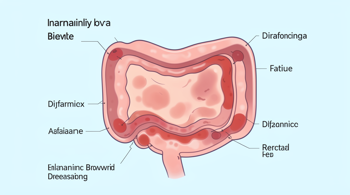
Crohn’s disease and ulcerative colitis overlap in many symptoms but affect different regions. Crohn’s disease can involve any part of the gastrointestinal tract, whereas ulcerative colitis primarily affects the large intestine and always involves the rectum. Crohn’s disease typically appears in patches separated by areas of healthy tissue, while ulcerative colitis spreads continuously from the rectum. These anatomical differences help explain why warning signs vary between individuals. 2 4 6
When assessment is needed and how diagnosis works
Medical assessment is appropriate when diarrhea, bleeding, abdominal pain, urgency, fatigue, fever, or weight loss persists or repeatedly returns. Symptoms can be caused by infection, irritable bowel syndrome, celiac disease, and other disorders, so a clinician must distinguish inflammation from conditions that do not damage the bowel. IBD is a chronic condition with periods of flare-ups and remission, meaning symptoms may lessen temporarily without proving that the underlying problem has resolved. 3 4 6
Diagnosis generally requires a combination of clinical assessment and testing. Depending on the suspected disease and affected location, evaluations may include colonoscopy or sigmoidoscopy, imaging, and video capsule endoscopy. Crohn’s disease is commonly assessed with colonoscopy, capsule endoscopy, and computed tomography or magnetic resonance imaging, while ulcerative colitis may be evaluated with sigmoidoscopy or colonoscopy. No single symptom reliably confirms IBD. 4 5 9
Sources
- Mayo Clinic, Inflammatory bowel disease: Symptoms and causes
- Johns Hopkins Medicine, Inflammatory Bowel Disease
- Government of Canada, Inflammatory bowel disease
- Merck Manual Consumer Version, Overview of Inflammatory Bowel Disease
- Merck Manual Consumer Version, Crohn Disease
- Hospital Clínic Barcelona, Inflammatory bowel disease: symptoms and key signs
- Cleveland Clinic, Crohn’s Disease: Symptoms and Treatment
- National Institute of Diabetes and Digestive and Kidney Diseases, Crohn’s Disease: Symptoms and Causes
- National Institute of Diabetes and Digestive and Kidney Diseases, Ulcerative Colitis: Symptoms and Causes
- Cleveland Clinic, Inflammatory Bowel Disease
Authored by MyTrendSpot team