Early symptoms of prostate cancer you should know: Clinical signs, screening limits, and when evaluation matters
Early symptoms of prostate cancer you should know include subtle urinary, sexual, and pelvic changes, but the most important clinical fact is that early-stage disease often causes no symptoms at all. Many cases are identified through screening rather than through a noticeable change, while symptoms that do occur can resemble benign prostate enlargement or infection. 1
Why early prostate cancer can be difficult to notice
Most men diagnosed with prostate cancer, including some with advanced disease, do not initially report symptoms. Screening with a prostate-specific antigen, or PSA, blood test can detect cancer while it remains asymptomatic. The absence of symptoms therefore cannot reliably exclude disease, and the appearance of symptoms does not prove that cancer is present. Prostate cancers also vary biologically: some grow slowly and remain confined to the prostate for years, while others progress more quickly. 1 2
- Early disease may be discovered during routine assessment rather than after symptoms develop. 10
- Symptoms generally become more likely as a tumor enlarges or affects nearby structures. 5
- People with a prostate, including some transgender women who retain the gland, can develop prostate cancer. 2
Urinary changes that deserve attention
When early-stage prostate cancer causes symptoms, they most often involve the lower urinary tract. Possible changes include difficulty starting or stopping urination, a weak or interrupted stream, more frequent urination, especially at night, and a sensation that the bladder has not emptied completely. Pain or burning during urination may also occur. These symptoms result from the prostate’s position below the bladder and around the urethra, but they are not specific to cancer. 3 4
- Difficulty initiating urination or maintaining a steady stream. 3
- Repeated nighttime urination, known as nocturia. 3
- Persistent urgency, frequency, or incomplete emptying. 4
Blood and sexual symptoms
Blood in the urine or semen is another possible warning sign, although it can have causes unrelated to cancer, including benign prostate enlargement, kidney stones, inflammation, or infection. Prostate cancer may also be associated with erectile difficulty or painful ejaculation. These symptoms should be assessed in context because they can result from medication effects, vascular disease, infection, or other urologic conditions. A symptom’s persistence, recurrence, or association with other changes is clinically relevant, but it cannot establish a diagnosis by itself. 11 12
- Visible blood in urine or semen should be reported to a healthcare professional. 4
- Erectile dysfunction and painful ejaculation are possible but nonspecific symptoms. 11
- Self-diagnosis is unreliable because several benign conditions produce similar findings. 6
Pain and symptoms associated with spread
Persistent pain in the back, hips, pelvis, or upper thighs can occur when prostate cancer has spread beyond the prostate, particularly to bone. Such pain is not usually considered a distinctive early symptom and may also reflect arthritis, injury, or other common disorders. Additional advanced symptoms reported by clinical sources include fatigue, unexplained weight loss, pelvic discomfort, and problems caused by urinary obstruction. New or worsening pain that does not resolve should receive medical attention, especially when accompanied by urinary or systemic changes. 7 9
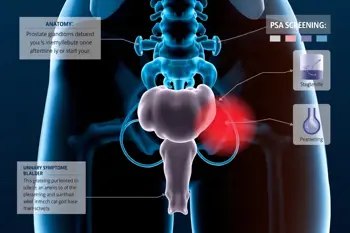
- Persistent back, hip, pelvic, or upper-thigh pain is more concerning than a brief, explainable ache. 11
- Unexplained fatigue or weight loss may occur in more advanced disease but is not specific to prostate cancer. 7
- Leg or foot numbness can occur when advanced disease affects nearby structures. 9
How symptoms differ from benign prostate conditions
Urinary symptoms are commonly caused by benign prostatic hyperplasia, often called BPH, or by prostatitis and urinary infection. BPH is a noncancerous enlargement that becomes more common with age and can produce frequency, weak flow, hesitancy, and incomplete emptying. Because the symptom patterns overlap, neither the presence nor severity of urinary difficulty can distinguish cancer from benign disease. A clinician may review the medical history, perform an examination, order a PSA test, and consider imaging or biopsy when findings justify further investigation. 3 6
- Urinary symptoms alone do not diagnose prostate cancer. 14
- PSA results can be influenced by conditions other than cancer and require clinical interpretation. 12
- Further testing may include physical examination, imaging, and, when appropriate, biopsy. 6
Screening, risk factors, and medical evaluation
Screening decisions for people without symptoms should be individualized rather than based only on age or a single test result. Risk increases with age, and Black men, people with a close family history of prostate cancer, and those with inherited genetic risk may need earlier or more personalized discussions. The U.S. Preventive Services Task Force recommends individualized PSA-based screening decisions for men aged 55 to 69 and recommends against routine PSA-based screening for men aged 70 and older. 19
- Persistent, new, or worsening urinary, sexual, or pelvic symptoms warrant professional assessment. 13
- Family history and inherited risk can change the timing and nature of screening discussions. 5
- PSA screening can produce false-positive results and may lead to unnecessary procedures, so potential benefits and harms should be discussed. 19
Sources
- Harvard Health, Symptoms of early-stage prostate cancer
- Memorial Sloan Kettering Cancer Center, Prostate Cancer symptoms and screening
- University of Iowa Health Care, Early warning signs of prostate cancer
- University of Utah Health, Warning signs of prostate cancer
- MSD Manual Consumer Version, Prostate Cancer
- Acibadem Hospitals Group, Prostate Cancer Symptoms: Early Signs in Men
- Franciscan Health, Prostate Cancer Symptoms and Screening
- Sharecare, What to know about prostate cancer
- National Cancer Institute, Prostate Cancer Treatment
- American Cancer Society, Signs and Symptoms of Prostate Cancer
- Mayo Clinic, Prostate Cancer Symptoms and Causes
- Centers for Disease Control and Prevention, About Prostate Cancer
- NHS, Prostate Cancer
- U.S. Preventive Services Task Force, Prostate Cancer Screening Recommendation
Authored by MyTrendSpot team