14-day Baltic Sea cruises through Åland Islands and protected nature reserves: An itinerary and oversight report
14-day Baltic Sea cruises through Åland Islands and protected nature reserves typically combine archipelago navigation, historic port cities, and nature-focused excursions. Published itineraries show that Åland may appear within longer Baltic loops or as part of smaller sailing voyages linking Stockholm, Mariehamn, Turku, and Helsinki. 1
What a 14-day Baltic itinerary usually includes
Long Baltic voyages are generally structured around a sequence of cultural ports and sheltered island passages rather than continuous open-sea travel. A documented 14-day Grand Baltic voyage includes Copenhagen, Bornholm, Gdańsk, Klaipėda, Visby, Stockholm, Riga, Tallinn, and Helsinki, with small-group touring and time aboard an 89-passenger vessel. Another published 14-night route combines Copenhagen, the Kiel Canal, Gdańsk, Bornholm, Wismar, Antwerp, Dover, Farsund, Oslo, and Gothenburg. These examples demonstrate that “14-day” can describe substantially different geographic circuits. 23
- Common northern gateways include Stockholm, Copenhagen, Helsinki, and Oslo. 4
- Some programs emphasize Baltic capitals, while others prioritize islands, sailing, and smaller coastal communities.
- Port duration can determine whether a destination supports a city tour, a reserve excursion, or only a brief shore visit.
Åland’s role between Sweden and Finland
Åland is an autonomous, demilitarized region of Finland with a Swedish-speaking capital, Mariehamn. The archipelago lies between Sweden and Finland and is described in cruise material as containing approximately 6,700 islands. Mariehamn occupies a compact position between two harbors, giving itineraries access to restaurants, cafés, shops, maritime heritage, and outdoor activities. The islands’ position makes them a geographic bridge between Stockholm’s archipelago and Finland’s coastal waters, while their autonomy creates a distinct political and cultural setting. 5
- Mariehamn is associated with Viking heritage and an annual Viking Market. 5
- Åland excursions can include walking, cycling, kayaking, boat trips, fishing heritage, and coastal villages. 6
- The Eckerö area includes sandy beaches, a fishing museum, an historic post and customs house, and wildlife-oriented attractions. 6
Protected nature and archipelago navigation
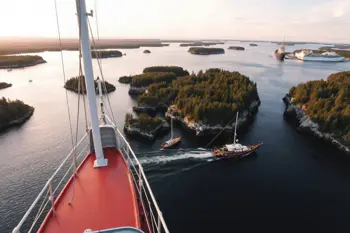
The Finnish Archipelago National Park is one of the protected landscapes associated with this region. Its environment consists of island and marine habitats shaped by glacial processes, with biodiversity protection influencing how visitors and vessels interact with the coast. Stockholm’s surrounding archipelago is also an important nature setting, described by tourism research as extending across more than 30,000 islands and islets. These figures refer to broad archipelago areas, not necessarily the number of islands visited during a specific cruise. 78
- Small ships and sailing vessels can generally approach narrower channels and sheltered anchorages more readily than large ships.
- Reserve visits may involve guided landings, kayaking, walking, or observation from the vessel rather than a conventional urban shore excursion.
- Protected status does not mean every island is open for unrestricted access, so landing points and activities can vary.
Ship size, route design, and passenger experience
Ship scale strongly affects the type of Åland and reserve experience available. Expedition vessels described in the research have a maximum capacity of 230 passengers and are designed for exploration, expert-led interpretation, and access to places that larger ships may not reach. A separate sailing program uses a Bavaria 50 for week-long Finnish Archipelago voyages between Helsinki, Turku, Åland, and Mariehamn. By contrast, a 138-metre expedition ship can combine expedition facilities with a larger onboard service structure. 910
| Format | Typical strength | Main limitation |
|---|---|---|
| Large ocean ship | Broad port network and extensive onboard facilities | Restricted access to narrow channels and small landing places |
| Expedition ship | Nature interpretation, smaller ports, and guided exploration | Itinerary changes may follow weather or access conditions |
| Sailing vessel | Close contact with archipelago scenery and quiet anchorages | Fewer berths and less standardized daily programming |
Seasonality and operational constraints
Baltic cruising is concentrated in the warmer months, particularly from late spring through late summer, when daylight is long and waters are generally accessible. Published sailing schedules place Finnish Archipelago voyages in July and August, while a Stockholm to Turku sailing itinerary lists seven overnight stays between late July and early August. Seasonal timing can affect wildlife viewing, sea conditions, daylight, village services, and the practicality of outdoor excursions. 111
- Summer conditions support walking, cycling, kayaking, and village visits, but weather can still alter daily plans.
- Long daylight hours are an important feature of northern Baltic travel, especially in the archipelagos.
- Published dates and capacity can change; one documented seven-night sailing itinerary was marked sold out, illustrating that scheduled capacity is not the same as guaranteed access.
Environmental regulation and practical risks
The Baltic Sea is recognized by the International Maritime Organization as a Particularly Sensitive Sea Area, a designation associated with heightened environmental attention and protective measures. HELCOM also provides a regional framework for safeguarding the Baltic marine environment. These controls are relevant to wastewater, pollution prevention, routing, and the management of activity in vulnerable coastal areas. Environmental protection therefore affects cruise operations, even when a route is marketed primarily around scenery or cultural ports. 1213
- Protected-area visits can be limited by weather, local conservation rules, harbor access, or landing permissions.
- Large ships may require deeper water and established infrastructure, reducing access to remote reserves.
- Passengers should distinguish a scenic passage from an actual protected-area landing, because itinerary descriptions do not guarantee the same level of access on every departure.
- Geopolitical conditions can also reshape port sequences. Routes listing Baltic capitals should be checked against current official itinerary information rather than assumed to remain unchanged.
Sources
- Eye of the Wind, Sweden, Åland and Finland, https://eyeofthewind.net/en/product/sweden-aland-and-finland/
- Overseas Adventure Travel, Grand Baltic Sea Voyage, https://viewer.joomag.com/overseas-adventure-travel-a-world-of-discovery/0895620001763955889/article/grand-baltic-sea-voyage
- Crui.se, 14-Day Baltic Sea, Kiel Canal and Dover, https://www.crui.se/seabourn/14-day-baltic-sea-kiel-canal-dover/
- Viking Cruises, Mariehamn and Baltic Capitals itinerary, https://www.vikingcruises.com/oceans/cruise-destinations/baltic/scandinavia-and-baltic-capitals/index.html
- Visit Åland, https://www.visitaland.com
- Tallink Silja Line, Trip to Åland, https://www.tallink.com/ee-en/travelling/one-way/aland
- National Parks Finland, Archipelago National Park, https://www.nationalparks.fi/archipelagonp
- Scenic Cruises, Wonders of the Baltic Sea, https://scenic.cruises/AU/en-GB/blogs/wonders-of-the-baltic-sea
- Peregrine Travel Centre, Baltic Sea with Åland Islands Small Ship Cruise, https://www.peregrinetraveladelaide.com.au/trip/europe/germany/baltic-sea-with-aland-islands-small-ship-cruise/
- Another World Adventures, Finnish Archipelago Summer Sailing, https://www.anotherworldadventures.com/unusual-adventure-holidays/finnish-archipelago-summer-sailing-2027/
- International Maritime Organization, Particularly Sensitive Sea Areas, https://www.imo.org
- HELCOM, Baltic Marine Environment Protection Commission, https://helcom.fi
- Visit Stockholm, https://www.visitstockholm.com
Authored by MyTrendSpot team