Caribbean island cruises with 7 stops through protected waters: An itinerary and conservation analysis
What a seven-stop itinerary can include
A practical Eastern Caribbean concept links San Juan, St. Thomas, Philipsburg, Basseterre, St. John’s, Pointe-à-Pitre, and Roseau. The sequence spans Puerto Rico, the U.S. Virgin Islands, St. Maarten, St. Kitts, Antigua and Barbuda, Guadeloupe, and Dominica, although travelers must verify that an individual sailing actually includes all seven ports. 1
Published seven-night examples show that Caribbean routes vary considerably. One Virgin Voyages itinerary from San Juan includes St. Thomas, Bridgetown, Castries, St. John’s, and Philipsburg, while another combines St. Maarten, Antigua, St. Lucia, Aruba, and sea days. A separate Norwegian itinerary includes Tortola, St. John’s, Basseterre, Philipsburg, and Bridgetown. 2
Ports, landscapes, and cultural differences
San Juan functions as a major urban and cruise gateway, with Spanish colonial streets, historic forts, beaches, mountains, and access to El Yunque. St. Thomas adds Charlotte Amalie’s Danish architecture, harbor viewpoints, and beach excursions. Philipsburg provides access to the dual French and Dutch character of St. Maarten, while Basseterre connects visitors with St. Kitts’ historic estates, rainforest, and Brimstone Hill Fortress. 3
St. John’s, Antigua, is associated with Nelson’s Dockyard and island sailing experiences. Pointe-à-Pitre introduces Guadeloupe’s markets, colonial architecture, and French-Caribbean setting. Roseau, Dominica, is the principal arrival point for an island known for natural springs and mountainous landscapes. These stops create a broader cultural range than an itinerary focused only on beach destinations. 4
How protected waters fit into cruise travel
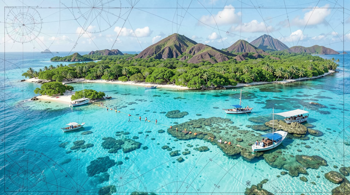
Protected-water experiences on these routes generally occur through shore excursions, tender boats, snorkeling trips, or small-vessel visits near marine parks. Large cruise ships do not normally navigate inside every restricted conservation zone. Access can depend on local rules, weather, anchoring limitations, operator permits, and the ecological sensitivity of reefs, beaches, and underwater habitats. 5
Virgin Islands National Park on St. John protects beaches, forests, reefs, and historic sites near St. Thomas calls. Buck Island Reef National Monument near St. Croix protects coral reefs, tropical marine habitat, and surrounding waters, although St. Croix is not part of every seven-stop Eastern Caribbean concept. These areas demonstrate why a port may provide protected-water access without the cruise ship entering the protected zone itself. 6
Marine-park alternatives beyond the core route
Bonaire National Marine Park is a significant protected-waters alternative for snorkeling and diving itineraries. The park encompasses coastal waters around Bonaire and is particularly relevant to southern Caribbean routes that include Aruba, Curaçao, and Bonaire. A seven-night itinerary from La Romana connects those Dutch Caribbean islands with Grenada, creating a different geographic and ecological profile from the Eastern Caribbean sequence. 7
Saba Marine Park surrounds Saba and protects coral, reef, and deep-water habitats, but access is normally by small boat rather than a large cruise vessel. Belize’s Barrier Reef Reserve System is another major alternative for longer western Caribbean itineraries. UNESCO identifies it as a World Heritage property containing important coral reef, mangrove, and marine ecosystems. 8
Seven-night sailing patterns and ship scale
Seven-night cruises commonly operate as eight-day round trips, with embarkation and return at the same port. San Juan is used for several routes, while Fort-de-France is a departure point for a seven-night MSC itinerary visiting Guadeloupe, Barbados, Saint Vincent, Grenada, and Saint Lucia. A Royal Clipper voyage instead sails round trip from Bridgetown through the Grenadines, including Tobago Cays, Bequia, Grenada, Martinique, and St. Lucia. 9
Ship scale affects the character of protected-water visits. Royal Clipper carries 227 guests and has a watersports marina platform, three swimming pools, 42 sails, and expansive open decks. MSC World Europa is listed with capacity for 6,774 passengers, while Virgin Voyages’ ships in the cited itineraries carry 2,770 passengers and 1,150 crew. Larger vessels may require more structured transfers and port logistics. 10
Planning constraints, oversight, and visitor responsibilities
Itinerary comparison requires more than counting island names. Port duration, tender requirements, sea conditions, marine-park access rules, and entry requirements can alter the practical experience. A route that lists seven destinations may include a short call, an overnight passage, or a stop where protected waters are reachable only through a separately organized small-boat excursion. 11
Conservation areas also impose management realities. NOAA explains that coral-reef ecosystems support biodiversity and are managed through conservation and protected-area approaches. Visitors should therefore expect limits on anchoring, touching coral, collecting marine life, and entering designated zones. Weather seasonality can affect snorkeling, diving, tender operations, and port access, making the published route subject to operational changes. 12
How to evaluate a proposed seven-stop route
The most reliable comparison records the embarkation port, each scheduled call, arrival and departure times, tender status, and the exact protected area associated with an excursion. It should distinguish a marine park from a national park, World Heritage property, or general coastal attraction. This distinction prevents a protected-waters claim from implying that a cruise ship itself sails through a restricted conservation zone. 13
A balanced assessment also weighs cultural variety against transit time and operational friction. San Juan routes can combine several Lesser Antilles ports, while southern routes may emphasize the Dutch Caribbean’s distinct architecture and reef environments. Grenadine sailings place greater emphasis on smaller anchorages and tall-ship navigation. The final choice depends on port mix, ship size, access rules, weather conditions, and the desired balance between urban visits and marine excursions. 14
Sources
- Peregrine Travel Centre, Grenadine Islands 7 Nights Caribbean Cruise
- Escape Xperts, Southern Caribbean Cruise
- Royal Caribbean, Southern Caribbean Cruises
- Global Journeys, Virgin Voyages Caribbean itineraries
- National Park Service, Virgin Islands National Park
- National Park Service, Buck Island Reef National Monument
- STINAPA Bonaire, Bonaire National Marine Park
- UNESCO World Heritage Centre, Belize Barrier Reef Reserve System
- Global Journeys, MSC Caribbean and Antilles itinerary
- Global Journeys, Virgin Voyages and ship specifications
- Official tourism and destination authorities cited in the research data
- National Oceanic and Atmospheric Administration, Coral Reef Ecosystems
- Saba Conservation Foundation, Saba Marine Park
- Cruise Planner Pro, Lesser Antilles itinerary analysis
Authored by MyTrendSpot team