Ex-military communication equipment: A Technical and Regulatory Overview of Decommissioned Tactical Systems
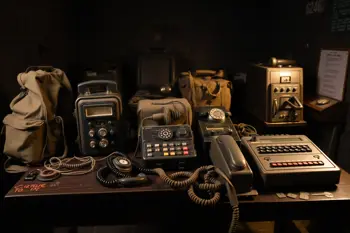
Decommissioned tactical radios, legacy field signaling systems, and vintage transceivers occupy a unique space among communication historians, electronic restoration hobbyists, and emergency planning groups. Understanding the technical profiles, operational histories, and compliance restrictions of this hardware is essential for anyone researching or maintaining ex-military communication equipment.
Historical Evolution of Military Communications Surplus
The public availability of decommissioned military tactical transceivers is historically driven by strategic modernization cycles. Under systematic programs overseen by federal agencies, high-grade electronics are routinely classified as excess and distributed through programs like the Law Enforcement Support Office, commonly known as the 1033 Program 1, or transferred through federal asset pipelines like the General Services Administration 2. This structured disposition cycle ensures that decades of specialized defense engineering are preserved rather than scrapped, allowing technical experts to restore and study robust, historical hardware.
Early surplus markets were heavily defined by foundational tactical equipment such as the BC-1000 backpack transceivers used by allied forces 3. Known as the quintessential portable walkie talkie of World War II, the BC-1000 was a portable radio transceiver designed for ground troops 3. Concurrently, vehicle-mounted and fixed ground stations relied on systems like the SCR-284, manufactured by the Crosley Corporation 4. Weighing more than 100 pounds with all its support accessories, the core 45-pound BC-654 transmitter was difficult for operators to carry in combat, but it played a critical role in major coordinate networks, including the beach landings during the D-Day invasion of Normandy 4.
Technical Profile of Decommissioned Backpack Radios
Throughout the mid-twentieth century, tactical backpack transceivers underwent rapid miniaturization and frequency shifts. The AN/PRC-25, historically referred to as the Prick-25, became a highly regarded tactical asset during the Vietnam War, praised by military leadership as a critical tactical item of its era 5. Operating across a frequency range of 30 to 75.95 MHz in two bands, this FM radio was carried on a rigid metal backpack frame 5. Its ruggedized casing and simple mechanical controls established a baseline for military-grade engineering that remains a point of study for modern communications technicians.
Prior to the widespread adoption of the PRC-25, the U.S. Signal Corps utilized the AN/PRC-10 squad radio, a 16-tube FM transceiver introduced in 1951 for use during the Korean War 6. In the maritime environment, the Navy and Marine Corps utilized the TBY-6 radio, manufactured by the Colonial Radio Corporation, which served as a backup on PT boats and was operated by Navajo Code Talkers 7. These early portable units lacked moisture fungus proofing, making them highly susceptible to corrosion and environmental degradation in humid jungle settings 7. The survival of intact units is rare, as humidity, salt water, and sand quickly compromised their delicate internal vacuum tubes and wiring 7.
Landline and Telegraphic Field Systems
In addition to wireless transceivers, wired field telephone networks and manual switchboards have historically formed the backbone of secure localized military communications. The SB-22A/PT manual field telephone switchboard is a portable, weather-resistant system designed for tactical installations and mobile shelters 8. Built to rigid military specifications, it has the capacity to interconnect 12 separate voice frequency circuits and can be linked with a second switchboard to expand the network to 29 circuits 8. These analog networks were highly reliable in contested environments where electronic jamming or radio interception posed significant operational risks.
To operate within these networks, forces utilized the TA-312/PT analog field telephone, which replaced older World War II-era EE-8 units 8. These battery-operated, two-wire devices featured a hand-crank to generate ring voltages and were housed in canvas carrying cases 8. For secure telegraphic communications, the British military deployed the Fullerphone Mk V field telegraph set, designed in the mid-1930s 9. Operating on direct current signals, it was virtually impossible for enemy forces to intercept using standard alternating current listening devices 9.
Post-War and Modern Allied Transceiver Frameworks
Post-war development saw the introduction of highly versatile multi-band systems, notably the British Clansman series of military radio equipment. Developed in the late 1970s, the Clansman inventory featured several notable transceivers, including the RT-320, the RT-349, and the RT-351 VHF sets 10. These radios utilize manual antenna tuning units and are highly favored by modern amateur radio operators for their robust, toppy audio, which is optimized for clear speech transmission under poor atmospheric conditions 10. Many of these units have undergone modifications, such as lower sideband conversions, to make them compatible with civilian amateur bands 10.
Modern advancements in military communications have shifted toward highly sophisticated software-defined radios and advanced digital encryption. Systems such as the L3Harris AN/PRC-160(V) combine high-frequency and very-high-frequency bands to deliver high-speed, secure Beyond-Line-Of-Sight communications without relying on satellite networks 11. Furthermore, modern dismounted forces utilize multi-channel systems like the TruNet AN/PRC-162 networked communications ground radio, which features embedded GPS and supports mobile ad-hoc networking waveforms to link ground units with airborne platforms seamlessly.
Acquisition Channels and Disposition Logistics
The transition of military communications equipment from active-duty inventory to civilian availability is governed by strict administrative procedures. In the United States, the Defense Logistics Agency is responsible for the disposition of excess military property 12. When tactical equipment is decommissioned, it is cataloged and made available for public auction through designated platforms like GovPlanet. These surplus items are sold in an as-is condition, meaning that operational functionality is rarely guaranteed, and buyers must often supply their own battery systems or execute technical repairs.
In addition to public auctions, the federal government facilitates the direct transfer of surplus communications assets through specialized programs. The Law Enforcement Support Office administers the 1033 Program, which authorizes the transfer of excess Department of Defense property, including specialized communication equipment, to state and local law enforcement agencies 1. This administrative mechanism allows public safety entities to acquire durable communications gear at minimal cost, ensuring that taxpayer-funded technology continues to serve a public safety purpose after its military utility has concluded 1.
Legal Constraints and Technical Compliance Realities
The civilian ownership and operation of ex-military communication equipment are subject to stringent regulatory oversight. In the United States, the Federal Communications Commission enforces strict equipment authorization rules under Title 47 of the Code of Federal Regulations to prevent harmful interference 13. Because many tactical military radios operate on frequency bands reserved for federal or public safety services, operating these transceivers legally typically requires an amateur radio license. Operating unmodified military transceivers without proper authorization can result in severe legal penalties and equipment confiscation.
Beyond frequency compliance, there are significant technical hurdles associated with restoring legacy tactical hardware. Many vintage systems require obsolete, non-standard battery types, forcing collectors to build custom power supplies or modify existing battery compartments. Furthermore, any modern cryptographic modules or active communications security features are strictly stripped or rendered non-functional prior to the sale of military surplus to prevent unauthorized access to sensitive military networks. Collectors must therefore focus on the analog RF capabilities of these historic systems, maintaining them purely for educational, historical, and amateur radio utility.
Sources
- Bureau of Justice Assistance (Office of Justice Programs, U.S. Department of Justice) - https://bja.ojp.gov/program/1033-program/overview
- General Services Administration (GSA) - https://www.gsa.gov/about-us/organization/federal-acquisition-service/federal-management-services/federal-management-services-2/property-management
- Tactical Rifle Zone (BC-1000 Backpack Radio) - https://tacticalriflezone.com/product/original-wwii-u-s-signal-corps-bc-1000-backpack-radio-receiver-and-transmitter-with-handset/
- Tactical Rifle Zone (SCR-284 Signal Corps Radio Set) - https://tacticalriflezone.com/product/original-u-s-wwii-scr-284-signal-corps-radio-set-by-crosley/
- Colt & Winchester Firearms (U.S.M.C. Radio Set RT-505B / PRC-25) - https://coltwinchestershop.com/product/original-vietnam-war-u-s-m-c-radio-set-rt-505b-prc-25-backpack-radio-rig-serial-81316/
- Tactical Rifle Zone (RT-176A AN/PRC-10) - https://tacticalriflezone.com/product/original-u-s-korean-war-vietnam-war-rt-176a-an-prc-10-backpack-radio-rig-serial-no-lbad-6906/
- Precision Gun Pro (TBY-6 Radio Receiver) - https://www.precisiongunpro.com/products/original-u-s-wwii-navy-usmc-navajo-code-talker-tby-6-radio-cri-43044-receiver/
- Backcountry Hunt Shop (U.S. Army Switchboard SB-22A and Telephone TA-312) - https://www.backcountryhuntshop.com/product/original-u-s-army-korean-war-and-vietnam-war-field-communications-set-sb-22a-pt-switch-board-ta-312-pt-telephone-mx219-accessory-set/
- Tactical Rifle Zone (Fullerphone MkV Telegraph Set) - https://tacticalriflezone.com/product/original-british-wwii-fullerphone-mkv-field-telegraph-set-in-case-with-strap-dated-1944/
- Radio Workshop (Clansman Military Radio Equipment) - https://www.radio-workshop.co.uk/g4nsj-clansman-military-radio-equipment-rt320-rt349-rt351/
- CLEATUS (L3Harris AN/PRC-160(V) Radio Assembly) - https://www.cleat.ai/government/contracts/l3harris-an-prc-160-v-radio-assembly-s52l
- Defense Logistics Agency - https://www.dla.mil/DispositionServices/Offers/Surplus/
- Federal Communications Commission (FCC Rules and Regulations Title 47) - https://www.fcc.gov/general/rules-regulations-title-47
Authored by MyTrendSpot team