Best full mouth reconstruction specialists in your region: A guide to credentials, treatment scope, and evaluation
The phrase “Best full mouth reconstruction specialists in your region” usually refers to clinicians who coordinate extensive restorative care rather than perform a single cosmetic procedure. Because no city or state is specified, the most reliable approach is to compare prosthodontic training, implant credentials, diagnostic methods, treatment planning, and documented experience in complex cases.
What full mouth reconstruction involves
Full mouth reconstruction, also called full mouth rehabilitation, evaluates the teeth, gums, bone, bite, and jaw joints together. Treatment can combine crowns, bridges, veneers, periodontal care, root canals, extractions, dental implants, dentures, and implant-supported restorations. The objective is to restore oral function and appearance through a coordinated sequence rather than isolated repairs. Cleveland Clinic describes the process as a combination of restorative and replacement procedures selected according to the patient’s condition. 1
Patients commonly seek this category of care after extensive tooth wear, multiple missing or failing teeth, unstable bites, damaged restorations, chronic dental infections, gum disease, or trauma. A reconstruction may be staged over several months, and the plan can change if infection, bone loss, periodontal disease, or medical factors must be addressed first. Implant treatment also requires evaluation of bone, gums, oral health, and general medical history. 2
Credentials that matter when comparing specialists
Prosthodontics is the dental specialty focused on restoring and replacing teeth, including complex crowns, bridges, dentures, and implant restorations. The American Board of Prosthodontics provides information for verifying board certification, while the American College of Prosthodontists maintains a patient-facing search resource for locating prosthodontists. These credentials do not guarantee a particular outcome, but they provide a more relevant starting point than general advertising claims. 3
When implants are central to the proposed plan, the American Academy of Implant Dentistry directory can help identify dentists with implant-related credentials. The American Academy of Cosmetic Dentistry directory may be useful for locating providers with cosmetic-restorative experience, although cosmetic-academy membership or accreditation is not equivalent to prosthodontic board certification. Patients should distinguish formal specialty training, board status, surgical experience, and restorative experience rather than treating all labels as interchangeable. 4
Regional examples identified in the research
The supplied research identifies practices in several U.S. markets, but it does not establish a national ranking or confirm that any provider is appropriate for a particular patient. Examples include Goldstein Dental Center in Atlanta, Misch Implant Dentistry in Sarasota, Advanced Smile Solutions in Fort Lauderdale and Hollywood, Sonoran Dental Design in Scottsdale, Miller Prosthodontics in Nashville and Franklin, Gordon Dental Implants and Cosmetics in Kansas City, Bublik Dental in Wausau, and Legacy Prosthodontics in Myrtle Beach. 5
| Location | Reported focus | Information requiring independent verification |
|---|---|---|
| Atlanta | Prosthodontic-led full mouth reconstruction | Current board status, treatment outcomes, and fees |
| Scottsdale | Restorative and cosmetic reconstruction with digital tools | Provider credentials and case suitability |
| Kansas City | Full-arch implants and zirconia restorations | Implant maintenance, alternatives, and surgical arrangements |
| Nashville and Franklin | Comprehensive rehabilitation and bite evaluation | Airway-related claims and treatment sequence |
Other research entries describe full-mouth services in Beverly Hills, Jerusalem, Fort Lauderdale, and Wausau. These pages report different combinations of digital planning, CBCT imaging, implant placement, in-house laboratory work, sedation, periodontal procedures, or restorative treatment. Such descriptions are practice-reported information, not independent clinical ratings, so geographic convenience should be considered alongside credentials and the complexity of the proposed care. 6
How an evaluation and treatment plan should work
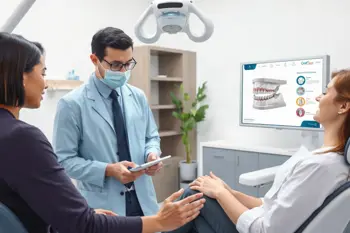
A thorough consultation typically begins with an examination of teeth, gums, bite alignment, jaw joints, missing teeth, existing restorations, and overall oral health. Depending on the case, imaging may include three-dimensional CBCT scans, and planning may use digital models or a simulated final design. Miller Prosthodontics describes evaluating the teeth, gums, bite, jaw joints, and related functional concerns before sequencing care. 7
Before treatment begins, patients should receive a written sequence identifying which teeth can be preserved, which may require extraction, whether periodontal or endodontic treatment is needed, and when temporary and definitive restorations will be placed. The plan should also explain alternatives, expected appointments, estimated timeline, maintenance requirements, and itemized fees. A second opinion is particularly relevant when irreversible procedures or extensive implant surgery are proposed.
Eligibility, risks, and practical limitations
Implants are not automatically appropriate for every patient. Bone quantity, gum health, active infection, oral hygiene, medical conditions, medications, smoking status, and healing capacity can influence candidacy and timing. The National Institute of Dental and Craniofacial Research emphasizes that implant evaluation includes oral health, bone, gums, and broader medical factors. Some patients need periodontal treatment, bone grafting, infection control, or other preparation before implant placement. 8
Full mouth reconstruction is irreversible in many respects and can involve substantial biological, financial, and time commitments. Potential friction points include temporary restorations, surgical complications, bite adjustment, maintenance visits, repair or replacement of prosthetic components, and the possibility that natural teeth cannot be saved. Marketing language about permanent teeth or immediate results should be examined carefully because long-term function depends on hygiene, chewing forces, material selection, and professional follow-up.
Academic centers and ongoing maintenance
Dental schools with prosthodontic departments can provide another route to complex evaluation. The University of Michigan and UCLA School of Dentistry both identify prosthodontic specialty services through their clinical systems. Academic settings may be relevant for patients seeking specialist assessment, multidisciplinary input, or a second opinion, although appointment availability, clinical staffing, and treatment arrangements vary by institution. 9
Maintenance is part of the reconstruction, not an optional final step. Patients should clarify how often examinations and professional cleanings are expected, how implant-supported restorations will be monitored, who handles emergencies, and what happens if a crown, bridge, denture, or implant component fails. Comparing written plans from appropriately trained clinicians is more reliable than choosing solely by online reviews, geographic labels, photographic examples, or claims of being the “best” provider.
Sources
- Cleveland Clinic, Full-Mouth Reconstruction: https://my.clevelandclinic.org/health/treatments/24925-full-mouth-reconstruction
- National Institute of Dental and Craniofacial Research, Dental Implants: https://www.nidcr.nih.gov/health-info/dental-implants
- American Dental Association, Dental Specialties: https://www.ada.org/resources/ada-library/oral-health-topics/dental-specialties
- American Board of Prosthodontics and American College of Prosthodontists: https://www.abpros.org/ and https://www.prosthodontics.org/patients/find-a-prosthodontist/
- Research pages for Goldstein Dental Center, Misch Implant Dentistry, Advanced Smile Solutions, Sonoran Dental Design, Miller Prosthodontics, Gordon Dental Implants and Cosmetics, Bublik Dental, and Legacy Prosthodontics
- Research pages for Dr. Kiyan Mehdizadeh and Sreter Clinic
- Miller Prosthodontics, Full Mouth Rehabilitation: https://miller-prosthodontics.com/dental-services/prosthodontics/full-mouth-rehabilitation/
- American Academy of Implant Dentistry, Credentialed Dentist Search: https://www.aaid.com/credentialing/find-a-credentialed-dentist/
- University of Michigan School of Dentistry and UCLA School of Dentistry prosthodontic services
Authored by MyTrendSpot team