Warning signs of liver disease: A Clinical Guide to Symptoms and Risk Assessment
Why liver disease can be difficult to recognize
The warning signs of liver disease are not always obvious. The liver supports digestion, stores energy, removes poisons, regulates metabolism, and performs many other functions, yet early disease may cause few or no symptoms. Conditions can develop suddenly, such as inflammation caused by hepatitis or medication toxicity, or gradually through chronic inflammation and scarring. Because symptoms may be absent or nonspecific, a person cannot determine liver health from symptoms alone. Medical evaluation is needed when risk factors or persistent changes are present. 1
Chronic liver disease commonly progresses over months or years, and many people remain unaware of damage until the condition is advanced. Early complaints may resemble other health problems, including tiredness, nausea, reduced appetite, or mild abdominal discomfort. Liver disease can result from viral hepatitis, alcohol-related injury, fatty liver disease, cancer, inherited conditions, medications, toxins, or immune-related disorders. The cause and stage influence which warning signs appear and how urgently they require assessment. 2
Common early warning signs
Early symptoms may include persistent fatigue, weakness, general unwellness, nausea, vomiting, poor appetite, and unintended weight loss. Some people experience itching, muscle loss, cramps, or sexual problems. Mild pain or soreness beneath the ribs on the upper right side of the abdomen can occur when the liver is inflamed or enlarged. These symptoms are not specific to liver disease, but persistence, progression, or combination with other signs warrants discussion with a healthcare professional. 4
Abdominal discomfort and digestive changes can occur in both acute and chronic liver conditions. Penn Medicine identifies fatigue, nausea, loss of appetite, mild abdominal pain, diarrhea, and blood in the stool among symptoms that may appear earlier in the course of disease. Such symptoms do not establish a diagnosis, because infections, gastrointestinal disorders, medication effects, and other conditions can produce similar patterns. Blood testing is commonly part of the initial medical assessment. 3
Visible changes involving bile and waste processing
Jaundice is one of the most recognizable warning signs. It causes yellowing of the skin or the whites of the eyes when bilirubin accumulates in the blood. Urine may become unusually dark, while stool can change color. MedlinePlus specifically notes changes in stool and urine color as possible symptoms, and cirrhosis guidance describes dark urine and yellowing as signs that may develop when liver function worsens. New jaundice should receive medical attention, particularly when other symptoms are present. 1
Changes in skin appearance are not the only external clues. Itching may occur without an obvious rash, while easy bruising or bleeding can indicate impaired production of proteins involved in blood clotting. These findings can have causes unrelated to the liver, but their appearance alongside jaundice, dark urine, appetite loss, or abdominal swelling increases the need for clinical evaluation. NHS guidance also lists jaundice, vomiting blood, and dark, tarry stools among later-stage cirrhosis symptoms. 5
Swelling, fluid retention, and advanced disease
Fluid accumulation is an important sign of worsening liver dysfunction. Ascites refers to fluid building up in the abdomen, while edema describes swelling in the lower legs, ankles, or feet. MedlinePlus lists abdominal and leg swelling among symptoms of liver disease, and the National Institute of Diabetes and Digestive and Kidney Diseases identifies ascites and lower-limb edema among complications associated with cirrhosis. Increasing abdominal size, tightness, or leg swelling should be assessed rather than attributed automatically to weight change. 4
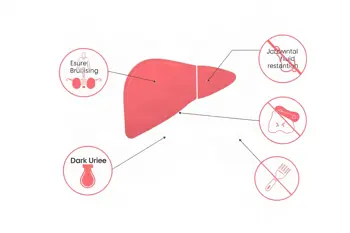
As scarring progresses, the liver may become less able to regulate blood flow and maintain normal protein production. This can contribute to fluid retention, bruising, bleeding, and other complications. Liver fibrosis itself may produce no symptoms until cirrhosis develops, according to Cleveland Clinic. That absence of symptoms is clinically important because a person can have substantial structural damage before noticing a clear physical change. Risk-based testing therefore remains relevant even when swelling or jaundice is absent. 6
Emergency warning signs
Some symptoms require emergency assessment because they may signal severe complications, although they can also result from other illnesses. Red flags include vomiting blood, very dark or black tar-like stool, new jaundice, difficulty breathing, marked confusion, inability to stay awake, or severe drowsiness. These findings may reflect gastrointestinal bleeding, impaired toxin processing, or advanced liver dysfunction. Liver UK advises attending an emergency department or contacting emergency services when these red flag symptoms occur. 2
Confusion, memory problems, personality changes, sleep disruption, or unusual sleepiness can occur when liver disease affects brain function. NIDDK lists these changes among symptoms of cirrhosis, while emergency guidance highlights unusual confusion and difficulty staying awake. Vomiting blood and black stools are particularly concerning because they can reflect internal bleeding from enlarged veins in the digestive tract. Emergency clinicians can assess breathing, circulation, mental status, bleeding, and possible acute liver failure. 7
Risk factors and how liver disease is evaluated
Symptoms are only one part of risk assessment. Liver UK identifies regularly drinking more than 14 units of alcohol per week, obesity with a body mass index above 30, type 2 diabetes, and possible exposure to viral hepatitis as factors associated with increased risk. Family history and immune-system disorders can also contribute to some liver diseases. People with these factors may need assessment even when they feel well, because early disease often remains silent. 8
Evaluation may include liver function blood tests, additional blood tests for possible causes, and imaging such as ultrasound, computed tomography, or magnetic resonance imaging. Elastography can assess liver stiffness, while other testing may be selected according to symptoms and medical history. Results are interpreted together rather than through a single symptom or laboratory value. The purpose is to identify liver injury, determine its cause, estimate severity, and guide appropriate medical management. 1
Sources
- MedlinePlus, Liver Diseases, https://medlineplus.gov/liverdiseases.html
- Liver UK, Symptoms of liver disease, https://liveruk.org/about-liver-disease/symptoms-of-liver-disease/
- Penn Medicine, Liver Disease: Symptoms and Causes, https://www.pennmedicine.org/conditions/liver-disease
- National Institute of Diabetes and Digestive and Kidney Diseases, Symptoms and Causes of Cirrhosis, https://www.niddk.nih.gov/health-information/liver-disease/cirrhosis/symptoms-causes
- NHS inform, Cirrhosis, https://www.nhsinform.scot/illnesses-and-conditions/stomach-liver-and-gastrointestinal-tract/cirrhosis/
- Cleveland Clinic, Liver Fibrosis, https://my.clevelandclinic.org/health/diseases/liver-fibrosis
- Mayo Clinic, Cirrhosis: Symptoms and causes, https://www.mayoclinic.org/diseases-conditions/cirrhosis/symptoms-causes/syc-20351487
- Liver UK, Worried about your liver?, https://liveruk.org/about-liver-disease/signs-and-symptoms/worried-about-your-liver/
Authored by MyTrendSpot team