Understanding Stage 1 Breast Cancer Characteristics: An Overview
Facts:
- Stage 1 breast cancer often has an excellent prognosis.
- Early detection is crucial for effective Stage 1 breast cancer treatment.
Decoding the Key Indicators of Stage 1 Breast Cancer
Understanding Stage 1 breast cancer is pivotal for those recently diagnosed or seeking comprehensive information on early detection. This initial stage signifies that the cancer is localized and has not spread extensively, making it highly treatable. Recognizing the specific breast cancer characteristics at this stage empowers patients and their healthcare providers to make informed decisions regarding treatment paths and future outlook.
What Defines Stage 1 Breast Cancer?
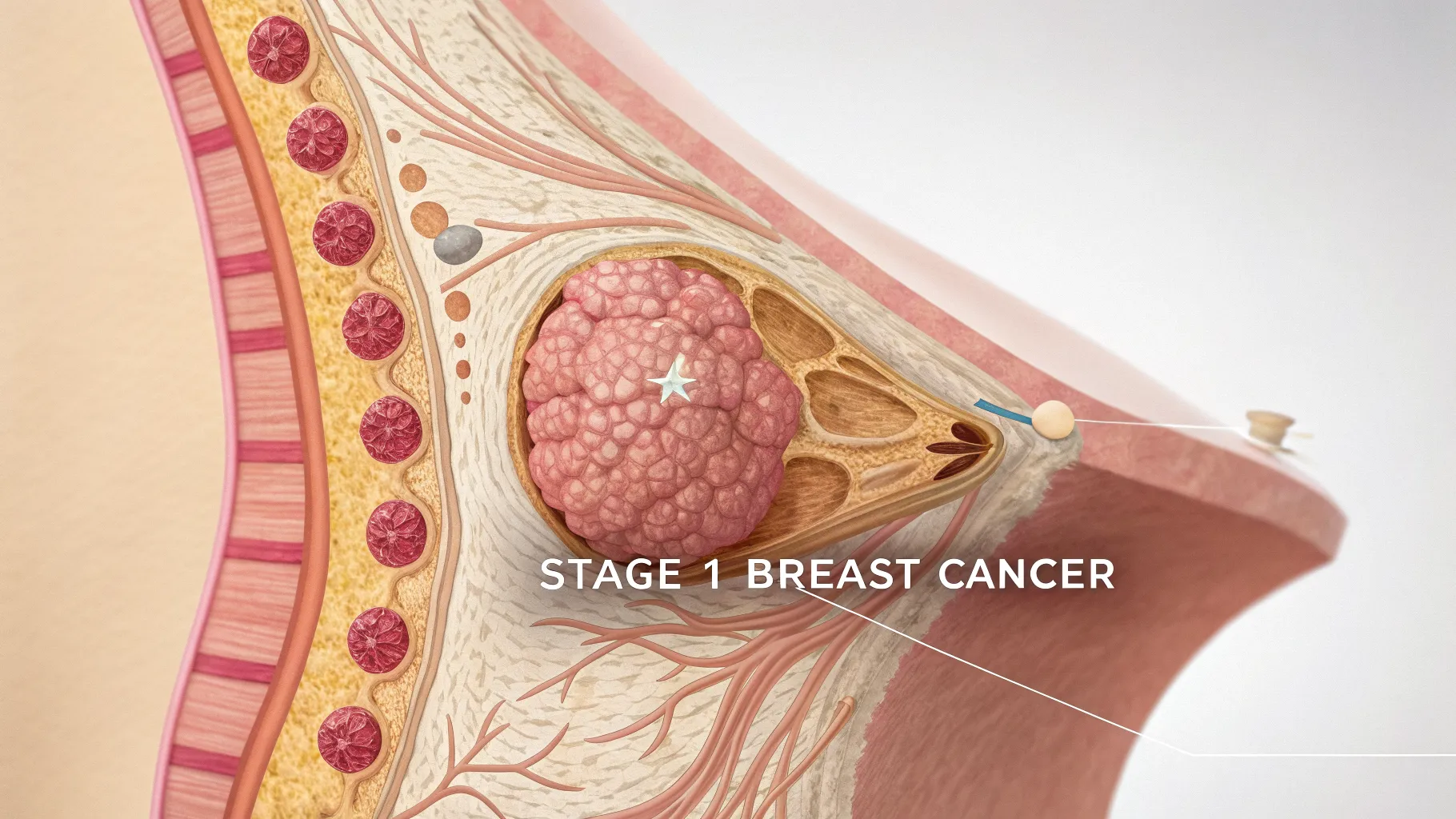
Stage 1 breast cancer is characterized by its relatively small size and the absence of spread to distant sites. It is further subdivided into Stage 1A and 1B based on the exact tumor size and whether there is any microscopic involvement of nearby lymph nodes. In Stage 1A, the tumor is generally 2 centimeters or less in diameter, and there is no spread to the lymph nodes. This makes it an ideal scenario for targeted interventions. For patients, understanding these specific breast cancer characteristics is the first step toward navigating their treatment journey.
The absence of macroscopic lymph node status involvement is a defining factor for Stage 1, distinguishing it from later stages. Pathologists meticulously examine tissue samples to determine the extent of cancer cell presence. This careful evaluation ensures an accurate staging, which directly impacts the recommended course of action and the overall prognosis. Advances in imaging techniques and biopsy procedures have greatly enhanced the precision of identifying these subtle indicators of early breast cancer diagnosis.
Detailed Characteristics of Stage 1A and 1B
Stage 1A: The Smallest Footprint
In Stage 1 breast cancer, specifically Stage 1A, the primary tumor is typically very small, measuring up to 2 centimeters (approximately 0.8 inches) in its largest dimension. Crucially, there is no evidence of cancer cells in the lymph nodes or distant parts of the body. This minimal spread is a key indicator of a favorable prognosis. Diagnosis at this stage often occurs through routine mammograms, before a lump is even palpable, underscoring the importance of regular screening for early breast cancer diagnosis. The precise measurement of tumor size is paramount for accurate staging, often relying on advanced imaging and pathology reports.
Stage 1B: Microscopic Lymph Node Involvement
Stage 1B breast cancer presents with either a very small primary tumor (up to 2 cm) and tiny clusters of cancer cells (micrometastases between 0.2 mm and 2 mm) found in one to three lymph nodes, or no detectable tumor in the breast itself but micrometastases in the lymph nodes. Despite the lymph node involvement, it remains an early stage due to the microscopic nature of the spread. This specific aspect of lymph node status is critical for staging and influences the subsequent discussion of treatment options. Patients diagnosed with Stage 1B still benefit from excellent outcomes, particularly with tailored therapeutic approaches that address these specific breast cancer characteristics.
Diagnostic Approaches for Early Breast Cancer Detection
An accurate early breast cancer diagnosis is fundamental to identifying Stage 1 breast cancer. This typically involves a combination of screening methods and diagnostic procedures. Mammography remains the cornerstone of screening, capable of detecting small tumors or calcifications that might indicate early-stage cancer. Ultrasound and MRI scans are often used as supplementary tools, especially for women with dense breast tissue or those at higher risk. Once a suspicious area is identified, a biopsy is performed to obtain tissue samples for pathological examination. This analysis confirms the presence of cancer, determines the specific breast cancer characteristics, and evaluates receptor status (e.g., estrogen receptor, progesterone receptor, HER2), which are vital for guiding treatment options.
Understanding Prognosis and Treatment Options for Stage 1
The prognosis for Stage 1 breast cancer is generally very good, largely due to the localized nature of the disease and the effectiveness of available treatments. Survival rates are exceptionally high when cancer is detected and treated at this early stage. Treatment options are highly individualized, depending on factors such as tumor size, hormone receptor status, HER2 status, and the patient's overall health. Common treatments include lumpectomy (breast-conserving surgery) or mastectomy, often followed by radiation therapy. Adjuvant therapies, such as chemotherapy, hormone therapy, or targeted therapy, may also be recommended to reduce the risk of recurrence, especially if certain aggressive breast cancer characteristics are present or if there's microscopic lymph node status involvement. The goal is always to eradicate the cancer while preserving quality of life.
Choosing the right path among the various treatment options for Stage 1 breast cancer involves a collaborative discussion between the patient and their multidisciplinary medical team. This team may include surgeons, oncologists, radiation oncologists, and pathologists. Genetic testing might also be considered for some patients to assess hereditary risk and further tailor treatment strategies. The excellent prognosis associated with early breast cancer diagnosis makes comprehensive and timely intervention incredibly impactful.
Empowering Your Journey After a Stage 1 Breast Cancer Diagnosis
- Seek a Second Opinion: Always consider getting a second medical opinion to ensure all treatment options are thoroughly reviewed and you feel confident in your chosen path. Different specialists may offer slightly varied perspectives based on their experience and expertise in breast cancer characteristics.
- Understand Your Pathology Report: Request a detailed explanation of your pathology report. Knowing your tumor size, grade, hormone receptor status, and HER2 status provides critical insight into your specific type of Stage 1 breast cancer and its implications for prognosis and treatment.
- Discuss Genetic Counseling: If you have a family history of breast or ovarian cancer, or if your specific cancer characteristics suggest it, discuss genetic counseling and testing with your doctor. This can inform future health management for you and your family.
- Prioritize Lifestyle Choices: Engage in healthy lifestyle practices, including a balanced diet, regular exercise, and stress management. These factors can positively impact your overall well-being and potentially reduce the risk of recurrence, supporting your long-term prognosis.
- Build a Support System: Connect with support groups, friends, or family. Dealing with a cancer diagnosis, even early breast cancer diagnosis, can be emotionally challenging. A strong support network is invaluable for navigating this journey.
Frequently Asked Questions
Is Stage 1 breast cancer considered curable?
Yes, Stage 1 breast cancer is highly curable. The excellent prognosis associated with this early stage means that with appropriate and timely treatment, the vast majority of patients achieve complete remission and live long, healthy lives. Early detection is a major factor in these favorable outcomes.
How quickly does Stage 1 breast cancer grow?
The growth rate of Stage 1 breast cancer varies significantly among individuals and depends on the specific biological breast cancer characteristics, such as grade and molecular subtype. Some grow slowly over years, while others can be more aggressive. Regular screenings are vital for catching these cancers when their tumor size is small.
What is the typical size of a Stage 1 breast cancer tumor?
A typical Stage 1 breast cancer tumor is generally 2 centimeters (about 0.8 inches) or less in its largest dimension. This small tumor size is a defining characteristic of this early stage and contributes to the excellent treatment outcomes.
Does Stage 1 breast cancer require chemotherapy?
Not all cases of Stage 1 breast cancer require chemotherapy. The decision for chemotherapy depends on various factors, including the tumor's grade, hormone receptor status, HER2 status, and other genomic profiles. Many patients, especially those with very small, hormone-sensitive tumors, may only need surgery and hormone therapy, but each case is unique regarding treatment options.
What role does lymph node status play in Stage 1?
Lymph node status is a critical component of staging for Stage 1 breast cancer. In Stage 1A, there is no lymph node involvement. In Stage 1B, there might be microscopic clusters of cancer cells in up to three lymph nodes, but not larger macroscopic spread. This minimal or absent lymph node involvement is what keeps it categorized as an early stage, influencing prognosis and treatment options.
References
- American Cancer Society. Breast Cancer Stages.
- National Cancer Institute. PDQ® Breast Cancer Treatment.
- Susan G. Komen. Types of Breast Cancer.
- Mayo Clinic. Breast Cancer Diagnosis and Treatment.
- World Health Organization. Breast cancer: prevention and control.
Authored by MyTrendSpot team