Spain and Portugal Tours: A Journalistic Overview of Iberian Travel Patterns
Travel across the Iberian Peninsula involves navigating a complex landscape of historical, linguistic, and cultural regions that share geographical borders but maintain distinct identities. Analysis of current Spain and Portugal Tours indicates that professional travel itineraries typically range from 9 to 15 days in duration, designed to provide comprehensive coverage of major urban centers such as Madrid, Lisbon, Seville, and Porto 21. These structured programs frequently incorporate multi-modal transportation systems, utilizing high-speed rail networks and private motorcoaches to facilitate cross-border movement between the Atlantic and Mediterranean coasts 6. The market reflects a diverse array of thematic approaches, ranging from small-group explorations to high-capacity educational programs 15.
Geographic Scope and Durational Trends in Iberian Travel
The standard duration for a comprehensive journey through the Iberian Peninsula is often bifurcated between short-form highlights and long-form explorations. Research indicates that nine-day programs, such as the Highlights of Spain and Portugal, focus predominantly on the urban corridor between Barcelona and Lisbon, often bypassing smaller regional centers to maximize time in primary capitals 2. These shorter itineraries frequently include two-night stays in each city to accommodate essential sightseeing while maintaining a rapid transit pace. In contrast, 15-day itineraries allow for a deeper immersion into the southern Andalusian region and the northern Douro Valley, often beginning and ending in Madrid 4. These extended journeys typically incorporate up to 14 nights of accommodation, featuring a mixture of three and four-star properties located in historic city centers 12.
Geographically, the distribution of these tours emphasizes the diverse topographical features of the peninsula, from the sunny Mediterranean shores to the rugged mountain ranges and the Atlantic coastline 1. Market data suggests that travelers often prefer a route that connects the Spanish interior with the Portuguese coast, frequently utilizing cities like Badajoz or Evora as gateway points between the two nations 10. The historical city of Salamanca also serves as a critical transit hub for those traveling between Madrid and Porto, offering a logical stop for viewing UNESCO World Heritage sites and ancient university architecture 8. The inclusion of the Algarve region in southern Portugal further expands the geographic reach, providing a transition between the coastal aesthetics of the Atlantic and the arid landscapes of Seville 11.
Cultural and Architectural Highlights of Major Hubs
Architectural diversity remains a primary driver for tourism in the region, with itineraries meticulously highlighting the evolution of Iberian design from Islamic fortresses to modernist masterpieces. In Barcelona, the works of Antoni Gaudi, specifically the unfinished basilica of La Sagrada Familia and Park Guell, represent the peak of Catalan Modernism 1 23. Moving southward, the Alhambra Palace in Granada stands as a significant monument to the Nasrid dynasty, representing one of the most well-preserved examples of Islamic architecture in the Western world 5. The Mezquita in Cordoba further exemplifies this layering of history, where a cathedral was famously constructed within the confines of a grand mosque 22.
| City | Primary Landmark | Historical Significance |
|---|---|---|
| Lisbon | Jerónimos Monastery | UNESCO site showcasing Manueline style 1 |
| Granada | Alhambra Palace | Medieval Islamic fortress and palace complex 5 |
| Madrid | Prado Museum | Houses premier collections of European art 1 |
| Porto | Ribeira District | Historic riverfront with traditional architecture 18 |
Portugal’s contributions to the architectural heritage of the peninsula are centered largely in Lisbon and Porto. The Belém district in Lisbon contains the Jerónimos Monastery and the Belém Tower, both of which are listed as UNESCO World Heritage sites and reflect the wealth and exploration of the Age of Discovery 17. In the north, Porto is celebrated for its Ribeira waterfront and the intricate tile work found in the Sao Bento railway station 18. Cultural experiences often supplement these visual landmarks, with traditional art forms like Fado music in Lisbon and Flamenco performances in Seville providing an auditory and rhythmic history of the regional social fabric 14. These performances are often held in intimate venues, such as the historical Jewish Quarter in Seville, to maintain a connection to local traditions 20.
Gastronomic Traditions and Regional Culinary Integration
Culinary integration is a vital component of the Iberian travel experience, with itineraries often featuring specific meals that reflect the agricultural diversity of Spain and Portugal. In Spain, the tradition of tapas remains a central social and gastronomic activity, particularly in cities like Madrid and Granada 3. Further north, in the Basque Country, this practice evolves into pintxos, which are often sampled in the markets of San Sebastian and Bilbao 16. The Valencian region is noted for its authentic paella experience, which many programs include as a hosted lunch or a demonstration to explain the historical significance of rice cultivation in the area 1.
Portugal offers a contrasting culinary landscape, focusing heavily on maritime products and specific regional pastries. The Pastel de Nata, or Portuguese custard tart, is a staple of Lisbon’s culinary identity, with the original recipe tracing back to the monks at the Jerónimos Monastery 17. The northern region of Porto is synonymous with the production of Port wine, where travelers frequently visit private quintas or traditional wine cellars along the Douro Valley for tastings 13. Wine tourism is also prevalent in Spain’s Rioja region and Portugal’s Alentejo province, where local petiscos (small plates) are paired with regional vintages to illustrate the synergy between the land and the table 16. Many modern tours have adopted farm-to-table initiatives, incorporating cooking classes and home-hosted meals in towns like Ronda to provide an objective look at rural food production 22.
Logistical Considerations and Multi-Modal Transit Methods
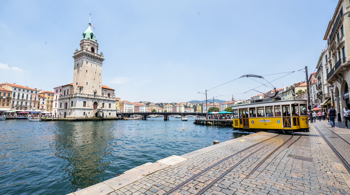
The logistics of navigating two countries in a single journey require careful coordination of transit methods. High-speed rail is a prominent feature for connecting major Spanish hubs, such as the AVE service between Barcelona, Madrid, and Seville 6. This method is valued for its efficiency and the ability to traverse vast distances of the Spanish interior in a matter of hours. However, cross-border rail infrastructure remains somewhat limited, which leads many tour operators to utilize deluxe motorcoaches for the transition between Madrid and Lisbon or Seville and the Algarve 3. These coaches are typically air-conditioned and equipped with wireless internet to accommodate long-distance travel through rural Extremadura or the Portuguese countryside 13.
For independent travelers or small-group participants, the use of open-jaw flights is a common strategy to optimize time. By arriving in a city like Lisbon and departing from Barcelona, travelers can avoid the necessity of a return journey to their starting point, effectively creating a linear path through the peninsula 21. Airport transfers and porterage are often included in managed tour packages to reduce the friction of international travel 13. The mobility requirements for these tours are generally classified as moderate to active, with many historical sites requiring significant walking on cobbled streets or climbing steps in medieval walled towns like Obidos and Toledo 1 10. Travelers are often advised to verify the mobility rating of specific itineraries, as historic quarters frequently lack modern accessibility infrastructure 6.
Regulatory Framework and International Entry Protocols
International travel to Spain and Portugal is governed by the regulations of the Schengen Area, of which both nations are members. Currently, citizens from countries like the United States generally require a valid passport with at least six months of remaining validity for entry 26 27. However, a significant regulatory shift is approaching with the implementation of the European Travel Information and Authorization System (ETIAS). Starting in 2025, it is expected that all visitors from previously visa-exempt countries will be required to obtain an ETIAS authorization prior to departure 25. This digital system is designed to enhance security within the European Union and will involve a mandatory application process for travelers entering the Schengen zone 25.
In addition to entry requirements, travelers should remain cognizant of the health and safety guidelines provided by official government entities. The UK Foreign, Commonwealth and Development Office (FCDO) and the U.S. Department of State provide continuous updates regarding travel advisories, entry restrictions, and safety protocols for both Spain and Portugal 26 28. These advisories often cover practical considerations such as local laws, strikes, or environmental factors like extreme heat during the summer months. To avoid these extreme conditions, the industry standard suggests visiting during the shoulder seasons of spring and autumn 21. Planning resources from official national tourism authorities, such as Spain.info and Visit Portugal, offer detailed guidance on local customs and essential travel documentation 29 30.
Market Analysis of Specialized and Thematic Itineraries
The market for Spain and Portugal tours has diversified significantly to accommodate specific demographic interests and travel styles. Small-group tours, often limited to 14 to 28 participants, focus on off-the-beaten-path experiences and deeper cultural immersion 9 20. One emerging trend is the development of gender-specific itineraries, such as those designed for women, which highlight the historical and contemporary contributions of women in Iberian society 9. These programs may include visits to female-run wineries in Extremadura or creative workshops in Lisbon that foster intergenerational connections 9. Such specialized tours often command a higher price point due to their niche focus and smaller group sizes.
Another segment of the market focuses on luxury and rail-centric travel. These itineraries prioritize premium accommodations, such as historic quintas in the Douro Valley or paradores in Spain, which are government-run hotels located in converted castles and monasteries 16. River cruising on the Douro River has also become a popular extension for land-based tours, offering a scenic perspective of the northern Portuguese wine country 14. Conversely, budget-conscious travelers may opt for basic service levels that utilize public transportation and shared accommodations, focusing on social interaction and group activity 20. Regardless of the price tier, most itineraries now include flexible booking options and travel protection plans to mitigate the risks associated with international travel changes 1 4.
Sources
- Go Collette
- Globus Tours
- Expat Explore (Highlights)
- Expat Explore (Explorer)
- Collette (Exploring Iberia)
- Vacations by Rail
- TourRadar (Essential)
- Firebird Tours
- EF Go Ahead Tours
- Grand European Travel
- Excite Travel
- TravelManagers Australia
- The Travel Lady
- Non-Stop Travel
- EF Educational Tours
- Ventresca Travel (Flavors)
- On The Go Tours
- Travel with Mary-Gail
- Costsaver US
- Just Travel Deals
- Intrepid Travel
- Trafalgar
- G Adventures
- Rick Steves
- European Union
- U.S. Department of State (Spain)
- U.S. Department of State (Portugal)
- UK Foreign, Commonwealth & Development Office
- Spain.info (Official Tourism Portal)
- Visit Portugal (Official Tourism Portal)
Authored by MyTrendSpot team