Ex-Military Tactical Gear: A Comprehensive Review of Equipment Standards and Market Trends
The acquisition and utilization of ex-military tactical gear represents a specialized segment of the outdoor and professional equipment market. This equipment, often sourced through government liquidation or manufactured to meet rigorous defense specifications, serves a dual purpose for both professional operators and prepared civilians who require high-durability solutions 26. The market encompasses a broad range of items, from load-bearing vests and ballistic protection to specialized footwear and modular storage systems, all designed to function in high-stress environments 12.
The Framework of Surplus Distribution and Grading
The primary source for authentic ex-military tactical gear is the federal surplus system, where government agencies dispose of equipment that is no longer in active service. This inventory is typically offered through approved channels such as the U.S. General Services Administration (GSA), which facilitates the transition of personal property into the public sphere 26. Items found in this market often carry condition ratings to help buyers assess their remaining utility. For example, Grade 1 items are typically classified as being in like-new condition, while Grade 2 items represent used equipment that remains functional despite visible wear 13.
Surplus gear is not limited to domestic inventory. International equipment, such as British Desert DPM combat vests or German Flecktarn Goretex wet weather gear, is also prevalent in the market 13. These items provide insight into the diverse engineering approaches taken by different global defense forces. Some organizations even specialize in upcycling these materials: for instance, genuine Bundeswehr surplus is sometimes modified with Cordura poacher pockets and reflective panels to enhance its utility for modern field applications 22.
Material Standards and Technical Durability
One of the defining characteristics of ex-military tactical gear is the use of high-performance materials like 1000D Cordura nylon. This fabric is widely recognized for its resistance to abrasion and tearing, making it the industry standard for tactical organization and gear management 6. Professional-grade backpacks, such as the 40L assault pack design, frequently utilize this material along with heavy-duty MOLLE (Modular Lightweight Load-carrying Equipment) webbing to allow for the attachment of specialized pouches for medical kits or communication devices 23.
| Gear Category | Primary Materials | Key Features |
|---|---|---|
| Plate Carriers | 500D to 1000D Cordura | Quick-release buckles, internal mesh cooling |
| Footwear | Leather, Ripstop Nylon | AR670-1 compliance, moisture-wicking liners |
| Storage Systems | MOLLE Webbing, Y-Strap compression | Clamshell opening, internal mesh organization |
| Protective Shields | UHMWPE, AR500 Steel | NIJ Level III or IV ratings |
Engineering innovations also extend to hydration and apparel. Advanced hydration systems are designed with materials that maintain water quality and resist mechanical stress, even during high-intensity field use 5. Similarly, combat apparel such as the Xpedition or Pro Flex pants often incorporates ripstop technology and specialized cargo placement to support high-movement environments 15. These technical specifications ensure that the equipment remains operational long after its initial military procurement cycle has ended.
Ballistic Protection and Personal Safety Metrics
A critical component of the ex-military tactical gear sector is ballistic protection, including body armor and shields. Most protective equipment in this category is evaluated against standards set by the National Institute of Justice (NIJ). Level III and Level III plus armor, often constructed from AR500 steel or composite materials like UHMWPE, are designed to protect against rifle-caliber threats 19. Specialized armor carriers, such as the SPAV-AW model, are engineered to support SAPI or ESAPI plates while utilizing harness systems that balance load carriage with wearer comfort 16.
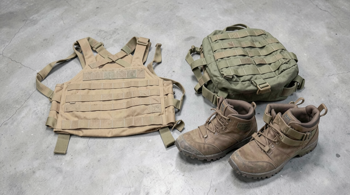
Personal protection equipment also includes ballistic shields and specialized vests with soft armor inserts. For example, some shields are rated to NIJ 0101.07 RF1 standards, providing protection against specific high-velocity projectiles 7. Many of these systems incorporate anti-sweat mesh pads and ventilated interior linings to mitigate the physical strain of long-term wear 24. These features are particularly valued by law enforcement and security professionals who require gear that meets established safety metrics while providing operational longevity.
Global Manufacturing and Professional Application
The manufacturing of tactical equipment is a global enterprise, with centers of excellence in the United States, Israel, and Southeast Asia. Companies like Source Tactical Gear in Israel have over 30 years of experience developing soldier systems and ballistic solutions for security forces worldwide 5. In the United States, manufacturers like Armorguard and Spec-Ops Brand focus on domestic production, with some facilities maintaining a monthly output of up to 30,000 pieces to support military tenders and government defense projects 14.
This professional gear is increasingly utilized by emergency medical services (EMS) and first responders. Apparel lines like the 24-7 Series are frequently used by paramedics due to their durability and specialized utility pockets 15. The expansion of e-commerce platforms has also made professional-grade equipment more accessible to outdoor enthusiasts and those in the private security sector, allowing for the procurement of full uniform setups and duty-ready accessories through single-source retailers 17.
Valuation and Market Accessibility
Economically, ex-military tactical gear offers a distinct value proposition compared to newly manufactured commercial equivalents. Surplus items are typically priced between 30% and 70% below the cost of new equipment, depending on their rarity and condition 28. This pricing model makes high-specification gear more accessible to individuals and departments with strict budgetary constraints. Furthermore, wholesale and OEM (Original Equipment Manufacturer) models allow for the mass production of proven designs, such as the 72-hour bug-out bag, for retail distribution 23.
In addition to direct purchases, veterans in the United States may have access to vocational rehabilitation and employment (VR&E) benefits that facilitate training for roles involving technical equipment and defense logistics 25. Programs like VetSuccess on Campus (VSOC) further support veterans pursuing education in fields relevant to equipment engineering and military technology 25. This integration of professional service experience with technical gear knowledge continues to drive the evolution of the market.
Regulatory Considerations and Operational Integrity
While ex-military tactical gear is highly durable, its use is subject to specific regulatory frameworks and operational considerations. Some states impose restrictions on the purchase and possession of body armor, requiring buyers to verify local compliance before acquisition. Maintenance is also a critical factor: ballistic plates and protective garments must be inspected for structural integrity, as exposure to extreme temperatures or mechanical stress can degrade their protective capabilities over time 19.
Operational integrity also depends on the modularity of the gear. Systems like the HRT Quarter Belt allow for the customization of loadouts without reweaving MOLLE components, enabling users to swap sections for medical, range, or duty roles as mission requirements change 18. This modularity, combined with rigorous testing by industry professionals, ensures that the gear remains effective. Professionals are encouraged to source gear from authorized dealers to ensure the authenticity of the products and the validity of any manufacturer warranties that may apply to the equipment 17.
Sources
- Big Al Tactical
- Phantom Tactical
- Condor Outdoor
- Summit Tactical
- Source Tactical Gear
- Spec-Ops Brand
- RTS Tactical
- Liontac Armament
- ACETAC
- Guerrilla Tactical
- G2 Tactical
- FKTG Tactical
- ODGG Supply
- Armorguard Tactical Gear
- Tru-Spec
- MOS Tactical
- PX Supply / IssueWire
- HRT Tactical Gear / Soldier Systems Daily
- Tactical Scorpion Gear
- All American Military Surplus
- MCS Gearup / AccessNewswire
- KommandoStore
- PANOAR Tactical
- Chief Miller Apparel
- U.S. Department of Veterans Affairs
- U.S. General Services Administration
- 5.11 Tactical
- Market Averages for Military Surplus
Authored by MyTrendSpot team