Ex-Military Forklifts: A Technical Analysis of Surplus Material Handling Equipment
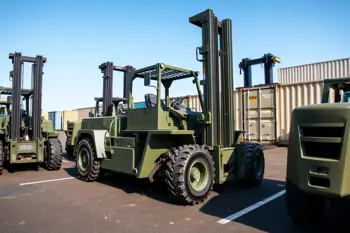
Ex-military forklifts represent a specialized segment of material handling equipment (MHE) that has undergone a transition from defense logistics to the industrial sector. These vehicles, often designated as surplus government property, are categorized by their rugged construction and high operational durability compared to standard warehouse units. Analysts observing the liquidation of these assets note that they frequently emerge from various branches of the armed forces with distinct mechanical enhancements designed for austere environments and heavy-duty logistics operations in varied international climates.
Technical Specifications and Heavy-Duty Capabilities
Ex-military forklifts are often defined by extreme lifting capacities and reinforced frames to support military supply chain demands. For example, the Hyster H32.00-16 is a notable ex-military container handler designed for massive payloads, capable of managing shipping containers in port or field environments 1. Similarly, the Valmet Sisu 1612 is a 4x4 16-ton forklift that provides significant lifting power while maintaining mobility on uneven surfaces 2. These units are distinct from commercial counterparts because they often prioritize structural integrity and extreme load thresholds over the compact footprints required for narrow-aisle indoor warehousing.
The mechanical architecture of these machines typically involves high-power diesel engines and specialized transmissions. For instance, the Steinbock 2500kg 4x4 FUG forklift is a common utility model used for medium-weight logistics across varied terrain 3. These machines are frequently built with 4-wheel drive systems and high ground clearance to ensure they can operate in sandy, muddy, or unpaved conditions where a standard rear-wheel-drive forklift would fail 4. The inclusion of reinforced hydraulic systems and weatherproofing further underscores the engineering intent to provide reliable performance in unpredictable field scenarios across global military theaters.
Explosion-Proof Designs for Hazardous Environments
A critical subset of the ex-military forklift market includes explosion-proof (EX) models, which are engineered for operation in hazardous or volatile environments. These units are essential for handling explosive materials, flammable gases, or combustible dust within military arsenals and chemical processing sites 5. Models such as the Drexel FL40AC-EX and FL60AC-EX are battery-powered and UL listed for use in Type EX Class I and Class II hazardous areas 5. These machines must adhere to strict safety ratings, such as the ATEX and IECEx standards, which categorize zones based on the likelihood of an explosive atmosphere being present 6.
The technical requirements for explosion-proof handling equipment include non-sparking components, non-magnetic materials, and corrosion-resistant surfaces 6. In Zone 1 or Zone 2 environments, where flammable gases may occur occasionally or for short durations, specialized forklifts must be used to prevent the ignition of vapors or dusts 6. The maintenance of these EX-rated units is highly specialized, as any mechanical modification could potentially compromise the safety certification required for industrial operation in high-risk zones. Many of these units are retired from military service due to age rather than mechanical failure, retaining significant utility for the pharmaceutical and petrochemical sectors.
Rough Terrain Performance and Specialized Mobility
Rough terrain performance is a hallmark of military-grade material handling equipment. The Manitou MH25-4, a 2.5-ton rough terrain forklift, features specialized front and rear tires, such as 280/80R20 and 27X10-12, to maintain traction on soft soil 7. Furthermore, the Eager Beaver MKII is a unique ex-military forklift capable of road travel, allowing it to move between work sites independently before performing tasks such as pallet movement or heavy vegetation removal 8. These machines are valued in construction and agriculture for their ability to navigate slopes and obstacles that would impede standard industrial equipment.
| Equipment Model | Capacity (Metric Tons) | Primary Terrain Type | Drivetrain Feature |
|---|---|---|---|
| Hyster H32.00-16 | 32.0 | Industrial/Port | Heavy Chassis |
| Valmet Sisu 1612 | 16.0 | Rough Terrain | 4x4 Drive |
| Steinbock FUG | 2.5 | All-Terrain | 4x4 Utility |
| JCB 524 | 2.4 | Variable | Telehandler Arm |
| Manitou MH25-4 | 2.5 | Rough Terrain | High Traction Tyres |
Lifecycle and Acquisition Through Government Channels
The process of acquiring ex-military forklifts typically involves government disposal services and specialized auctions. In the United Kingdom, equipment like the 2007 JCB 524 telehandler often comes from Ministry of Defence (MOD) fleet contracts, showing relatively low usage hours, such as 1273 hours 9. In the United States, the Defense Logistics Agency (DLA) facilitates the disposal of surplus military assets through portals like GovPlanet 4. These auctions provide a transparent mechanism for civilians and commercial entities to procure heavy machinery that has reached its scheduled retirement date within the military lifecycle 10.
Many of these units are sold in as-is condition, meaning they have not been refurbished prior to sale. Buyers often find that while the acquisition cost is lower than new equipment, there are inherent risks regarding the immediate operational status of the vehicle 4. However, certain auction houses provide detailed specifications, such as VIN numbers, engine types, and recorded running hours, to assist in the evaluation process 7. The availability of these assets fluctuates based on defense budget cycles and the decommissioning of specific military vehicle programs or logistical hubs globally.
Maintenance Realities and Mechanical Preservation
Maintenance of ex-military forklifts presents a unique set of challenges related to parts availability and technical documentation. Many of these machines use military-spec components that are no longer in active production or are proprietary to the original defense contractor 4. Consequently, operators must often rely on specialized technical manuals (TMs) to diagnose mechanical, electrical, or hydraulic faults 4. For instance, a mobile forklift engineer must be proficient in working across diesel, LPG, and electric models while ensuring that repairs comply with safety standards such as LOLER and PUWER 11.
Preventive maintenance plans are essential for machines that may have sat idle in storage or been used in high-intensity field operations. Historical records for machines like the 1998 Ex-truck diesel forklift show that even with low running hours, such as 1708 hours, age-related wear on seals and hydraulic lines is common 12. Specialized service providers focus on the remanufacturing of older chassis, replacing internal combustion engines with modern lithium-ion batteries and updated controllers 13. This process allows the robust steel frames of ex-military units to remain in service while meeting modern efficiency and emission standards.
Regulatory Compliance and Safety Standards
Before an ex-military forklift can be integrated into a commercial operation, it must meet strict regulatory compliance and safety standards. In many jurisdictions, this involves a thorough inspection and certification to ensure the machine is fit for purpose and safe for operators 4. Standards like LOLER (Lifting Operations and Lifting Equipment Regulations) and PUWER (Provision and Use of Work Equipment Regulations) are mandatory in the UK for all material handling equipment used in a workplace 11. These regulations ensure that the lifting mechanisms, brakes, and safety features are fully functional and capable of handling rated loads safely.
The 360-degree view of these assets reveals that while their durability is a major benefit, the operational costs can be influenced by the need for specialized training. Operating a heavy-duty container handler or a rough terrain 4x4 requires specific certifications that may differ from standard indoor forklift licenses. Safety remains the paramount concern, especially when dealing with older units that may lack the modern ergonomic features or electronic stability controls found in contemporary models. Prospective operators must account for the reality that while these machines are built to last, they require rigorous ongoing oversight to ensure they remain safe and compliant in a civilian industrial setting.
Sources
- exarmyuk.com/50546-hyster-h32-00-16-ex-military-container-handler/
- exarmyuk.com/50473-valmet-sisu-1612-4x4-16-ton-forklift/
- exarmyuk.com/50519-steinbock-2500kg-fug-forklift/
- govplanet.com/Forklifts
- hkequipment.com/forklifts/explosion-proof-forklifts/
- zapworx.com.au/ex-forklifts-ex-pallet-trolley-jack/
- sbauction.com.au/item/241305-1-2018-manitou-mh25-4-2-5t-rough-terrain-forklift/
- fatllama.com/uk/i/225-eager-beaver-mkii-ex-military-forklift
- gpsv.co.uk/products/2007-jcb-524-ex-mod-fleet-gp40603-36km42/
- dla.mil/Disposition-Services/Offers/Sell-Property/
- linkedin.com/in/miles-butler-612486207
- machineryline.com/-/auction/diesel-forklifts/Ex-truck--26043019525995464900
- handlingequipmentonline.com/p/ep-equipment-remanufactured-li-ion-forklift-truck-efxz301e/
Authored by MyTrendSpot team