Ex-Military Boots: A Technical Overview of Surplus Footwear Durability and Regional Specifications
Ex-military boots are a distinct category of high-performance footwear sourced from national defense inventories, consisting of items previously issued to personnel or held as overstock within military supply chains. These products are often identified as genuine army surplus, signifying they originate from authentic military stocks rather than commercial reproductions 1. The market for these items is established upon the premise of durability, as the gear is engineered to withstand the rigorous demands of active service 1. Footwear in this category ranges from service-worn items to unissued stock, all characterized by construction standards that prioritize structural integrity and protection in various operational environments.
Definition and Origins of Genuine Military Surplus Footwear
The term ex-military boots refers to footwear that has been decommissioned or released from official military stocks through formal disposal processes. These items are frequently marketed as ex-issue or service-worn gear, underscoring their historical role within armed forces 1. Because military procurement involves large-scale contracts with specialized manufacturers, surplus inventory often includes high-specification models that were originally intended for elite or special forces units, such as the German Army special forces 1. These products are distinct from civilian tactical boots because they are built to meet the specific technical requirements defined by defense ministries, often featuring reinforced components that are not standard in the mass consumer market.
Surplus footwear arrives in the marketplace through established liquidation channels managed by government agencies, such as the Defense Logistics Agency Disposition Services in the United States 12. This agency handles the disposal of excess Department of Defense property, which includes personal equipment like combat and desert boots 12. The transition from military inventory to the public market allows for the analysis of different production runs and contract variants. For instance, the Australian Army utilized a specific general-purpose boot pattern between 1994 and 1999, which featured a color often described as poo green, leading many service members to professionally blacken the leather to meet personal or unit preferences 2.
Technical Material Standards and Waterproofing Technologies
One of the defining features of high-tier ex-military boots is the integration of advanced membrane technologies, most notably Gore-Tex. This material is employed in models like the Meindl SF Combat GTX and the AKU Pilgrim GTX to ensure waterproof performance while maintaining the breathability necessary for long-term wear 1, 4. In specialized tactical designs, the footwear must repel external moisture while simultaneously allowing internal perspiration to escape 4. Research into waterproof tactical boots shows that high-quality seam-sealed membranes are often tested to withstand over 10,000 flex cycles to ensure they remain effective throughout the lifespan of the boot 11. This level of testing is standard for footwear designated for army missions and wet environments.
The physical composition of these boots typically involves a combination of full-grain leather, suede, and synthetic textiles like Cordura. For example, the LOWA Zephyr MK2 Hi utilizes a mix of 65 percent suede leather and 35 percent textile, providing a balance of flexibility and abrasion resistance 7. Many models also incorporate specialized support systems, such as the Monowrap exoskeleton found in LOWA designs, which surrounds the foot to provide stability on uneven terrain 7. Additionally, the use of Thinsulate insulation is common in winter-specific models, such as the Czech military winter boots, which use a removable liner to trap heat in freezing conditions 9. These materials are selected based on their ability to meet rigorous government requirements for thermal regulation and protection.
Regional Variations in Combat and General Purpose Footwear
Ex-military boots vary significantly based on the country of origin and the environmental conditions for which they were designed. The German Army often issues high-leg boots like the Meindl SF Combat or the Haix Commander GTX, which are noted for their reinforced construction and specialized tread patterns 1,
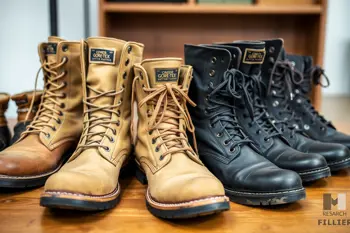
Historical variants also provide insight into the evolution of military footwear. East German leather jackboots, for example, represent a traditional pull-on pattern that utilizes thick leather construction and, in some cases, alternate rubber soles fitted during later refurbishment 7. Similarly, the South African Waxi boot features a unique history, with some variants utilizing an Anti-Track sole 10. This flat sole design was used to conceal troop movement by creating footprints that appeared washed out or aged, a critical feature for border operations 10. These variations highlight how military footwear is often a direct response to the specific tactical challenges of a given region or era.
Performance Metrics for Specialized Environmental Conditions
The operational effectiveness of military footwear is measured by its performance in specific environmental stressors, such as extreme heat, oil exposure, or rough terrain. Many tactical boots are engineered with outsoles that are resistant to oil, petrol, and contact heat, with some models like the Rockrooster Colmar capable of resisting temperatures up to 500 degrees Fahrenheit 8,
| Boot Category | Primary Use Case | Key Technical Component |
|---|---|---|
| Desert Combat | Arid, sandy environments | Breathable suede/Cordura 3, 11 |
| Winter Military | Freezing temperatures | Thinsulate/removable liners 9 |
| Special Forces | Heavy tactical use | Gore-Tex/Vibram outsoles 1, 11 |
| General Purpose | All-terrain movement | Full-grain leather/Rubber rand 2, 15 |
Grading Systems and Condition Assessments in the Surplus Market
Because ex-military boots are often sourced from used stocks, the surplus industry utilizes a standardized grading system to communicate the condition of the items to potential users. Grade 1 items are typically characterized as being in used but functional condition, often showing minor signs of wear, marks, or scratches but retaining significant operational life 3,
Condition assessments also account for the age and storage history of the footwear. For example, some surplus boots are listed as used/fair condition, which indicates the item is functional but may have repairs or significant patina 3,
Regulatory Oversight and Acquisition Channels for Military Property
In the United States and other regions, the sale of ex-military equipment is governed by strict regulations to ensure that only authorized items enter the civilian market. The General Services Administration (GSA) and the Defense Logistics Agency provide the primary framework for the distribution of federal surplus personal property 12,
Furthermore, the manufacturing of military boots is tied to specific government contracts that dictate every aspect of the design, from the coefficient of friction on the outsoles to the puncture resistance of the plates 11. Professional manufacturers like Meindl, Haix, and YDS must adhere to these standards to maintain their standing as government suppliers 1,
Sources
- armyandoutdoors.com
- commandoaustralia.com
- armyandoutdoors.com.au
- uniformstores.co.uk
- goarmy.co.uk
- armyandoutdoors.co.nz
- beckettsstore.com
- chiefmillerapparel.com
- gomilitar.com
- kommandostore.com
- bestmilitaryboots.com
- dla.mil
- defense.gov
- gsa.gov
- roddandgunn.com
Authored by MyTrendSpot team