Ex-Military Body Armor: A Comprehensive Investigative Guide to Surplus Systems, Standards, and Safety Risks
What Qualifies as Ex-Military Body Armor
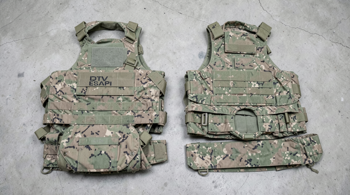
Ex-military body armor refers to ballistic protection systems that were originally issued to armed forces personnel and have since exited active service through retirement, demilitarization, or surplus disposition programs. The most widely recognized U.S. systems include the Interceptor Body Armor (IBA), which was the dominant system used across most military branches during the 2000s, and its successor, the Improved Outer Tactical Vest (IOTV), which entered service in 2007 and remains the standard-issue carrier for conventional U.S. Army ground combat units as of 2026. 1 The U.S. Marine Corps transitioned separately to the Modular Tactical Vest (MTV) and the Scalable Plate Carrier (SPC), while the IBA Outer Tactical Vest still saw limited use with U.S. Navy sailors aboard warships as recently as 2017. 2
These systems were not single-component products. The IBA, for example, consisted of a core Outer Tactical Vest shell made with Kevlar KM2 fiber, designed to protect against fragmentation and 9mm submachine gun threats, supplemented by removable accessories including throat protectors, yoke-and-collar units, groin protectors, and deltoid axillary protectors. 3 Hard plate inserts designated SAPI (Small Arms Protective Insert) and ESAPI (Enhanced Small Arms Protective Insert) provided rifle-threat protection when inserted into dedicated internal pockets. The IOTV Gen 4, fully loaded with ESAPI front and rear plates plus Enhanced Side Ballistic Inserts (ESBI) and soft-armor supplements, weighs approximately 33 pounds in its complete configuration. 4
How Surplus Military Armor Reaches Secondary Markets
When the U.S. Department of Defense retires equipment, it typically routes the material through the Defense Logistics Agency (DLA) Disposition Services, the official DoD organization responsible for managing excess property. This represents one of the primary pathways through which ex-military equipment can enter public resale channels. 5 The General Services Administration (GSA) operates a parallel program through GSA Auctions, a federal platform used to sell excess and surplus U.S. government property no longer needed by agencies. 6 From these official channels, items frequently flow further downstream into military surplus retailers and collector markets.
Surplus stores and specialty online retailers commonly list OTV and IOTV carrier shells, accessory components, and related tactical gear. Listings from established surplus dealers describe items such as the Interceptor OTV Base Vest in Army Combat Uniform (ACU) digital camouflage, noting MOLLE and PALS compatibility, but explicitly state that all included Kevlar soft armor inserts are expired and carry significantly reduced protective capabilities. 7 The same expired-armor notation appears consistently across Desert Combat Uniform (DCU) and other pattern variants from the same era, reflecting the standard depreciation timeline applied to ballistic materials.
NIJ Certification and Ballistic Degradation Realities
The National Institute of Justice (NIJ) publishes the ballistic resistance standards used to evaluate and certify body armor products sold in the U.S. market. A critical regulatory nuance is that NIJ certification is tied to a specific manufacturer's design and configuration at the time of testing. That certification is not transferable and is not guaranteed to remain valid once armor has been sold, used, stored under variable conditions, or modified in any way. 8 This means that ex-military armor, regardless of its original specification, cannot be represented as currently certified to NIJ standards once it has passed through secondary channels.
Physical degradation is a parallel concern. Ballistic panels deteriorate over time due to UV exposure, moisture infiltration, and mechanical wear from use. Kevlar fiber, the core ballistic material in most IBA and IOTV soft-armor inserts, carries a generally recognized service life of approximately five years before its protective properties are considered expired. 9 Ceramic plates face different failure modes; visible cracking, impact damage from prior rounds, or compromised backing layers can dramatically reduce their effectiveness. Law enforcement agencies and military units typically destroy used body armor to prevent it from failing in the field or being misused by unauthorized individuals. 10
Legal and Regulatory Constraints on Ex-Military Armor
Several overlapping legal frameworks govern the trade of ex-military ballistic equipment. The International Traffic in Arms Regulations (ITAR), administered by the U.S. Department of State, classifies military-grade ballistic protection as defense-related equipment and strictly limits its export, even when the items are labeled as surplus. 11 Domestic restrictions also apply at the state level; states including Connecticut, New York, and California impose specific prohibitions on body armor sales that affect both buyers and sellers. Surplus dealers active in this market explicitly note that certain items cannot be shipped to these states or to third-party forwarding services.
Many ballistic inserts, particularly SAPI and ESAPI ceramic plates, are legally considered controlled items and technically remain U.S. government property if they have not been officially demilitarized through proper DoD channels. 12 Major e-commerce platforms, including eBay, prohibit listings of body armor in compliance with legal standards and safety requirements, reflecting the complexity of verifying compliance in a general retail environment. 13 These restrictions are not uniformly enforced across all channels, which means buyers may encounter surplus items being sold without adequate legal or safety disclosures.
Comparison of Key U.S. Military Armor Systems
| System | Service Entry | Primary User | Core Material | Plate Compatibility |
|---|---|---|---|---|
| PASGT | Early 1980s | All U.S. branches | Kevlar fiber | Fragmentation only |
| Interceptor IBA / OTV | Late 1990s | All U.S. branches | Kevlar KM2 | SAPI / ESAPI |
| IOTV Gen 1-4 | 2007 | U.S. Army | Kevlar / ceramic hybrid | ESAPI / ESBI |
| Modular Tactical Vest (MTV) | Mid-2000s | U.S. Marine Corps | Soft armor + ceramic | SAPI / ESAPI |
| Modular Scalable Vest (MSV) | Ongoing fielding | U.S. Army (replacing IOTV) | Advanced composite | ESAPI |
The IOTV, produced by manufacturers including Point Blank Body Armor, BAE Systems, KDH Defense Systems, Protective Products Enterprises, UNICOR, and Creative Apparel Associates, first saw combat use with U.S. Army units from mid-2007 onward and has since been deployed across conflicts including operations in Afghanistan, Iraq, and the Russo-Ukrainian War as part of international assistance programs. 1 The newer Modular Scalable Vest is in the process of replacing the IOTV across the Army inventory, meaning a new generation of IOTV equipment will eventually enter surplus channels over the coming years.
Civilian and Non-Military Alternatives to Ex-Military Gear
For individuals seeking ballistic protection who are not active military personnel, the market for purpose-built civilian and law enforcement armor has matured considerably. Modern plate carriers built by domestic manufacturers incorporate military design lineage, MOLLE compatibility, and NIJ-certified ballistic inserts, without the legal ambiguity or degradation risks associated with ex-military surplus. Manufacturers active in this space produce Level III, Level IIIA, and Level IV systems using ceramic and ultra-high-molecular-weight polyethylene (UHMWPE) plates, the same material families used in current military configurations. 14 Ceramic plate construction works by shattering rifle rounds on impact and using a polyethylene or aramid fiber backing to capture residual energy, keeping backface deformation within NIJ-defined safe limits.
The global body armor market continues to grow, driven by military modernization programs, rising law enforcement procurement, and increasing geopolitical tensions. According to Future Market Insights analysis, demand for lightweight, high-performance body armor is accelerating as defense agencies, police forces, and private security organizations seek systems that balance ballistic capability with reduced user fatigue. 15 Manufacturers have significantly increased research and development investment to improve ballistic protection, reduce product weight, and enhance user mobility, with innovations in advanced fibers, smart materials, and lightweight protective systems generating next-generation solutions. For any individual evaluating protection options, independently certified new armor purchased through legitimate channels provides verifiable performance data that ex-military surplus, by its nature, cannot guarantee.
Sources
- Wikipedia - Improved Outer Tactical Vest: en.wikipedia.org/wiki/Improved_Outer_Tactical_Vest
- Wikipedia - Interceptor Multi-Threat Body Armor System: en.wikipedia.org/wiki/Interceptor_multi-threat_body_armor_system
- HandWiki - Interceptor Multi-Threat Body Armor System: handwiki.org/wiki/Engineering:Interceptor_multi-threat_body_armor_system
- Bulletproof Zone - What Body Armor Does the Military Use (2026): bulletproofzone.com/blogs/bullet-proof-blog/what-body-armor-does-the-military-use
- Defense Logistics Agency (DLA) Disposition Services: dla.mil/DispositionServices/
- GSA Auctions - U.S. General Services Administration: gsaauctions.gov
- Grandpops Army Navy - U.S. Military ACU Interceptor OTV Base Vest: grandpopsarmynavy.com/products/u-s-military-acu-interceptor-otv-base-vest-body-armor-w-add-ons
- National Institute of Justice - Body Armor Safety Initiative: nij.ojp.gov/topics/articles/body-armor-safety-initiative
- Military.com - The Dangers of Buying Surplus Body Armor: military.com/daily-news/2016/09/06/the-dangers-of-buying-surplus-body-armor.html
- National Institute of Justice - Body Armor Standards: nij.ojp.gov/topics/equipment/body-armor
- U.S. Department of State - Directorate of Defense Trade Controls (ITAR): pmddtc.state.gov/ddtc_public
- eBay - Police and Military Items Policy: ebay.com/help/policies/prohibited-restricted-items/police-military-items-policy?id=4322
- eBay Help - Prohibited and Restricted Items: ebay.com/help/policies/prohibited-restricted-items/police-military-items-policy
- Chase Tactical - Ceramic Body Armor Plates Guide: chasetactical.com/guides/ceramic-body-armor-plates
- FMI Blog - Global Body Armor Market Witnesses Strong Growth (July 2026): fmiblog.com/2026/07/02/global-body-armor-market-witnesses-strong-growth-as-demand-for-high-performance-ballistic-protection-accelerates/
Authored by MyTrendSpot team