Ex-Military Storage Containers: A Technical Report on Global Logistics and Repurposing
Ex-military storage containers are standardized ISO shipping units designed to provide mobile shelters or portable storage for government and defense operations 1. Often referred to as Conex boxes or Milvans, these units are engineered for extreme durability and fast deployment in harsh environmental conditions 22. This report analyzes the technical characteristics and the growing surplus market that allows these decommissioned assets to be utilized for civilian and industrial applications.
Engineering Standards of Military Shipping Containers
The primary appeal of ex-military containers lies in their robust structural engineering. Most units are constructed from 14-gauge corrugated steel and feature reinforced corner castings that facilitate stacking and lifting via heavy-duty crane systems 22. These containers typically utilize Corten steel, also known as weathering steel, which is specifically designed to resist corrosion and atmospheric degradation over long-term outdoor exposure 9. This material choice ensures that the units remain structurally sound even after 7 to 12 years of active service in global freight routes 9.
Internally, these containers are equipped with 28mm marine-grade plywood flooring supported by steel cross-members, providing significant load stability for heavy equipment 8. The standard 20-foot used container provides approximately 150 square feet of interior space and can support a maximum permissible load of up to 60,000 lbs 9. For larger requirements, the 40-foot High Cube (HC) variant offers a height of 9 feet 6 inches, providing roughly one additional foot of vertical clearance compared to standard ISO models 16. This extra height is critical for storing oversized inventory or implementing optimized racking systems 14.
Condition Grading and Surplus Classifications
When ex-military units enter the secondary market, they are categorized by standardized condition grades to determine their suitability for various tasks. The most sought-after grade for logistics is Cargo Worthy (CW), which indicates the container has been inspected and meets strict requirements for international transport 9. For those requiring stationary storage only, the Wind and Watertight (WWT) grade ensures that the unit is free from significant holes and that the door seals prevent environmental ingress 11. These units are guaranteed to protect contents from rain, pests, and wind exposure 14.
| Condition Grade | Description | Typical Application |
|---|---|---|
| Cargo Worthy (CW) | Certified for international shipping with CSC plate | Export, rail transport, long-term freight |
| Wind & Watertight (WWT) | Sealed against weather; structural integrity intact | On-site tool storage, inventory overflow |
| As-Is / Decommissioned | Potential for cosmetic rust, dents, or wear | Modular conversion, workshop frames |
Buyers often encounter units in historical military colors, such as RAL 6005 (deep mint green), which was a standard for the British Army and is frequently approved by planning authorities for landscape integration in rural areas 2. While used containers often exhibit surface rust, scrapes, or minor dents from prior service, these are generally cosmetic and do not compromise the core functional performance of the Corten steel shell 17. Secure door operation and structural soundness are the primary benchmarks for professional grade inspections 10.
Economic Comparison: Acquisition vs. Rental Fees
For organizations and individuals seeking long-term storage, purchasing a used shipping container is often analyzed as a capital investment against the recurring costs of self-storage facilities. Research indicates that the average monthly cost for a 20ft by 10ft storage unit in the United States is approximately $280, totaling over $3,300 annually 7. In contrast, a 20-foot used shipping container can often be acquired for a total price ranging between $1,100 and $1,800, depending on location and local inventory levels 7, 9.
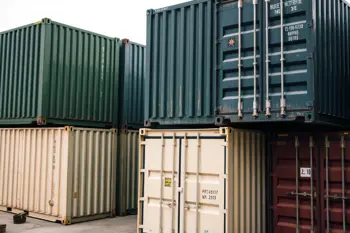
Larger 40-foot High Cube units typically see higher historical market averages, with prices ranging from $2,200 to $5,400 depending on the specific condition and location 3, 11. Ownership provides added advantages such as long-term reliability, full control over modifications, and freedom from rising annual rental fees 7. These units are also noted for their high resale value, as the underlying steel and structural components retain utility even after decades of use as stationary storage or modified workshops 10.
Specialized Variants and Modification Potential
Beyond standard dry storage units, the ex-military and marine surplus markets offer specialized variants designed for specific environmental needs. Refrigerated containers, known as reefers, are insulated units equipped with integrated machinery to maintain controlled internal temperatures ranging from -25°C to +25°C 15. Ex-marine reefers feature stainless steel interior linings and aluminum T-bar floors designed for maximum airflow, making them suitable for static cold storage or temperature-sensitive logistics 13, 15.
Other versatile models include the 20-foot open-side container, which features fully openable side panels and lockable end doors 21. This design is particularly useful for loading irregularly shaped items or for use as a mobile workspace 21. Many decommissioned units are further modified with insulation, custom windows, or passive ventilation ports to reduce condensation 19. These modifications allow the containers to serve as field hospitals, armories, or even comfortable housing for personnel in remote operational settings 1.
The Role of Storage in Military Readiness
In a tactical context, storage systems are considered strategic assets that determine mission success. The ability to access gear quickly and protect sensitive equipment is critical for military operations, where readiness and accountability are paramount 18. High-security units like TA-50 gear lockers are often integrated into container-based storage to ensure that weapons, protective gear, and mission kits are organized and instantly accessible 23. This approach mitigates safety hazards and improves the efficiency of base operations 18.
Military families also utilize portable storage solutions during Permanent Change of Station (PCS) moves, which occur frequently at major installations such as Fort Liberty in North Carolina or Fort Hood in Texas 24, 28. These moves often involve tight timelines and temporary housing gaps, making secure container storage a necessity for managing household goods 29. Large-scale infrastructure projects, such as NATO-funded complexes in Poland, rely on controlled-humidity warehouses and long-term equipment storage to maintain the mission-readiness of thousands of vehicles 20.
Regulatory Channels and Procurement Protocols
The disposal and sale of surplus military property in the United States are strictly regulated. The Defense Logistics Agency (DLA) manages the Disposition Services program, which oversees the distribution and sale of excess Department of Defense assets, including shipping and storage containers 22, 30. Official platforms such as GSA Auctions allow the government to offer federal property to the public through competitive bidding, ensuring a transparent disposal process for containers and industrial equipment 31.
Procurement through private vendors often involves the reconditioning of these surplus units to meet commercial standards. Services can include repainting in specific RAL colors, installing high-security lock boxes, and verifying that the units meet ISO 1496 and ISO 668 standards 14, 22. While ex-military containers offer significant structural advantages, buyers must verify the presence of a valid CSC plate if the unit is intended for future international shipment, as decommissioned units may be sold for static storage only 4, 10.
Sources
- ExBox Containers - Shipping Containers for Military Infrastructure
- ContainerEU - 40-foot Green Container RAL 6005
- Cascade Container - 40ft High Cube Ex-hire Shipping Container
- Boshboxes - 40ft Used High Cube Storage Containers
- Conex Storage Shipping Containers - 40ft Used Shipping Container
- Pentalver Container Sales - 40ft High Cube Ex-hire Shipping Container
- ExBox Containers - Shipping Containers for Storage
- L&P Container - 40ft Used High Cube Shipping Container
- ExBox Containers - Used 20ft Shipping Container
- Boshboxes - 20ft Used Shipping Containers
- Universal Containers LLC - 40FT Preloved Shipping Container
- OneStop Container Store - 40ft HC Insulated Container Ex-reefer
- Boshboxes - 40ft Used High Cube Marine Refrigerated Containers
- Containexco - 40ft High Cube Used Shipping Container
- Boshboxes - 20ft Used Ex-Marine Refrigerated Containers
- ExBox Containers - Used 40ft High Cube Container
- Alto Container - 40FT High Cube Used Shipping Container
- Bradford Systems - Military Storage Solutions for Optimal Preparedness
- Cargo Container Store - Decommissioned AS IS 20ft Storage Container
- AECOM - Designing a Military Storage and Maintenance Complex in Poland
- ExBox Containers - Used 20ft Open Side Container
- General Research - ISO Standards and Military Logistics Overview
- AW Systems - TA-50 Gear Lockers for Military Storage
- Badger Box Storage - Military Storage In Fayetteville, NC
- Ammo Can Man - Renewed Military Storage and MRE Combo
- EIN Presswire - CMG Containers Industrial Use in Chicago
- Military.com - How Military Logistics Work
- Amy’s Attic - Fort Hood Storage Units for Military Moves
- Amy’s Attic - Simplifying Military PCS Moves
- Defense Logistics Agency - Surplus Property Disposal
- GSA Auctions - Federal Property Sales
Authored by MyTrendSpot team