Selecting the Perfect Compact Gazebo for Your Deck: A Comprehensive Guide
Fast Facts:
- Compact gazebos boost deck outdoor living usability.
- Trend info: increased demand for versatile small deck shelters for modern urban spaces.
Understanding Your Deck's Needs for a Compact Gazebo
Selecting the ideal compact gazebo for your outdoor space involves more than just picking an aesthetically pleasing design; it requires careful consideration of functionality, durability, and how it integrates with your existing deck outdoor living area. A well-chosen deck gazebo can transform a simple deck into a shaded oasis, an outdoor dining room, or a private retreat, enhancing your home's value and your quality of life. This guide will walk you through the crucial steps to ensure you select a gazebo that perfectly complements your deck and lifestyle, turning your vision of a perfect outdoor sanctuary into a tangible reality.
Key Considerations When Choosing a Compact Gazebo
Before making any purchase, a thorough evaluation of your specific requirements is paramount. The goal is to find a compact gazebo that serves its purpose effectively while seamlessly blending with your home's architecture and your personal aesthetic. Paying attention to these foundational elements will prevent costly mistakes and ensure lasting satisfaction with your new outdoor addition, particularly when optimizing your deck outdoor living.
Assessing Your Deck's Dimensions and Layout
The first and most critical step is to accurately measure your deck. Consider not just the total area, but also any obstructions like railings, planters, or existing furniture. For a compact gazebo, precise measurements are non-negotiable to ensure proper fit and safe installation. Think about the desired footprint of your deck gazebo and how much usable space you want to retain around it. Will it impede traffic flow or block desirable views? Mapping out the proposed location with chalk or tape can provide a tangible visual aid, helping you visualize the true gazebo size for deck installation and identify potential spatial conflicts, thereby optimizing your overall deck outdoor living experience.
Material Durability and Weather Resistance
The climate in your region will heavily influence the best material choice for your small deck shelter. Aluminum frames are lightweight and rust-resistant, ideal for coastal areas, while steel offers greater strength for windier conditions but requires more maintenance against rust. Canopy materials, whether soft-top fabric or hard-top polycarbonate, vary in UV protection, water resistance, and longevity. Soft tops are typically more affordable and offer seasonal flexibility, whereas hard tops provide superior protection and are designed for year-year use. Understanding these material properties is crucial for long-term durability and minimal maintenance of your compact gazebo.
Style and Aesthetic Integration
Your deck gazebo should complement your home's architectural style and your personal taste. Modern homes might benefit from sleek, minimalist designs with clean lines, while traditional homes could be enhanced by gazebos with more ornate detailing or classic shapes. Consider the color palette of your home and existing outdoor decor. A cohesive design ensures that your compact gazebo feels like an intentional extension of your living space rather than an afterthought. The aesthetic appeal plays a significant role in creating an inviting deck outdoor living environment that you'll love spending time in.
Installation Requirements and Portability
Some compact gazebos are designed for permanent installation, requiring secure anchoring to your deck, while others offer greater portability, allowing them to be moved or stored during off-seasons. Assess your comfort level with DIY installation or factor in professional assembly costs. If you anticipate needing to relocate your small deck shelter, a lighter, more easily disassembled model would be preferable. Permanent fixtures often provide greater stability and a more integrated look, but they commit your deck space more definitively. This decision impacts not only initial setup but also future flexibility in your deck outdoor living arrangements.
Understanding Local Regulations and Permits
Before finalizing your choice, it is absolutely essential to check local building codes and homeowner association (HOA) regulations. Some areas have restrictions on the size, height, or type of structures that can be erected on a deck. A compact gazebo might still fall under these regulations, especially if it's a permanent fixture. Failure to obtain necessary permits can result in fines or the forced removal of your new deck gazebo. Early research into these requirements will save you significant headaches and potential expenses down the line, ensuring your new small deck shelter complies with all legal stipulations.
Comparing Popular Compact Gazebo Types
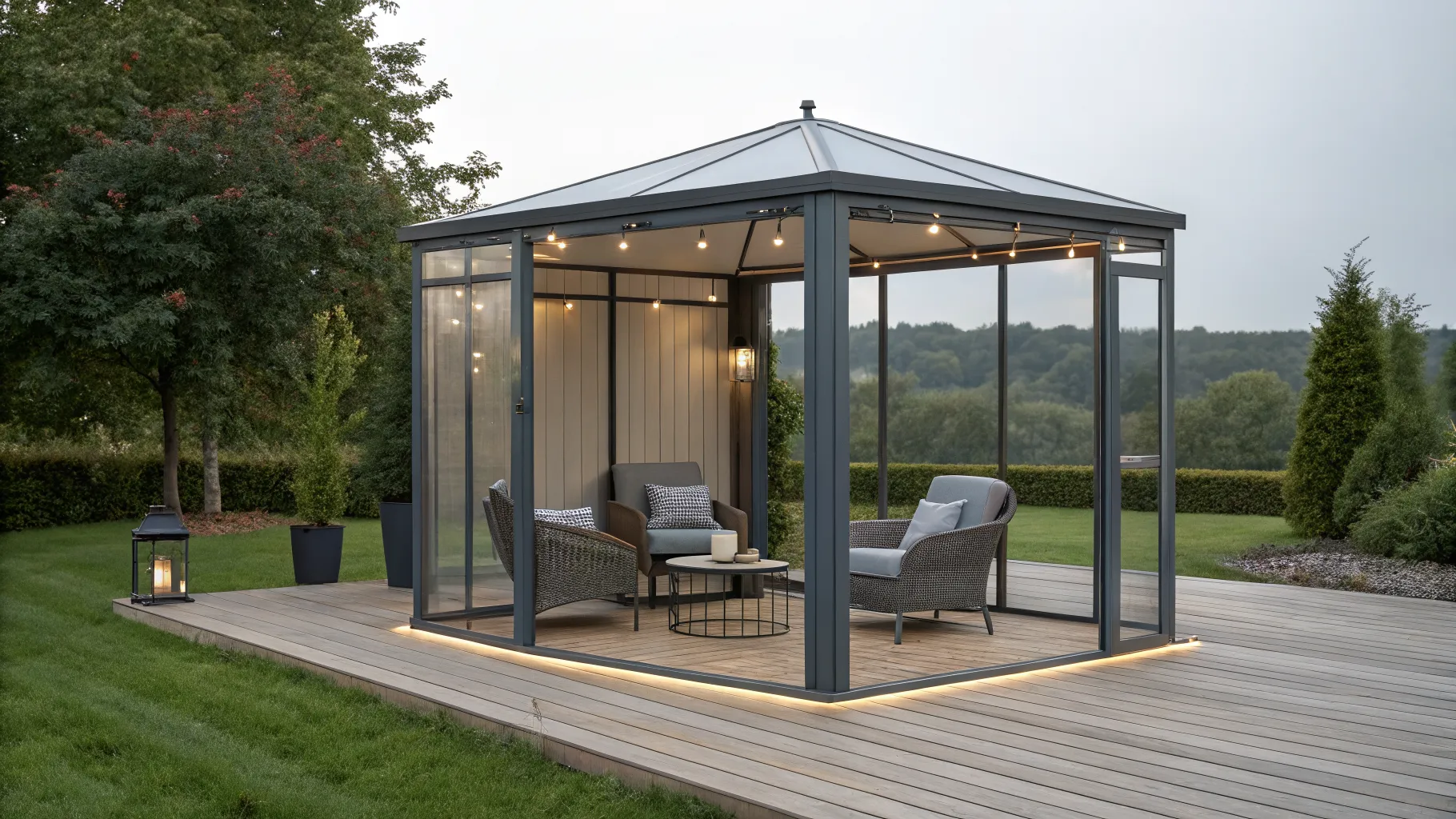
When considering a compact gazebo, the market primarily offers two main categories: soft-top and hard-top models. Soft-top gazebos, often featuring fabric canopies, are generally more affordable and offer excellent flexibility. They are easier to install and dismantle, making them perfect for seasonal use or for those who prefer to store their small deck shelter during harsh weather. However, their fabric canopies may require replacement after a few years due to sun exposure and general wear. Hard-top gazebos, on the other hand, typically feature sturdy metal, polycarbonate, or even wood roofs. These are significantly more durable and offer superior protection from the elements, designed for year-round use and capable of withstanding more severe weather conditions. While their initial cost and installation complexity are higher, hard-top models provide a more permanent and robust solution for enhancing your deck outdoor living experience, often requiring less maintenance over time. The choice between these depends heavily on your budget, climate, and desired longevity for your deck gazebo.
Practical Tips for Optimizing Your Deck Gazebo Experience
Regular Maintenance for Longevity
Regardless of the material, consistent maintenance is key to extending the life of your compact gazebo. For soft-top models, this means cleaning the fabric canopy regularly to prevent mold and mildew, and inspecting the frame for rust or loose connections. Hard-top gazebos benefit from periodic cleaning of the roof panels and frame, ensuring drainage systems are clear. Proactive maintenance helps preserve both the aesthetic appeal and structural integrity of your small deck shelter, ensuring it remains a comfortable spot for your deck outdoor living for years to come.
Enhancing Comfort with Accessories
To truly transform your deck gazebo into a comfortable outdoor retreat, consider adding accessories. Mosquito netting can provide protection from insects, allowing for uninterrupted evenings. Curtains or privacy panels offer additional shade and seclusion. Outdoor lighting, whether string lights or solar-powered lanterns, can create a warm and inviting ambiance. Comfortable outdoor furniture, like cushioned chairs or a small dining set, will complete the space, making your deck outdoor living area even more enjoyable.
Strategic Placement for Maximum Benefit
The placement of your compact gazebo can significantly impact its utility. Consider the sun's path throughout the day to ensure optimal shade during peak hours. If privacy is a concern, position the deck gazebo to block views from neighbors. Also, think about proximity to your home for easy access, especially if you plan to use it for outdoor dining. A well-thought-out placement ensures your small deck shelter provides maximum benefit and integrates seamlessly into your overall landscape design, enhancing the functionality of your entire deck outdoor living space.
Frequently Asked Questions
What is the ideal gazebo size for deck applications?
The ideal gazebo size for deck areas depends entirely on your deck's dimensions and the amount of space you wish to allocate. For a truly compact gazebo, sizes typically range from 8x8 feet to 10x10 feet. It's crucial to measure your deck accurately and consider clearances from railings, walls, and other obstructions. You should aim to leave at least 2-3 feet of clearance around the gazebo for comfortable movement and access, ensuring your deck outdoor living remains functional.
Can I install a deck gazebo on an elevated deck?
Yes, many deck gazebos are suitable for installation on elevated decks. The most important factor is ensuring the deck's structural integrity can support the weight of the gazebo, especially hard-top models which are heavier. Proper anchoring is critical for safety, preventing the gazebo from being lifted by strong winds. Always consult your deck builder or a structural engineer if you have concerns about your deck's capacity before installing a small deck shelter.
Are compact gazebos difficult to maintain?
Maintenance for a compact gazebo varies by material. Soft-top models generally require more frequent cleaning of the canopy and inspection for wear, often needing the canopy to be removed during winter. Hard-top models are typically lower maintenance, requiring only periodic cleaning of the roof and frame. Both types benefit from regular checks of fasteners and connections. Overall, neither type is excessively difficult to maintain, especially when integrating into your regular deck outdoor living routine.
References
- Outdoor Living Trends Report.
- Guide to Outdoor Structure Installation.
- Material Science for Exterior Fixtures.
- Homeowner's Association Guidelines for Deck Structures.
- DIY Network: Gazebo Selection and Setup.
Authored by MyTrendSpot team