Recognizing Skin Eczema: Early Signs and Treatment Options - A Clinical Overview for Patients and Caregivers
What Skin Eczema Is and Who It Affects
Eczema is an umbrella term covering a group of inflammatory skin conditions that damage the skin's protective barrier, allowing moisture to escape and irritants, allergens, and microbes to penetrate more easily. 1 The most common form, atopic dermatitis, accounts for approximately 80% of eczema cases in the United States and is estimated to affect just over 7% of adults and close to 11% of children in the country, totaling upwards of 31.6 million Americans. 2 Globally, the World Health Organization estimates eczema affects up to 20% of children and 3% of adults, making it one of the most prevalent skin disorders worldwide. 3
The condition is not contagious and cannot be spread from person to person. 4 However, it frequently runs in families alongside asthma and hay fever, a clustering clinicians refer to as the atopic triad. 5 Atopic dermatitis almost always begins in infancy or before age 5, and approximately 1 in 5 infants is affected, typically presenting between 2 and 6 months of age. 6 Despite its association with childhood, roughly 1 in 4 adults with eczema report that their symptoms first appeared after age 18, often in their 30s, 40s, or 50s, with no prior history. 7
Early Signs: What to Watch for Before the Rash Appears
Intense, persistent itching is the cardinal symptom of eczema and is required for a clinical diagnosis. 8 A clinically significant detail is that the itch frequently precedes any visible skin changes by hours or even a full day. Many people feel itching on a spot that still appears completely normal to the eye before redness or a rash develops. 9 In children, this pre-rash phase may manifest as increased nighttime scratching, rubbing against bedding, or repeatedly touching a specific area of skin.
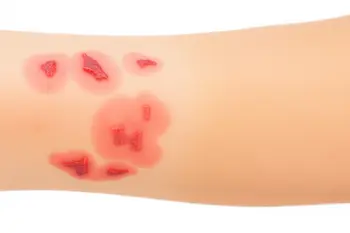
Once visible signs emerge, the earliest include dry, rough patches, slight discoloration, and small raised bumps that may weep clear fluid when scratched. 10 Eczema commonly appears on the face, hands, feet, ankles, wrists, neck, upper chest, and in skin folds such as behind the knees and inside the elbows, though it can occur anywhere on the body. 11 In infants, the cheeks, forehead, and scalp are typical first sites, while in older children the condition tends to migrate to elbow creases and behind the knees. Recognizing the itch-first pattern and the characteristic locations gives caregivers an early opportunity to seek assessment before symptoms intensify.
How Symptoms Vary by Skin Tone, Age, and Severity
One of the most clinically important and frequently overlooked aspects of eczema recognition is that its appearance changes significantly across different skin tones. On lighter skin, eczema typically presents as pink or red patches. On olive skin, it often appears purplish. On medium to darker skin tones, eczema commonly manifests as brown, gray, or ashen patches rather than red, which frequently leads to missed or delayed diagnoses. 12 This color variation applies across all eczema types, including in infants, where patches may appear brown, gray, or purple on darker-toned skin.
Severity adds another layer of variability. Mild eczema covers small areas and causes intermittent itching. Moderate to severe eczema disrupts sleep, covers wider body surface areas, and can involve thickened, leathery skin from chronic scratching, a change dermatologists call lichenification. 13 Research shows that patients with moderate to severe atopic dermatitis experience an average of nine flare-ups per year, with individual episodes lasting from days to weeks depending on severity and trigger exposure. 14 Adults who develop eczema later in life often find it presents on the hands, eyelids, lower legs, and neck rather than the classic childhood locations.
Common Triggers and the Itch-Scratch Cycle
Eczema flares are driven by a combination of internal and external triggers. Clinically documented triggers include stress, allergens such as pollen and pet dander, irritants like harsh soaps and detergents, extreme temperatures, low environmental humidity, sweating, and certain infections. 15 Contact allergens including nickel, fragrances, preservatives in cosmetics, and poison ivy are frequent causes of allergic contact dermatitis specifically. Irritant contact dermatitis, which is more common than the allergic subtype, results from repeated chemical damage to the skin and is especially prevalent among people in occupations involving prolonged wet-hand exposure, such as nurses, beauticians, and kitchen workers. 16
A critical mechanism that sustains eczema is the itch-scratch cycle. When the skin is scratched, the already-weakened barrier sustains further physical damage, inflammation intensifies, and the threshold for the next flare lowers. Dermatologists note that scratching during sleep or while distracted, such as when watching television, can keep a person locked in this inflammatory cycle even when all other management steps are being followed correctly. 17 Dietary factors, including intolerances to gluten or specific foods that drive systemic inflammation, can also worsen flares in susceptible individuals, though food is not a universal trigger for all patients. 18
Evidence-Based Treatment Options: A Step-Up Framework
There is currently no permanent cure for eczema, but a well-structured, step-up treatment approach can control symptoms effectively for most patients. Daily moisturizing applied immediately after bathing is the foundational step for all eczema management plans, as it helps lock in moisture and partially restore barrier function. 19 For mild to moderate flares, topical corticosteroids are the most widely prescribed first-line anti-inflammatory option. Potency and duration of use are selected based on the patient's age, the body site being treated, and the severity of the flare. 20
For patients who require a non-steroidal prescription option, topical calcineurin inhibitors, specifically tacrolimus and pimecrolimus, are available and are particularly useful for sensitive areas such as the face and eyelids. 21 When topical treatments are insufficient for moderate to severe disease, phototherapy (light therapy) represents the next step. 22 For eligible patients with moderate to severe atopic dermatitis that does not respond adequately to topical therapies, the biologic medication dupilumab has received FDA approval and targets the specific immune pathways driving eczema inflammation. 23 Janus kinase (JAK) inhibitors represent an additional prescription class for certain cases of moderate to severe atopic dermatitis, with use depending on patient eligibility and safety considerations. 24
When to Seek Medical Assessment and Infection Warning Signs
Several clinical signs indicate that eczema has moved beyond home management and requires prompt professional evaluation. Honey-colored crusting on the skin surface, increased warmth around a rash, spreading redness, pus, or the presence of fever can all signal a secondary bacterial infection complicating the eczema. 25 Clinicians may prescribe antibiotics or targeted antimicrobial treatments in these circumstances. A separate but serious complication is eczema herpeticum, a viral infection that presents as painful clusters of uniform blisters and constitutes a medical emergency requiring immediate assessment.
Beyond infection, other indicators that warrant a dermatology consultation include eczema that disrupts sleep consistently, symptoms that are worsening or spreading despite adherence to a moisturizing routine, and eczema affecting sensitive areas such as the eyelids or genitals. 26 For children, open sores, crusting yellow skin, or eczema severe enough to interfere with daily activities and rest are clear signals that pediatric dermatology input is needed. Early professional intervention reduces the risk of long-term skin complications, including scarring and chronic lichenification, and improves quality of life for both patients and caregivers.
Eczema vs. Related Skin Conditions: Key Distinguishing Features
Eczema is frequently confused with other inflammatory skin conditions, particularly psoriasis and simple dry skin. Distinguishing these conditions matters because treatment approaches differ substantially. Psoriasis typically produces thick, well-defined red or discolored plaques covered in silvery or gray scales, with sharper borders than eczema lesions. Eczema lesions are generally thinner, less sharply bordered, and associated with more intense itching than psoriasis plaques. 27 Simple dry skin, by contrast, usually improves within a day of applying standard moisturizer, does not produce the characteristic raised bumps or oozing seen in eczema, and does not involve the immune system activation that underlies eczema as a chronic inflammatory condition.
Other eczema subtypes also warrant distinction. Dyshidrotic eczema presents as small blisters specifically on the palms of the hands and soles of the feet. Discoid eczema (also called nummular eczema) produces circular or coin-shaped patches of irritated, scaly skin. Stasis dermatitis affects the lower legs and is typically connected to circulatory problems rather than the genetic and immune factors driving atopic dermatitis. 28 An accurate clinical diagnosis by a qualified dermatologist, based on symptom history, rash pattern, family history, and sometimes patch testing, remains the appropriate pathway for determining which condition is present and which treatment plan is indicated.
Sources
- Acibadem International Hospitals Group – Eczema: Symptoms, Triggers, and Skin Barrier Care (acibademinternational.com)
- Sharecare – Eczema: Symptoms, Causes, Types and Treatment (sharecare.com)
- PureVital / World Health Organization reference – Eczema Symptoms: Key Signs to Watch For (purevitalofficial.com)
- National Eczema Association via HealthVetted – Eczema: Symptoms, Causes and Treatment (healthvetted.com)
- RespoFlow – What Does Eczema Look Like (respoflow.com)
- Blueberry Pediatrics – Baby Eczema: Everything Parents Need to Know (blueberrypediatrics.com)
- Campbell Dermatology – Sudden Onset Eczema in Adults: Causes and What to Do (campbellderm.com)
- HarlanMD – Eczema Symptoms: How to Recognize Them by Type and Severity (harlanmd.com)
- TextsSprout – What Does Eczema Look Like: Visual Guide by Type, Location and Skin Tone (textssprout.com)
- DermExplained – Eczema Symptoms and Treatment: What It Looks Like and How to Calm It Fast (dermexplained.com)
- WebMD / American Academy of Dermatology – Atopic Dermatitis Symptoms and Body Locations (aad.org)
- HarlanMD – Eczema in Adults: Pictures and How to Identify It (harlanmd.com)
- HarlanMD – Eczema Symptoms by Severity and Lichenification (harlanmd.com)
- Cleveland Clinic – Having an Eczema Flare-Up? Here's What To Do (health.clevelandclinic.org)
- Cleveland Clinic – Eczema Flare-Ups: Common Triggers and Relief (health.clevelandclinic.org)
- Canadian Dermatology Association – Eczema: Contact and Irritant Types (dermatology.ca)
- Healthline / Dr. Raechele Cochran Gathers – Expert Tips for Managing Eczema Flare-Ups (healthline.com)
- Cleveland Clinic – Is There an Eczema Diet? Here's What Works (health.clevelandclinic.org)
- American Academy of Dermatology – Eczema Treatment: Moisturizers and Emollients (aad.org)
- National Eczema Association – Topical Corticosteroids for Eczema (nationaleczema.org)
- National Eczema Association – Topical Calcineurin Inhibitors (nationaleczema.org)
- American Academy of Dermatology – Phototherapy for Eczema (aad.org)
- FDA – Drug Approval for Dupilumab (Dupixent) for Atopic Dermatitis (fda.gov)
- FDA – Upadacitinib (Rinvoq) Prescribing Information for Atopic Dermatitis (fda.gov)
- Centers for Disease Control and Prevention – Bacterial Infections Complicating Skin Conditions (cdc.gov)
- Happy Skin Pediatric Dermatology – Recognizing the Right Time to Act on Atopic Dermatitis in Children (happyskindermatology.com)
- Cleveland Clinic – Eczema vs. Psoriasis: What's the Difference? (health.clevelandclinic.org)
- Medical News Today – Eczema: Symptoms, Treatment, and More (medicalnewstoday.com)
Authored by MyTrendSpot team