When Should You Seek Help for Skin Eczema: A Journalistic Guide to Red Flags and Professional Care
When dealing with skin irritation, individuals often ask when should you seek help for skin eczema rather than continuing with basic home care routines. While mild eczema is common and often manageable with simple daily care, certain changes in the skin require professional medical attention. Understanding the distinction between a typical dry patch and a potentially dangerous complication is essential for maintaining skin health. Failing to recognize the early warning signs of complications can lead to systemic infections or prolonged physical discomfort.
The Core Difference Between Typical Flares and Secondary Infections
Eczema, or atopic dermatitis, is a chronic inflammatory skin condition driven by skin barrier dysfunction 8. In a healthy state, the outer layer of the skin acts as a protective shield. In individuals with eczema, this barrier is compromised, meaning the skin loses moisture easily and allows irritants, allergens, and microbes to enter 14, 27. A typical flare-up usually causes dryness, redness, scaling, and localized itching 7. However, when pathogenic bacteria or viruses penetrate this broken barrier, secondary infections can develop rapidly.
Bacterial infections, most commonly caused by Staphylococcus aureus, present distinct clinical signs that differ from standard inflammation. This state, often referred to as infected eczema, requires targeted medical intervention rather than standard over-the-counter moisturizers. A viral infection, such as the herpes simplex virus on eczematous skin, represents a medical emergency known as eczema herpeticum 1, 8. Recognizing these variations prevents delays in receiving appropriate medical therapies.
Crucial Bacterial Red Flags and When to Seek Immediate GP Advice
Bacterial complications are among the most frequent reasons patients require professional medical consultations. When the skin barrier is severely broken due to scratching or extreme dryness, bacteria can colonize the area, leading to localized or spreading infections. Recognizing these symptoms early can prevent deeper skin complications like cellulitis 1.
Clinical signs of a bacterial infection on eczema-prone skin include the following developments:
- Weeping and Leaking: Fluid or pus continuously oozing from active skin patches 1.
- Crusting: The appearance of yellow or golden, honey-colored crusts on the skin surface 1.
- Pus-Filled Spots: Small pustules forming within or around the inflamed eczema patches 1.
- Increased Temperature: The affected skin feels hot or warm to the touch, or the patient develops a systemic fever 1.
- Worsening Pain: The area transitions from being intensely itchy to noticeably sore, tender, or painful 1.
Eczema Herpeticum: Recognizing a Viral Medical Emergency
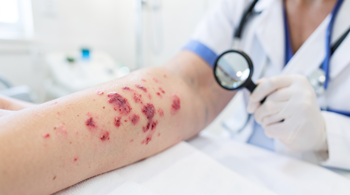
Unlike bacterial infections which may develop over several days, certain viral complications require immediate emergency medical evaluation. Eczema herpeticum is a severe, rapidly spreading infection caused by the herpes simplex virus on skin already compromised by atopic dermatitis 1, 8. This condition can spread across large areas of the body within hours and carries a risk of serious systemic complications if left untreated.
Medical guidance from the NHS and clinical databases highlights that individuals must seek urgent care if they notice a sudden outbreak of painful, fluid-filled blisters or open, circular sores 1, 8. This rash is typically accompanied by a high temperature, swollen lymph nodes, and a general feeling of being unwell 1. Immediate antiviral therapy is necessary to control the viral replication and protect the patient from secondary systemic issues.
When Persistent Symptoms Disrupt Daily Life and Sleep
Even in the absence of an active infection, severe eczema can impose a heavy physical and emotional burden on a person. Clinicians do not assess eczema severity based on skin redness alone; they also evaluate the overall impact on the individual's quality of life, sleep patterns, and daily functioning 9. Intensive itching that keeps an individual awake at night is a primary clinical indicator that current management strategies are insufficient.
Research indicates that adults with moderate-to-severe atopic dermatitis experience an average of nine flare-ups per year, with symptoms lasting from several days to weeks 11. Chronic sleep disruption from nighttime scratching can lead to daytime fatigue, decreased productivity, and elevated risks of mental health challenges such as depression and anxiety 8, 15. When the physical discomfort begins to interfere with work, school, or daily routines, a consultation with a dermatologist is highly recommended to explore stronger, systemic management plans.
Evaluating Eczema Severity: The Four Clinical Lenses
To determine the most appropriate treatment pathway, healthcare providers evaluate eczema through multiple clinical lenses rather than relying on a single symptom. This structured approach helps differentiate between mild, moderate, and severe cases, ensuring that patients receive treatments tailored to their specific disease burden.
| Clinical Lens | Assessment Criteria | Indicators of Higher Severity |
|---|---|---|
| Extent | Body Surface Area (BSA) involved | Widespread patches or involvement of high-impact zones like the face, hands, or eyelids 9. |
| Intensity | Physical appearance of active lesions | Severe redness, deep skin cracking, swelling, and bleeding 9. |
| Subjective Burden | Impact on daily living | Intense, uncontrollable itching and chronic sleep loss 9. |
| Temporal Pattern | Behavior of the disease over time | Frequent, rapidly recurring flare-ups that fail to clear with standard moisturizers 9. |
The Limitations of Self-Care and When to Escalate Treatment
Most mild eczema cases respond well to standard self-care measures, such as applying thick, fragrance-free emollient creams within minutes of bathing, avoiding harsh soaps, and keeping the home environment hydrated 2, 16. However, when these basic measures fail to yield improvement after one to two weeks, continuing to rely solely on over-the-counter products can delay recovery and lead to unwanted side effects.
In some global regions, such as Malaysia, dermatologists have noted a rising prevalence of severe eczema cases linked to the prolonged, unmonitored use of over-the-counter steroid creams purchased without medical supervision 24. While topical corticosteroids are highly effective for calming acute flares, long-term or improper use can result in skin thinning, stretch marks, and fragile skin 24, 25. A dermatologist can offer safer, modern non-steroidal alternatives, including calcineurin inhibitors, PDE-4 inhibitors, or advanced systemic therapies like biologics and JAK inhibitors for severe, persistent cases 8, 26, 27.
Sources
- Medcare Health Clinic - Eczema Red Flags Guide: https://medcare-healthclinic.com/eczema-red-flags-urgent-medical-advice/
- WePrescribe - When Should You See a Doctor About Eczema: https://weprescribe.co.uk/blog/when-should-you-see-a-doctor-about-eczema/
- AccessGP - Eczema and Dermatitis: https://accessgp.co.uk/knowledge-base/dermatology-skin-allergies/eczema-dermatitis/
- Dermatology Group of The Carolinas - Dry Skin vs Eczema: https://dermgroup.org/dry-skin-vs-eczema-when-is-it-time-to-see-a-dermatologist/
- Dermatology Associates Skin & Cancer - When to See a Dermatologist for Severe Eczema: https://www.769skin.com/blog/1294019-when-to-see-a-dermatologist-for-severe-eczema/
- Medical News Today - Eczema Symptoms and Treatment: https://www.medicalnewstoday.com/articles/14417
- iCliniq - How to Manage Eczema Flares and Prevent Complications: https://www.icliniq.com/qa/eczema/how-do-i-manage-eczema-flares-and-prevent-complications
- TeleDirectMD - Eczema Symptoms, Causes, Treatment & Guidelines: https://teledirectmd.com/health-guides/eczema-atopic-dermatitis-guide/
- Medcare Health Clinic - Mild vs Moderate vs Severe Eczema: https://medcare-healthclinic.com/eczema-severity-mild-moderate-severe/
- Wellbeing Magazine - 5 Signs You Should Visit an Eczema Specialist: https://wellbeingmagazine.com/5-signs-you-should-visit-an-eczema-specialist-in-the-uk/
- Cleveland Clinic - Managing Eczema Flare-Ups: https://health.clevelandclinic.org/managing-eczema-flare-ups
- HealthVetted - Eczema Symptoms, Causes & Treatment: https://healthvetted.com/conditions/eczema
- Ubie Doctor's Note - Eczema Not Healing: https://ubiehealth.com/doctors-note/eczema-never-healing-skin-reacting-steps-47-manual41e4
- Ubie Doctor's Note - Eczema Causes, Symptoms and Evidence-Based Treatments: https://ubiehealth.com/doctors-note/eczema-causes-symptoms-types-evidence-treats-57-991e10
- Sharecare - Eczema Overview: https://www.sharecare.com/skin-health/eczema
- Healthline - Expert Tips for Managing Eczema Flare-Ups: https://www.healthline.com/health/ask-the-expert-whats-making-my-eczema-worse
- Emil A. Tanghetti, MD - Managing Severe Eczema: https://dermatologyandlasersurgery.com/how-can-you-manage-severe-eczema-when-nothing-seems-to-work/
- Convene Health - 5 Signs Your Skin Rash Needs a Dermatologist: https://convenehealthcare.com/articles/5-signs-your-skin-rash-needs-a-dermatologist-not-otc-cream
- Campbell Dermatology - Sudden Onset Eczema in Adults: https://campbellderm.com/blog/sudden-onset-eczema-in-adults/
- DermExplained - Eczema Symptoms and Treatment: https://dermexplained.com/eczema-symptoms-and-treatment/
- Vitals Vault - Eczema Explained in Plain English: https://www.vitalsvault.com/conditions/eczema
- Everfit Healthy - Winter Rash or Eczema: https://everfithealthy.com/2026/01/01/winter-rash-or-eczema-a-dermatologist-explains-the-difference-and-when-to-seek-help/
- Liv Hospital - How Do You Know If You Have Eczema: https://int.livhospital.com/how-do-you-know-if-you-have-eczema-signs-and-symptoms-explained/
- NaturalHealth Malaysia - Over-the-Counter Creams and Delayed Eczema Care: https://naturalhealth.my/over-the-counter-self-purchased-creams-delayed-care-behind-severe-eczema-cases-in-malaysia/
- HealthCentral - Steroids vs. Non-Steroids for Eczema: https://www.healthcentral.com/condition/eczema/steroids-vs-non-steroids
- iCliniq - New Eczema Creams and Injections: https://www.icliniq.com/qa/eczema/are-new-eczema-creams-or-injections-safe-for-long-term-use
- The Bombay Skin Clinic - Eczema Treatment in Mumbai: https://www.thebombayskinclinic.com/eczema-treatment/
Authored by MyTrendSpot team