Hair Loss: What Causes It and How to Address It - A Medical and Journalistic Guide to Modern Solutions
Noticing extra strands of hair in the brush, on a pillow, or circling the shower drain is a common experience that often causes sudden concern 5, 14. While shedding a modest amount of hair is a normal physiological function, progressive thinning or sudden bald patches may point to underlying genetic, hormonal, or environmental factors 1, 15. Hair loss, clinically referred to as alopecia, is a multifactorial condition that impacts millions of individuals globally across all demographics 4, 15. Successfully managing this condition relies entirely on identifying the specific biological mechanism disrupting the hair growth cycle 18.
The Physiological Cycle of Hair Growth
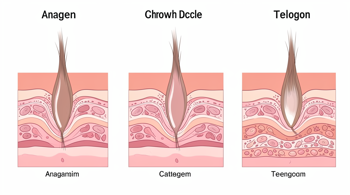
To understand why hair falls out, it is first necessary to examine the normal lifecycle of a hair follicle. Every individual hair on the human scalp operates independently, transitioning continuously through three distinct developmental phases 5, 11. The first phase is the anagen phase, which represents the active growth period 11, 17. During this stage, which typically spans between two and eight years, the hair follicle is actively producing cells that form the hair shaft, determining the maximum potential length of the hair 11, 17. Roughly 90% of the hairs on a healthy scalp reside in this growth phase at any given time 17.
Following the active growth stage, the follicle enters the catagen phase, a brief transitional period lasting approximately two to three weeks 11, 17. During the catagen phase, the hair follicle shrinks and detaches from its localized blood supply, causing the hair strand to stop growing 11, 17. Finally, the follicle enters the telogen phase, which is a resting state lasting about two to four months 11. At the conclusion of this resting period, the older hair strand is shed, and the follicle re-enters the anagen phase to initiate a new cycle 17. Daily shedding of 50 to 150 hairs is considered normal and does not impact overall hair density because new hairs emerge simultaneously 11, 20.
Genetic and Hormonal Causes of Hair Loss
Androgenetic alopecia, commonly known as male-pattern or female-pattern baldness, represents the most prevalent cause of progressive hair thinning worldwide 12, 15. This hereditary condition is driven by a genetic sensitivity of the scalp hair follicles to dihydrotestosterone (DHT), a potent androgen hormone converted from testosterone 13, 18. When susceptible follicles are exposed to DHT, they undergo a process called miniaturization 18, 21. This progressive shrinking shortens the active anagen phase and produces increasingly finer, shorter hair strands until the follicles stop producing visible hair altogether 6, 13.
The presentation of androgenetic alopecia differs noticeably between genders 1, 17. In men, hair loss typically manifests in a highly predictable distribution, starting with a receding hairline at the temples or thinning at the crown of the head, often forming an 'M' shape 6, 8. In women, the hairline is generally preserved, but diffuse thinning occurs across the top and crown of the scalp, which often presents as a widening of the central hair part 1, 22. These genetic traits can be inherited from either the maternal or paternal side of the family 21.
Temporary Shedding and Telogen Effluvium
When the body experiences a significant physiological or psychological stressor, the normal hair growth cycle can be abruptly disrupted, resulting in a temporary condition known as telogen effluvium 12, 14. Under acute stress, high levels of the hormone cortisol force a large percentage of active anagen hair follicles to prematurely enter the resting telogen phase 5, 17. Approximately two to four months after the initiating trigger, these hairs are shed simultaneously, leading to sudden and diffuse hair thinning across the entire scalp 11, 14. Common triggers for telogen effluvium include:
- Severe physical illness or high fevers, such as those associated with systemic infections 12, 19.
- Major surgical procedures or physical trauma 24.
- Significant hormonal shifts, particularly the rapid decline of estrogen postpartum or during menopause 5, 16.
- Abrupt nutritional changes, severe caloric restriction, or rapid weight loss 7.
- Intense emotional distress, such as grief or major life changes 5.
Autoimmune, Inflammatory, and Scarring Alopescias
Not all forms of hair loss are limited to genetic thinning or temporary shedding. Alopecia areata is an autoimmune disorder where the body's immune system mistakenly targets the healthy hair follicles, causing hair to fall out in distinct, circular patches 4, 8. This condition can affect the scalp, beard, eyebrows, or eyelashes 1, 4. In some instances, the hair may regrow naturally without intervention within a year, while other cases require clinical management 2, 8.
A critical diagnostic distinction must be made between nonscarring alopecias, where the hair follicle remains intact and capable of regrowth, and scarring (cicatricial) alopecias 4, 19. Scarring alopecia involves irreversible, inflammatory damage that permanently destroys the hair follicles and replaces them with scar tissue 4, 19. This permanent loss can be triggered by chronic inflammatory diseases like lupus, fungal infections, or conditions like frontal fibrosing alopecia 12. Clinical evaluation by a dermatologist is essential if hair loss is accompanied by scalp pain, itching, burning, redness, or visible scaling 4, 15.
Nutritional Gaps and External Styling Factors
The metabolic demands of hair follicle cells are exceptionally high, making hair growth highly sensitive to nutritional status 14. Deficiencies in essential vitamins and minerals can impair follicle function and accelerate hair shedding 14, 19. Specifically, low levels of iron (serum ferritin) restrict oxygen delivery to the hair roots, while inadequate vitamin D levels compromise the signaling pathways necessary for initiating the growth phase 19, 24. Insufficient dietary protein also limits the raw materials required for keratin synthesis, leading to weak, brittle hair strands that break easily 3, 24.
Beyond internal health, physical styling habits play a direct role in follicle health. Traction alopecia is a form of hair loss caused by repetitive, prolonged tension on the hair roots, commonly resulting from tight ponytails, braids, hair extensions, or heavy dreadlocks 1, 4. If identified early and the physical tension is removed, the follicles can recover; however, chronic tension can lead to permanent follicle damage and localized scarring 4, 19. Excessive use of chemical relaxers, high-heat styling tools, and harsh serums can also weaken the hair shaft, leading to widespread breakage that mimics systemic hair loss 19.
Clinical Diagnostic and Treatment Pathways
Before initiating any therapy, a precise medical diagnosis is necessary to target the specific cause of hair loss 2, 18. Dermatologists utilize physical examinations, patient history surveys, and specialized diagnostic tests to evaluate scalp health 2. These tests may include a pull test to determine shedding severity, a scalp biopsy to examine follicle structures microscopically, or blood panels to check thyroid function, iron levels, and hormone balances 2, 3. Treatment plans are then tailored based on whether the hair loss is temporary, permanent, inflammatory, or hormonal in nature 2, 7.
| Therapy Type | Primary Mechanism | Target Population | Clinical Evidence Strength |
|---|---|---|---|
| Topical Minoxidil | Vasodilator that extends the anagen growth phase of the follicle 2, 24 | Men and women with pattern baldness 15 | Strong 24 |
| Oral Finasteride | Inhibits 5-alpha reductase to reduce systemic DHT levels 15, 18 | Men with androgenetic alopecia 15 | Strong 24 |
| Hormone Therapies | Blocks androgen receptors or balances estrogen levels 16 | Women with hormone-linked thinning 16 | Moderate 16 |
| Nutritional Support | Replenishes deficiencies in iron, vitamin D, or zinc 14, 24 | Individuals with documented deficiencies 24 | Moderate 24 |
| Surgical Restoration | Transplants DHT-resistant hair follicles to thinning areas 12, 18 | Individuals with stable donor hair areas 18 | Strong 12 |
Standard pharmaceutical interventions include topical minoxidil, an over-the-counter vasodilator that stimulates blood flow to the follicles, helping to slow shedding and encourage regrowth in 40% to 60% of users 2, 15. For men, oral finasteride is a prescription option that specifically blocks the conversion of testosterone to DHT 15, 18. When medical treatments are insufficient or follicles have been permanently lost, surgical hair transplantation remains an option, involving the relocation of active follicles from the back of the scalp to affected regions 12, 18. Early intervention remains the most reliable factor in preserving existing hair and preventing further thinning 15, 20.
Sources
- Mayo Clinic - Hair loss - Symptoms and causes (https://www.mayoclinic.org/diseases-conditions/hair-loss/symptoms-causes/syc-20372926)
- Mayo Clinic - Hair loss - Diagnosis and treatment (https://www.mayoclinic.org/diseases-conditions/hair-loss/diagnosis-treatment/drc-20372932)
- MedlinePlus - Hair Loss | Alopecia (https://medlineplus.gov/hairloss.html)
- Penn Medicine - Hair Loss (Alopecia) – Symptoms and Causes (https://www.pennmedicine.org/conditions/hair-loss-alopecia)
- Cleveland Clinic - 6 Reasons Why Your Hair Is Falling Out (https://health.clevelandclinic.org/why-is-my-hair-falling-out)
- Harvard Health - It's not too late to save thinning hair (https://www.health.harvard.edu/skin-and-hair-health/its-not-too-late-to-save-thinning-hair)
- Acibadem Hospitals Group - Hair Loss In Men and Women: Causes and Treatments (https://acibademinternational.com/health-library/hair-loss-in-men-and-women-causes-and-treatment-choices/)
- Health.com - 14 Surprising Causes of Hair Loss and How To Treat Them (https://www.health.com/why-is-my-hair-falling-out-7496590)
- VCU Health - A dermatologist's guide to hair loss treatments (https://www.vcuhealth.org/news/a-dermatologists-guide-to-hair-loss-treatments/)
- Prevention.com - Doctors Explain 16 Causes of Hair Loss and Thinning Hair (https://www.prevention.com/beauty/a71403731/doctors-explain-causes-of-hair-loss-and-thinning-hair/)
- Cleveland Clinic - How Much Hair Loss Is Normal and When To Worry (https://health.clevelandclinic.org/how-much-hair-loss-is-normal)
- Wikipedia - Hair loss (https://en.wikipedia.org/wiki/Hair_loss)
- Harvard Health - Treating hair loss in men: What works? (https://www.health.harvard.edu/skin-and-hair-health/treating-hair-loss-in-men-what-works)
- Atlantis Medical - What Causes Hair Loss and How to Stop It (https://atlantismedical.com.au/blog/what-causes-hair-loss/)
- HealthVetted - Hair Loss: symptoms, causes & treatment (2026) (https://healthvetted.com/conditions/hair-loss)
- The Well by Northwell - What Causes Hair Loss in Women? (https://thewell.northwell.edu/womens-health/what-causes-hair-loss-in-women)
- Geisinger - Causes of Hair Loss in Women (https://www.geisinger.org/health-and-wellness/wellness-articles/2025/12/04/17/20/causes-of-hair-loss-in-women)
- Curekey - Causes of Hair Loss: Genetic, Hormonal, Medical, and More (https://www.curekey.com/hair-loss/causes)
- Zenodo - A REVIEW ON PREVALENCE, CAUSES, AND TREATMENT STRATEGIES OF HAIR FALL AMONG MEN AND WOMEN (https://doi.org/10.5281/zenodo.17745971)
- Golden State Dermatology - 8 Signs You Should See a Dermatologist About Hair Loss (https://www.goldenstatedermatology.com/blog/8-signs-you-should-see-a-dermatologist-about-hair-loss/)
- The Well by Northwell - Why Do Men Go Bald? (https://thewell.northwell.edu/mens-health/why-do-men-go-bald)
- Isdin - What Causes Hair Loss & Baldness? 4 Potential Reasons (https://www.isdin.com/us/blog/beauty/hair-and-nails/what-causes-hair-loss-top-7-reasons/)
- What Causes Hair Fall - 12 Proven Reasons + How to Stop It (https://whatcauseshairfall.com/what-causes-hair-fall-guide/)
- DietarySupplement.ai - Hair Loss: Evidence on Biotin, DHT Blockers and Beyond (2026) (https://dietarysupplement.ai/conditions/hair-loss/)
Authored by MyTrendSpot team