Identifying Early Signs of Skin Cancer in Texas Residents: A Critical Guide
Fast Facts:
- Texas has high rates of skin cancer due to intense sun.
- Increased UV radiation elevates sun exposure risks for Texans.
Understanding the Common Early Signs of Skin Cancer in Texas Residents
Living in Texas means enjoying abundant sunshine, but it also means a higher prevalence of sun exposure risks, making it crucial for Texas residents to be vigilant about their skin health. Recognizing the early signs of skin cancer in Texas residents is not just beneficial, it is a life-saving skill that empowers individuals to seek timely medical intervention. This comprehensive guide will delve into the various indicators, risk factors, and preventative measures essential for safeguarding your skin and promoting effective melanoma early detection strategies in the state.
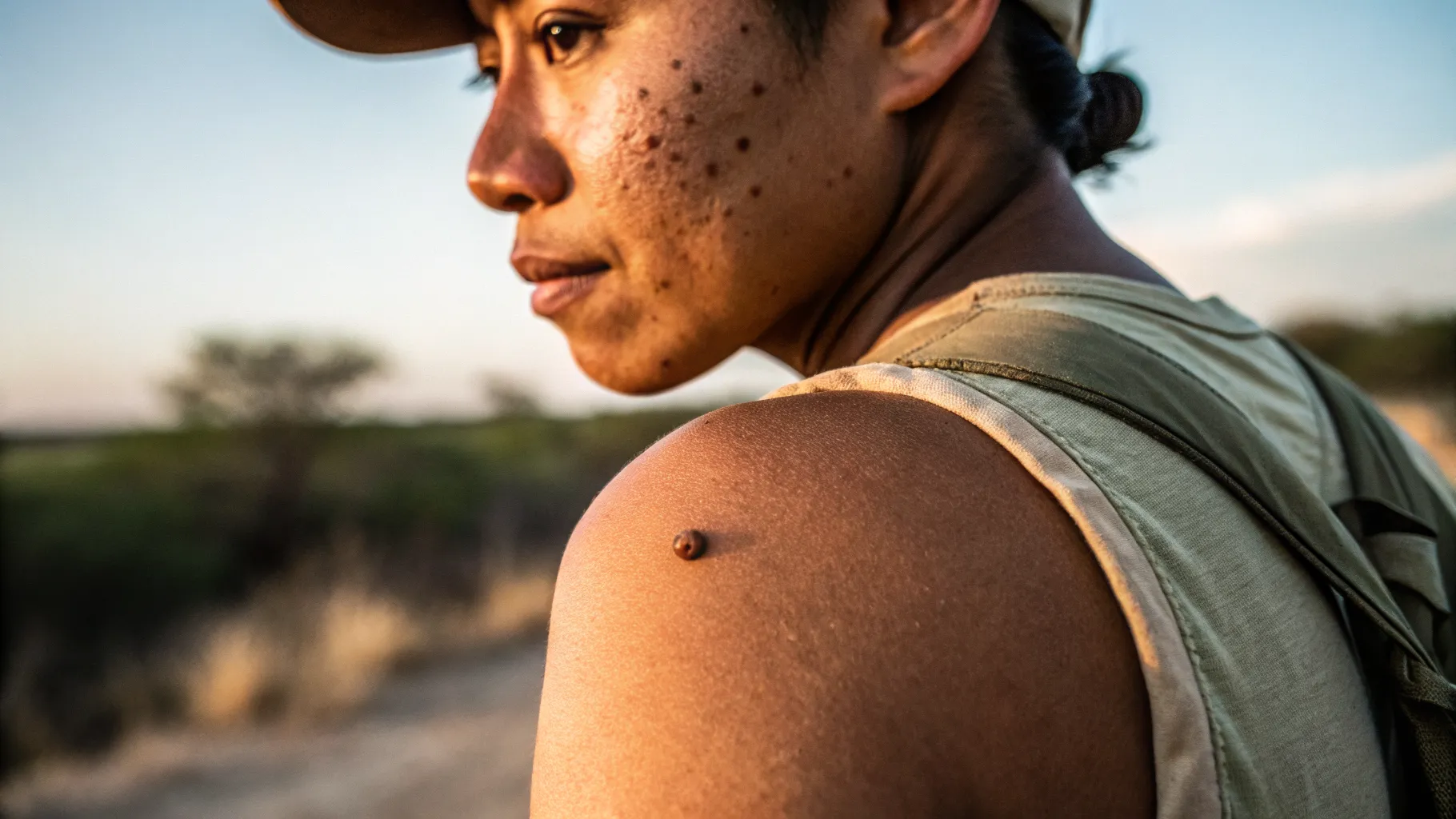
Key Indicators and Unusual Moles: A Closer Look
Identifying potential indicators of skin cancer requires a keen eye and an understanding of what constitutes normal versus abnormal skin changes. While many moles and blemishes are harmless, certain characteristics demand attention, especially when considering the heightened sun exposure risks in Texas. Recognizing unusual moles or new growths is a primary step in successful early signs of skin cancer in Texas residents.
Basal Cell Carcinoma: Subtle Skin Changes
Basal cell carcinoma (BCC) is the most common form of skin cancer and often appears on sun-exposed areas like the face, neck, and arms. Look for a pearly or waxy bump, a flat, flesh-colored or brown lesion, or a sore that heals, then reopens. These subtle skin changes are key early signs of skin cancer in Texas residents. BCC rarely spreads but can be locally destructive, emphasizing the need for prompt removal.
Squamous Cell Carcinoma: Persistent Patches
Squamous cell carcinoma (SCC) is the second most common type and frequently presents as a firm, red nodule, or a flat lesion with a scaly, crusted surface. These can occur on areas repeatedly exposed to the sun. Any persistent red patch or open sore that does not heal should be considered an unusual mole or lesion warranting investigation, as these are critical indicators for early signs of skin cancer in Texas residents. SCC has a higher risk of spreading than BCC if left untreated.
Recognizing Melanoma Early Detection Clues with the ABCDE Rule
Melanoma, while less common, is the most serious type of skin cancer due to its potential to spread rapidly. Effective melanoma early detection is paramount. The ABCDE rule serves as a crucial guide for spotting unusual moles:
- Asymmetry: One half of the mole does not match the other half.
- Border Irregularity: The edges are ragged, notched, or blurred.
- Color Variation: The color is not uniform and may include shades of brown or black, sometimes with patches of pink, red, white, or blue.
- Diameter: Melanomas are usually greater than 6 millimeters (about the size of a pencil eraser) when diagnosed, but they can be smaller.
- Evolving: The mole is changing in size, shape, color, or elevation, or any new symptom like bleeding, itching, or crusting.
Any of these factors observed in existing or new unusual moles should prompt immediate concern for early signs of skin cancer in Texas residents and a visit to a healthcare professional.
High-Risk Factors and Mitigating Sun Exposure Risks in Texas
Understanding personal risk factors is essential for proactive skin health. In Texas, prolonged and intense sun exposure is a primary concern, contributing significantly to sun exposure risks. Individuals with fair skin, a history of severe sunburns, numerous moles (especially atypical ones), or a family history of skin cancer are at an elevated risk. Additionally, weakened immune systems and exposure to certain chemicals can increase susceptibility. Mitigating these sun exposure risks through consistent sun protection is a vital component of preventing skin cancer Texas diagnoses. This includes seeking shade, wearing protective clothing, and applying broad-spectrum sunscreen with an SPF of 30 or higher, even on cloudy days.
The Imperative of Regular Dermatologist Checkups
While self-examinations are important, nothing replaces the trained eye of a professional. Regular dermatologist checkups are critical, particularly for individuals with increased sun exposure risks or a personal/family history of skin cancer. Dermatologists are skilled in identifying subtle skin changes and suspicious lesions that may be overlooked during a self-exam. These checkups are especially vital for comprehensive melanoma early detection. They can use specialized tools like dermatoscopes to examine moles more closely, and if necessary, perform biopsies to confirm or rule out cancer. For Texas residents, annual or even semi-annual dermatologist checkups might be recommended depending on individual risk profiles.
Empowering Self-Examination for Skin Changes
Performing regular self-examinations is a powerful tool in catching early signs of skin cancer in Texas residents. Once a month, conduct a thorough head-to-toe check of your skin in a well-lit room using a full-length mirror and a hand-held mirror for hard-to-see areas. Pay close attention to areas with significant sun exposure risks. Look for any new growths, sores that don't heal, or any changes in existing moles, freckles, or birthmarks. Documenting the location and appearance of unusual moles can help track changes over time. Be systematic: start with your face, ears, neck, and scalp, then move to your arms, hands, torso, legs, and feet, including soles and between toes. Don't forget your back and buttocks. Any persistent or evolving skin changes warrant professional evaluation to ensure effective melanoma early detection.
When to Seek Professional Medical Attention
If you observe any suspicious skin changes, particularly those matching the ABCDE criteria for melanoma, or any unusual moles that are new, growing, bleeding, or causing discomfort, it is crucial to seek immediate medical attention. Do not delay, as prompt evaluation is key to successful treatment of skin cancer Texas. Even if a lesion doesn't fit the classic description of cancer, persistent concerns should always be addressed by a healthcare professional. Early diagnosis significantly improves prognosis for all types of skin cancer Texas.
Comparing self-examination with professional dermatologist checkups reveals that both play complementary roles in optimal skin health. While self-exams empower individuals to be proactive and notice immediate skin changes, professional screenings offer expert evaluation, often detecting lesions imperceptible to the untrained eye. For instance, a dermatologist can use a dermatoscope to examine the sub-surface characteristics of an unusual mole, providing a more definitive assessment than visual inspection alone. Combining these methods provides the most robust strategy for melanoma early detection, especially given the high prevalence of sun exposure risks in Texas. Regular professional screenings act as a critical safety net, validating self-observations and catching any overlooked early signs of skin cancer in Texas residents, thereby reducing overall morbidity and mortality.
Proactive Steps for Skin Cancer Texas Prevention and Early Action
- Limit Sun Exposure: Avoid peak sun hours (10 a.m. to 4 p.m.) to reduce sun exposure risks. Seek shade whenever possible, especially during outdoor activities.
- Use Sunscreen Religiously: Apply broad-spectrum sunscreen with an SPF of 30 or higher year-round, even on cloudy days. Reapply every two hours or after swimming/sweating.
- Wear Protective Clothing: Opt for long-sleeved shirts, pants, wide-brimmed hats, and UV-blocking sunglasses to shield your skin from harmful rays.
- Perform Regular Self-Exams: Familiarize yourself with your skin and conduct monthly self-checks for any new or changing unusual moles or other skin changes.
- Schedule Annual Dermatologist Checkups: For Texas residents, especially those with high sun exposure risks or a personal/family history of skin cancer, professional screenings are essential for melanoma early detection and overall skin health monitoring.
Frequently Asked Questions
Are all unusual moles indicative of skin cancer Texas?
No, not all unusual moles are cancerous. Many benign moles can have irregular features. However, any mole that changes in size, shape, color, or elevation, or causes itching, bleeding, or discomfort, should always be examined by a dermatologist to rule out early signs of skin cancer in Texas residents and confirm its nature.
How often should I have dermatologist checkups if I have high sun exposure risks?
If you have high sun exposure risks or a personal/family history of skin cancer, your dermatologist may recommend annual or even bi-annual dermatologist checkups. Discuss your specific risk factors with your doctor to determine the appropriate frequency for your screenings for skin cancer Texas.
What is the most effective way for melanoma early detection?
The most effective strategy for melanoma early detection combines regular self-skin examinations with annual professional dermatologist checkups. Knowing your skin and recognizing the ABCDEs of melanoma are crucial, but a professional eye can often spot subtle indicators that might be missed, greatly improving outcomes.
References
- American Academy of Dermatology Association.
- Skin Cancer Foundation.
Authored by MyTrendSpot team