Varicose Veins Prevention and When Treatment is Necessary: A Clinical Perspective on Venous Health
Varicose veins, which are abnormally enlarged and twisted superficial veins in the legs, affect approximately 30% of adults in developed countries 1. While many individuals initially view these bulging, bluish-purple vessels as a minor cosmetic concern, they are often the outward manifestation of chronic venous insufficiency 2. If your legs feel heavy, achy, or swollen at the end of the day, you might be experiencing the first warning signs of venous pooling 3. This article examines the genetic and physical causes of vein damage, daily habits that promote healthy circulation, and the clinical symptoms that make medical treatment necessary to prevent severe vascular complications.
Understanding the Causes and Progression of Venous Insufficiency
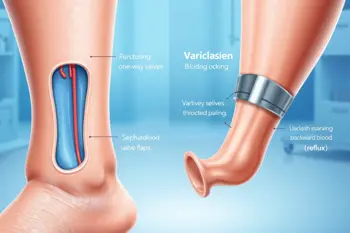
Varicose veins develop primarily due to a structural weakness in the walls of superficial veins, which lie just beneath the skin 4. This structural vulnerability causes the vein walls to lose their elasticity over time, stretching and becoming elongated. To fit within the same physical space, these elongated veins become convoluted and bulge outward 4. Under normal physiological conditions, tiny one-way valves inside the veins keep blood flowing upward against gravity toward the heart 5. When the vein walls stretch, the valve flaps, or cusps, separate. This separation allows blood to flow backward, filling the superficial veins and causing them to enlarge further under increased pressure 4.
Heredity plays a major role in determining who develops this condition. Research indicates that if one parent has varicose veins, the individual risk is approximately 40%, rising to nearly 90% if both parents are affected 6. Other significant risk factors include aging, obesity, and pregnancy, which introduces hormonal changes and increased blood volume that put immense pressure on the lower body 7. Additionally, occupations requiring uninterrupted standing or sitting force the veins to work against gravity for hours, increasing the risk of valve damage 8.
The Core Strategies for Varicose Veins Prevention
While genetic factors cannot be altered, active varicose veins prevention strategies focus on improving lower-leg circulation and reducing daily strain on vein walls 3. Regular physical activity, such as walking, is highly beneficial because the calf muscles act as the primary pump to return blood to the heart 9. Managing body weight is another crucial component, as excess weight directly increases the pressure exerted on leg veins 10. Periodically elevating the legs above the level of the heart throughout the day also helps lower venous pressure and alleviate mild symptoms of leg fatigue 11.
Lifestyle modifications also extend to daily choices, such as avoiding prolonged periods of immobility and refraining from wearing tight garments that constrict blood flow 8. The table below summarizes the key preventative actions and their physiological benefits:
| Preventative Action | Physiological Benefit |
|---|---|
| Regular Walking & Calf Exercises | Engages calf muscles to pump blood upward, reducing pooling |
| Weight Management | Lowers overall intra-abdominal and lower limb venous pressure |
| Periodic Leg Elevation | Uses gravity to assist blood return and reduce lower leg swelling |
| Avoiding Prolonged Standing/Sitting | Prevents continuous hydrostatic pressure buildup in lower veins |
The Role of Compression Therapy in Conservative Management
For many individuals, compression garments represent the most effective non-surgical tool for managing symptoms and preventing the progression of venous pooling 12. These specialized stockings apply graduated pressure, which is tightest at the ankle and gradually decreases further up the leg. This pressure prevents the superficial veins from dilating, which helps the one-way valves close properly and facilitates efficient blood flow back toward the heart 12. Compression garments are highly effective at reducing common symptoms such as aching, throbbing, heaviness, and nighttime muscle cramps 12.
In the United States, major insurance providers, including Medicare, typically require a documented trial of conservative management, usually consisting of 6 to 12 weeks of daily compression therapy, before approving invasive procedures 13. During this period, patients must also document persistent symptoms and undergo a diagnostic reflux examination using duplex ultrasound to verify underlying venous disease 13.
When Treatment Becomes a Medical Necessity
Although varicose veins often progress slowly over several years, they can eventually reach a stage where conservative self-care is no longer sufficient. Medical intervention becomes necessary when the patient experiences persistent, limiting pain, severe skin changes, or advanced vascular complications 14. Over time, chronic venous hypertension can cause fluid and blood cells to leak into surrounding tissues, leading to scaly, irritated skin that hardens or thickens near the ankles 15.
Left untreated, this localized tissue damage can progress to open sores known as venous ulcers, which are notoriously difficult to heal 15. Other critical indicators for urgent medical evaluation include spontaneous bleeding from a bulging vein and recurrent superficial thrombophlebitis, which is characterized by localized pain, redness, and inflammation in a superficial vein 1.
Recognizing Serious Risks: Deep Vein Thrombosis
A major concern associated with advanced venous disease is the potential development of deep vein thrombosis (DVT), a condition where blood clots form in the deep veins of the leg 15. These clots are dangerous because they can break loose, travel through the bloodstream, and block arteries in the lungs, causing a life-threatening pulmonary embolism 15. While varicose veins primarily involve the superficial venous system, their presence can be associated with prior deep vein clots or overall poor circulation 8.
It is crucial to recognize the warning signs of a deep vein clot. If an individual experiences sudden swelling, warmth, intense pain, or redness in a single leg, immediate medical evaluation is required 15. A diagnostic duplex ultrasound is the gold standard used by vascular specialists to rule out deep clots and map out the exact points of venous reflux prior to planning any therapeutic procedures 16.
Modern Minimally Invasive Treatment Options
When conservative measures fail and medical criteria are met, vascular specialists can utilize several safe and minimally invasive outpatient procedures to treat damaged veins. Rather than surgically removing the vein, modern techniques focus on closing the diseased vessel, which redirects blood flow naturally to healthy, deeper veins. Common procedures include:
- Endovenous Thermal Ablation: Utilizing radiofrequency or laser energy to generate localized heat that seals the damaged vein shut.
- Sclerotherapy: Injecting a chemical solution directly into the vein, causing it to scar and collapse. This is highly effective for smaller veins and tributaries.
- Phlebectomy: A minimally invasive procedure where small, bulging superficial veins are removed through tiny skin punctures.
These procedures generally feature rapid recovery times and high success rates, although patients should be aware that new varicose veins can still form over time if underlying genetic or lifestyle risk factors persist 4.
Sources
- Merck Manual Consumer Version - Varicose Veins
- StatPearls (NCBI) - Venous Insufficiency
- USA Vein Clinics - How To Prevent Varicose Veins
- Merck Manual Consumer Version (en-ca) - Varicose Veins
- HVS Hospitals - Varicose Veins: Causes, Symptoms & Treatment Options
- Center for Vein Restoration - What are Varicose Veins and Can They Be Prevented?
- Sun Vein and Vascular - What Are Varicose Veins? Causes, Symptoms, and Treatment Options
- Harvard Health - Varicose Veins
- Center for Vein Restoration - Varicose Vein Prevention: Exercise Tips
- Mayo Clinic - Varicose Veins Care & Prevention
- Cleveland Clinic - Varicose Vein Remedies
- Cleveland Clinic - What You Need To Know About Self-Care for Varicose Veins
- VaricoseMD - Is Varicose Vein Treatment Covered by Insurance?
- mediSuggest - When is Varicose Vein Treatment Needed
- Penn Medicine - Varicose Veins: Symptoms and Causes
- MedlinePlus - Venous Duplex Ultrasound
Authored by MyTrendSpot team