Skin Eczema Symptoms and Treatments: A Clinical Overview of Causes, Flares, and Emerging Therapies
Skin eczema is one of the most prevalent inflammatory skin conditions globally, affecting an estimated 31.6 million Americans alone, with just over 7% of adults and close to 11% of children diagnosed with some form of the disease. 1 The condition is not contagious, yet its physical and psychosocial burden is significant, making an informed understanding of its symptoms, triggers, and treatment pathways essential for anyone managing or researching the condition. 2
What Is Skin Eczema and How Common Is It?
Eczema is an umbrella term for a group of inflammatory skin conditions that disrupt the skin's protective barrier, allowing moisture to escape and irritants, allergens, and microbes to enter more easily. 3 Atopic dermatitis (AD) is the most common type, and it is often used interchangeably with the word eczema in clinical settings. Approximately 1 in 4 children develop AD, with symptoms frequently appearing before age 5. 4 In Canada, up to 17% of the population will experience atopic dermatitis at some point in their lives, while in Singapore approximately 20% of school children are affected. 5
Previously, experts estimated that around 60% of individuals with childhood AD no longer showed symptoms by adolescence. Current evidence now suggests that figure is closer to 35%, meaning a substantial portion of patients carry the condition into adulthood. 4 Globally, eczema affects individuals of all ages and racial backgrounds. On darker skin tones, the rash often appears ashen, brown, or grayish rather than the classic red presentation seen on lighter skin, a distinction that is clinically important for accurate diagnosis. 6
Recognizing the Symptoms of Skin Eczema
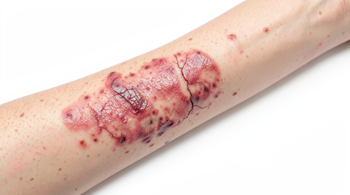
The hallmark symptom of eczema is intense, persistent pruritus, or itching, which frequently worsens at night and drives a damaging itch-scratch cycle that further compromises the skin barrier. 3 Other consistent clinical features include dry, rough, or scaly skin; red or discolored inflamed patches; thickened or leathery skin areas from chronic scratching; and small raised bumps that may ooze fluid and crust over. 7 Rashes commonly appear on the face, scalp, and skin creases of the elbows and knees in children, while adults more often experience involvement of the hands, neck, and chest.
Patients with moderate to severe atopic dermatitis experience an average of nine flare-ups per year, with individual flare durations ranging from days to weeks depending on severity. 8 During active flares, symptoms include inflamed patches, flaky or cracked skin, blistering, bleeding, and lesions that leak fluid. Between flares, the skin may appear calmer but remains hypersensitive. Eczema is also associated with broader health impacts: adults with atopic dermatitis are 14 to 20% more likely to experience depression, and children face elevated risks of ADHD and sleep disorders. 9
Main Types of Eczema and Their Distinguishing Features
Understanding the specific subtype of eczema guides effective management. While atopic dermatitis accounts for the majority of cases, several other clinically distinct forms exist. 10
- Atopic dermatitis: Hereditary, most common, typically beginning in infancy; linked to asthma and hay fever in the same individual or family.
- Contact dermatitis: Divided into allergic (triggered by substances like nickel, poison ivy, or fragrances) and irritant types (caused by repeated exposure to soaps, detergents, or solvents).
- Dyshidrotic eczema: Characterized by small, intensely itchy blisters on the palms of the hands and soles of the feet.
- Nummular eczema: Presents as coin-shaped, crusted, and scaly patches of irritated skin.
- Seborrheic dermatitis: Most often located on the scalp, back, face, and chest.
- Stasis dermatitis: Skin irritation of the lower legs usually related to circulatory problems.
- Asteatotic eczema: Common in older adults; characterized by dry, fissured skin with a distinctive cracked appearance, sometimes called winter itch.
Chronic hand eczema (CHE) is a separately defined inflammatory skin disease localized to the hands and wrists, lasting more than three months or relapsing at least twice per year. In the United States, the absence of specific ICD-10 diagnostic codes for CHE makes consistent clinical tracking particularly challenging. 11
Known Causes, Triggers, and Risk Factors
Eczema arises from a combination of genetic predisposition, immune dysregulation, and environmental exposures. A key genetic factor is the filaggrin gene, which controls a protein essential for maintaining the skin barrier. Mutations in this gene are found in up to 50% of moderate-to-severe atopic dermatitis cases and weaken the barrier significantly, making skin more susceptible to both irritants and infections. 9 Eczema frequently runs in families, particularly where asthma and hay fever are also present, a clustering known clinically as the atopic triad.
Environmental triggers vary by individual but commonly include harsh soaps and detergents, fragrances, wool fabrics, temperature extremes, cold and dry air, dust mites, pet dander, mold, and pollen. 12 Stress and emotional factors are also recognized triggers, as psychological stress can amplify the immune response driving skin inflammation. Diet may play a secondary role in some individuals: specific food intolerances or allergies, such as to gluten or certain proteins, can contribute to flares in susceptible people, though no single elimination diet is universally effective. 13 Occupational exposure is a notable risk factor for irritant contact dermatitis, particularly in healthcare workers, beauticians, bartenders, and others who work frequently with wet hands. 6
Treatment Options: From Topical Therapies to Advanced Biologics
Eczema management follows a stepwise, severity-based approach. Daily moisturizing and trigger avoidance form the foundation of care for all patients, regardless of disease severity. Thick emollients, creams, and ointments, applied using the soak-and-seal method immediately after bathing, help restore the compromised skin barrier and reduce flare frequency. 3 For mild-to-moderate inflammation, topical corticosteroids (TCS) are the standard first-line anti-inflammatory treatment, applied during flares at the appropriate potency for the body site involved. Topical calcineurin inhibitors (TCIs) such as tacrolimus and pimecrolimus are prescription alternatives especially useful for sensitive areas like the face and skin folds; however, the U.S. FDA has issued a boxed warning noting a possible increased risk of cancer with prolonged TCI use, and these agents should only be applied as directed by a qualified clinician. 14
For patients with moderate-to-severe disease uncontrolled by topical therapies, systemic treatments are indicated. Phototherapy using ultraviolet light is an established option that suppresses the overactive cutaneous immune response. Among biologics, dupilumab targets the IL-4 and IL-13 immune pathways and is FDA-approved for moderate-to-severe AD; NEJM clinical trial data show dupilumab achieves clear or nearly-clear skin in approximately 38% of patients at 16 weeks. 9 The 2025 American Academy of Dermatology focused update added four new strongly recommended therapies: tapinarof cream, roflumilast cream, lebrikizumab, and nemolizumab, expanding the clinical toolkit at every severity level. 9 For chronic hand eczema specifically, topical delgocitinib is currently the only FDA-approved medication for patients who have not responded adequately to topical corticosteroids. 11
Complications, Risks, and When to Seek Medical Assessment
Although eczema itself is not life-threatening, complications can be serious. A weakened skin barrier increases susceptibility to secondary bacterial, viral, and fungal infections. Eczema herpeticum, a herpes simplex virus infection of eczematous skin, is a medical emergency requiring immediate care; warning signs include sudden painful vesicles, fever, and rapidly worsening skin lesions. 9 Topical steroid withdrawal (TSW) is a debated clinical phenomenon characterized by red, itchy, burning, peeling, and blistering skin that can emerge after stopping corticosteroid therapy; the condition was discussed at the 2026 British Society of Dermatologists Annual Meeting, where specialists emphasized that no patient should have to experience it with proper clinical management. 15
The socioeconomic burden of eczema is also well-documented. Costs encompass conventional treatments including corticosteroids, immunosuppressive agents, and phototherapy, as well as specialist consultation fees and significant productivity losses at work and school. 10 Persistent, severe, infected, or sleep-disrupting eczema warrants a formal assessment by a dermatologist or qualified clinician, who can confirm the diagnosis, identify subtypes, evaluate for co-existing conditions, and recommend an individualized treatment plan aligned with the latest evidence-based guidelines.
Sources
- Sharecare – Eczema: Symptoms, Causes, Types and Treatment (sharecare.com)
- StatPearls, NCBI Bookshelf – Atopic Dermatitis (ncbi.nlm.nih.gov)
- Ubie Doctor's Note – Eczema: Causes, Symptoms, Types, and Evidence-Based Treatments (ubiehealth.com)
- Medical News Today – Eczema: Symptoms, treatment, and more (medicalnewstoday.com)
- Canadian Dermatology Association – Eczema (dermatology.ca); Stratum Skin Singapore (stratumskin.com.sg)
- Canadian Dermatology Association – Eczema Signs, Symptoms and Causes (dermatology.ca)
- NASCENT Skin and Beauty Clinic – Eczema / Dermatitis: Symptoms, Causes, Triggers, Treatments (nascent.net.au)
- Cleveland Clinic – Having an Eczema Flare-Up? Here's What To Do (health.clevelandclinic.org)
- TeleDirectMD – Eczema (Atopic Dermatitis): Symptoms, Causes, Treatment and Latest Guidelines (teledirectmd.com)
- Frontiers in Allergy – Eczema: etiology, subtypes, therapeutic approaches and socioeconomic impact (frontiersin.org)
- American Journal of Clinical Dermatology, Springer – Expert Recommendations for Chronic Hand Eczema in the United States (link.springer.com)
- Your Health Magazine – Eczema Flare-Ups: Discovering Their Triggers and Solutions (yourhealthmagazine.net)
- Cleveland Clinic – Is There an Eczema Diet? Here's What Works (health.clevelandclinic.org)
- National Eczema Association / U.S. FDA – Topical Calcineurin Inhibitors Boxed Warning (nationaleczema.org; fda.gov)
- Medscape – Eczema and the Topical Steroid Withdrawal Controversy (medscape.com)
Authored by MyTrendSpot team