Managing Varicose Veins Without Surgery
Varicose veins affect approximately 1 in 4 adults in the United States, and up to 40 percent of adults in the United Kingdom will develop the condition at some point in their lives. 1 The underlying mechanism involves one-way valves inside the leg veins that weaken or fail, allowing blood to pool and causing the characteristic bulging, twisted appearance beneath the skin. 2 For the majority of patients, a range of non-surgical strategies can reduce symptoms, slow disease progression, and in some cases defer or avoid the need for a clinical procedure altogether.
Understanding the Condition and When Non-Surgical Care Is Appropriate
Varicose veins occur when superficial leg veins lose elasticity, widen, and allow blood to flow backward against the intended direction of circulation. In approximately 50 percent of cases the condition has a hereditary component, linked to inherited weaknesses in vein walls or the valves that regulate blood flow. 3 Estrogen levels, pregnancy, and occupations requiring prolonged standing also increase risk, and the condition is two to three times more common in women than in men. 3
According to UC Davis Health vascular surgeon Mimmie Kwong, varicose veins do not always require treatment. When the veins are asymptomatic, conservative monitoring is a clinically acceptable approach. However, when symptoms such as leg heaviness, swelling, aching, itching, or nighttime cramps affect daily function, clinical evaluation is appropriate. 1 A 2026 editorial in the Indian Journal of Dermatology, Venereology and Leprology raised concern about over-intervention in clinically stable patients classified as CEAP C2-C3 (varicose veins without skin changes or ulceration), advocating for a conservative-first strategy backed by long-term evidence. 4
Compression Therapy: The Primary Conservative Intervention
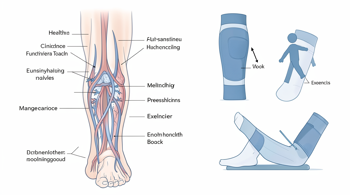
Medical-grade graduated compression stockings are consistently identified as the most effective home-based intervention for varicose vein symptom management. Cleveland Clinic vascular surgeon Kathleen Boyle, DO, explains that compression garments prevent vein dilation, which reduces aching, throbbing, and itching, particularly when worn throughout the day. 5 Clinical guidance specifies that pharmacy-grade support socks do not deliver the same outcome; properly fitted medical-grade stockings with 20 to 30 mmHg pressure, sized to calf circumference, are required. 6
A 2025 peer-reviewed review published in the Journal of Vascular Diseases, authored by researchers from multiple Croatian rehabilitation centers, confirmed that compression therapy remains a fundamental strategy in the treatment of lower-extremity venous disease, functioning both as a primary treatment and as an adjunct to other interventions. 7 Garment types range from knee-high and thigh-high to full legging styles, with the appropriate coverage determined by how far up the leg the affected veins extend. Patients are advised to wear them from waking until sleep for consistent benefit.
Lifestyle Modifications: Exercise, Elevation, and Weight Management
Regular physical activity is one of the most evidence-supported non-surgical strategies for managing varicose vein symptoms. A 2024 meta-analysis cited in the Journal of Vascular Surgery found that 30 minutes of brisk walking five days per week reduced leg pain by 47 percent and ankle swelling by 38 percent in patients with C2-C4 varicose veins. 6 Walking activates the calf muscle pump, which acts as a secondary circulatory mechanism to push venous blood upward against gravity. Adding 10 minutes of stair climbing three times per week is reported to double this calf-pump benefit. 6
Leg elevation, specifically raising the legs above the level of the heart for 15 minutes three to four times daily, is widely recommended to reduce venous pressure and discomfort. 8 Weight management also plays a measurable role, as excess body weight increases the pressure placed on leg veins and is a recognized contributing factor to disease progression. Dietary adjustments including increased fiber intake and reduced sodium can further assist by minimizing constipation and fluid retention, both of which amplify vein symptoms. 8 Collectively, the right combination of exercise, compression, and dietary habits has been reported to reduce pain and swelling by 40 to 60 percent in early-stage cases, though these measures cannot reverse a structurally damaged or refluxing vein. 6
Minimally Invasive Procedures: Non-Surgical Clinical Options
For patients whose symptoms are not adequately controlled by conservative measures, several minimally invasive procedures offer clinically recognized non-surgical alternatives. Endovenous Laser Treatment (EVLT), also referred to as Endovenous Laser Ablation (EVLA), involves inserting a thin laser fiber through a 2 mm access point and delivering heat energy to seal the affected vein from the inside. The procedure is performed under tumescent local anesthesia, typically takes 25 to 40 minutes per leg, and allows same-day ambulation. 9 Radiofrequency Ablation (RFA) follows a similar principle using thermal energy delivered by a catheter, also under local anesthesia. Both NICE in the United Kingdom and the Society for Vascular Surgery in the United States list endovenous thermal ablation as a first-line therapy, with open surgery reserved for fewer than 5 percent of cases. 9
Sclerotherapy involves injecting a chemical solution or foam directly into the affected vein to collapse it. A 2026 scoping review published in the SAIMSARA Journal, drawing on 167 references and data from over 3.1 million participants, found that ultrasound-guided foam sclerotherapy (UGFS) achieved up to 91 percent complete occlusion after one to three sessions. 10 However, the review also documented a 5-year recanalization rate of approximately 31.5 percent after UGFS, compared to 5.8 to 6.8 percent after radiofrequency or laser ablation, indicating that sclerotherapy may require retreatment over time. Cyanoacrylate adhesive (medical glue) injection represents a newer non-thermal, non-tumescent option reviewed in a 2025 Polish multi-center analysis of non-thermal minimally invasive methods for chronic venous insufficiency. 11
Comparative Overview of Non-Surgical Management Approaches
| Approach | Mechanism | Reported Benefit | Key Limitation |
|---|---|---|---|
| Compression Stockings (20-30 mmHg) | External graduated pressure on veins | Reduces aching, throbbing, swelling | Symptom management only; does not eliminate veins |
| Exercise (30 min brisk walking, 5x/week) | Activates calf muscle pump | 47% pain reduction, 38% swelling reduction | Cannot reverse valve damage |
| Leg Elevation | Reduces hydrostatic venous pressure | Decreases discomfort and pressure | Temporary relief; requires consistency |
| Sclerotherapy (UGFS) | Chemical collapse of vein | Up to 91% occlusion after 1-3 sessions | 31.5% recanalization rate at 5 years |
| EVLT / RFA | Thermal sealing of vein lumen | Durable closure; first-line recommended | Requires clinical setting; not suitable for all anatomy |
Documented Risks, Limitations, and When to Seek Clinical Assessment
Non-surgical and minimally invasive approaches carry their own risk profiles that patients should understand before making decisions. Serious neurologic, arterial, and thromboembolic events associated with foam sclerotherapy are uncommon but documented, and the SAIMSARA review emphasized the importance of disciplined foam volume limits, ultrasound guidance, and patient risk stratification to reduce these occurrences. 10 Even with thermal ablation, the MSD Manual notes that new varicose veins often form after treatment of existing ones, meaning long-term follow-up remains important regardless of the initial approach chosen. 12
A Cochrane review archived in January 2026 concluded that all currently available varicose vein treatments are broadly similar in terms of technical success (whether the treatment fully destroys the vein or stops blood from pooling), but noted that the evidence base is limited by small study numbers and inconsistent outcome measurement. 13 Patients experiencing worsening symptoms, skin color changes near the ankles, a vein that becomes painful and red, or the development of non-healing skin ulcers should seek prompt medical evaluation, as these may indicate progression to a more advanced stage of chronic venous insufficiency that conservative management alone cannot adequately address. 14
Practical Guidance: Building a Non-Surgical Management Routine
The current clinical consensus places conservative therapy as the starting point for most patients with CEAP C2 to C3 varicose veins. A practical non-surgical routine integrates daily use of properly fitted medical-grade compression stockings, a regular walking program of at least 30 minutes most days, periodic leg elevation, avoidance of prolonged uninterrupted standing or sitting, and weight management where relevant. 5 These measures are not mutually exclusive with minimally invasive procedures; in many cases they are used as preparation before and ongoing support after a clinical procedure. Patients are encouraged to document symptom changes over a period of three to six months of consistent conservative management before discussing escalation to procedural options with a vascular specialist. 7
It is important to recognize that lifestyle-based strategies reduce symptoms and slow progression but cannot permanently eliminate existing varicose veins or repair mechanically failed valves. 8 The decision to pursue minimally invasive procedures such as EVLT, RFA, or sclerotherapy should be guided by a clinical assessment that includes duplex ultrasound mapping of the venous system, as surface-visible veins are frequently a symptom of a deeper feeder vein problem that must be identified and addressed to prevent recurrence. 15
Sources
- UC Davis Health - Treating Varicose Veins: What You Need to Know (health.ucdavis.edu, 2025)
- Merck Manual Consumer Version - Varicose Veins, reviewed by James D. Douketis MD, McMaster University (merckmanuals.com, Jan 2026)
- Harvard Health Publishing - Varicose Veins A to Z, reviewed by Howard E. LeWine MD (health.harvard.edu, Mar 2026)
- Indian Journal of Dermatology, Venereology and Leprology - Over-intervention in Varicose Veins: A Call for Long-Term Evidence and Conservative-First Strategies, Attili SK (ijdvl.com, Feb 2026)
- Cleveland Clinic Health Essentials - What You Need To Know About Self-Care for Varicose Veins, Kathleen Boyle DO (health.clevelandclinic.org, Nov 2025)
- Dr. Raja Veins Clinic - Home Remedies for Varicose Veins: 12 Doctor-Approved Tips, medically reviewed by Dr. Ambrish Raja (drrajaveinsclinic.com, Jul 2026)
- Journal of Vascular Diseases - Role of Compression and Physical Therapy in the Treatment of Chronic Venous Insufficiency, Vasari et al. (mdpi.com, Nov 2025)
- Acibadem International Health Library - Varicose Veins: Treatment Options, Risks, and Recovery Time (acibademinternational.com, Jul 2026)
- Dr. Raja Veins Clinic - Varicose Veins Treatment Without Surgery: 5 Walk-In Walk-Out Options (drrajaveinsclinic.com, Jun 2026)
- SAIMSARA Journal - Sclerotherapy for Varicose Veins: Scoping Review with SAIMSARA (doi.org/10.62487/saimsara175c65a2, 2026)
- Journal of Education, Health and Sport - Non-Thermal, Minimally Invasive Methods for the Treatment of Chronic Venous Insufficiency, Szada-Borzyszkowski et al. (apcz.umk.pl, 2025)
- MSD Manual Consumer Version - Varicose Veins, reviewed by James D. Douketis MD (msdmanuals.com, Jan 2026)
- Cochrane Evidence - Which Procedures Are Best for Treating Varicose Veins in the Leg? (archive.ph/WfHud, Jan 2026)
- Manipal Hospitals - Varicose Veins in the Legs: Early Signs, Diagnosis, and Minimally Invasive Care, Dr. Hemanth Kumar Pandharpurkar (manipalhospitals.com, Jan 2026)
- Veins and Vascular - How a Varicose Veins Doctor Treats Leg Vein Problems Without Open Surgery (veinsandvascular.com, Apr 2026)
Authored by MyTrendSpot team