Senior Friendly Cruise Lines: An Analytical Guide to the Best Options for Mature Travelers
Senior friendly cruise lines represent one of the fastest-growing segments in global travel, and for clear reasons. According to the Cruise Lines International Association's 2025 State of the Cruise Industry Report, 17% of cruise travelers fell between the ages of 50 and 59, while 18% were in the 60 to 69 bracket, making mature adults the single largest demographic bloc on ocean voyages. 1 Travel specialists consistently point out that cruising removes the logistical friction of multi-destination travel by keeping accommodation, meals, entertainment, and transportation on a single vessel. As Paul Kiritsy, CEO of Shore Excursions Group, notes, cruises provide a fun, safe, and convenient way to explore destinations, and for seniors the right cruise balances comfort and accessibility with opportunities for discovery. 2
The Leading Ocean Cruise Lines for Seniors
Holland America Line is consistently ranked the strongest mainstream choice for travelers aged 55 and older. The average passenger age hovers around 57, and roughly three-quarters of guests are 55 or older. 3 Its mid-sized fleet of 11 ships across the Pinnacle, Vista, Signature, and R classes avoids the mega-ship scale where walking from one end of the vessel becomes physically exhausting. The Explorations Central (EXC) program runs daily destination lectures, port-focused programming, and culinary demonstrations on every voyage, while Music Walk provides four distinct live-music venues including B.B. King's Blues Club and Lincoln Center Stage. 3 Holland America has more than 150 years of operational history and positions its product specifically for travelers aged 65 and over, with spacious stateroom layouts, smooth walkways, elevators, clear signage, and onboard medical centres. 4
Viking Ocean Cruises appeals to culturally curious seniors through a strict adults-only, no-casino philosophy. The line prohibits guests under 18 and eliminates casinos and pushy photographers, fostering a serene, sophisticated atmosphere where the destination is the central focus. 5 Enrichment programming includes destination lectures, cultural performances, and local food tastings. The Nordic Spa with Snow Grotto aboard vessels such as Viking Venus adds wellness options suited to older passengers. Oceania Cruises, which moved to a fully adults-only booking policy across its eight-ship fleet effective January 7, 2026, operates smaller ships with a country-club-casual atmosphere, six specialty restaurants, and a partnership with renowned chef Jacques Pépin that positions cuisine as a primary draw. 6
Ultra-Luxury Options: Silversea and Regent Seven Seas
Silversea operates 12 small luxury ships carrying between 290 and 720 guests with high staff-to-passenger ratios. Its Door-to-Door fare structure covers home pickup, flights, and transfers, eliminating the logistics that most inconvenience older travelers. 7 Ideal itineraries include Europe, Antarctica, the Galápagos, and the Arctic. The product is positioned at the ultra-luxury end and is not suited to travelers seeking large-ship entertainment or those on constrained budgets.
Regent Seven Seas carries an average passenger age of 60 to 75, the highest of any ultra-luxury line, and earns a senior rating of 8.9 out of 10 across key metrics including an all-inclusive scope score of 9.4 and a shore excursions score of 9.1. 8 Its fleet of six ships accommodates 490 to 756 guests per sailing, and every cabin is a suite with butler service. Business-class airfare, unlimited shore excursions at every port, all specialty restaurants, premium spirits, pre-cruise hotel stays, Wi-Fi, laundry, and gratuities are included in the base fare, which ranges from approximately $500 to $1,500-plus per person per night. 8 The caveat is straightforward: the value calculation only works for travelers who will actually use the breadth of inclusions.
River Cruises as a Senior-Specific Category
River cruise operators are widely considered the most structurally senior-friendly segment because smaller ships navigate calmer waters, dock in city centres rather than distant port terminals, and allow passengers to unpack once for the entire journey. Uniworld Boutique River Cruises operates under a genuinely all-inclusive model covering gourmet meals, premium wines and spirits, all gratuities, and shore excursions, with one of the highest staff-to-guest ratios on any river. 9 Avalon Waterways hosts around 150 guests per vessel, creating an intimate social atmosphere without crowding, and offers itineraries through Europe and Asia at a pace suited to older travelers. 10
Viking River Cruises maintains its no-one-under-18 policy across its river fleet, mirroring the philosophy of its ocean division. AmaWaterways offers accessible cabins, medical staff onboard, and cultural enrichment programming specifically designed for mature travelers. 11 Amadeus River Cruises, an Austrian family-owned operation with over 40 years of history, docks directly in the hearts of historic towns, and its intimate ships allow immediate access to destinations without the lengthy tender or port transfer processes common on large ocean vessels. 12
Accessibility Features: What to Verify Before Booking
Accessibility on cruise ships varies substantially by vessel age and operator. Key features to confirm include roll-in showers, grab bars, accessible cabin dimensions, and proximity to elevators. Holland America and Princess Cruises are frequently cited as strong performers in accessibility for passengers with limited mobility. 13 Princess Cruises operates a 15-ship fleet and its MedallionClass technology uses a wearable OceanMedallion device to enable keyless cabin entry, onboard location-sharing for traveling companions, and the ability to order food and drinks from anywhere on the ship, genuinely reducing the friction points of large-ship cruising for senior passengers. 14 Royal Caribbean publishes a dedicated accessibility page and provides services for guests with mobility, visual, hearing, dietary, and specific medical needs, while offering shore excursions designed for mobility considerations. 15
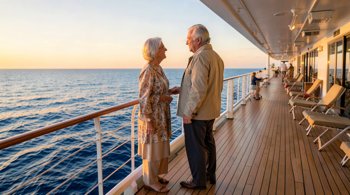
Ship layout is a critical variable that brochures often obscure. Older vessels can feature narrow corridors and complex deck plans that create navigation challenges for passengers using walkers or wheelchairs. Requesting deck plans before booking and specifically confirming elevator access to all passenger decks is standard due diligence. Itinerary type matters equally: scenic cruising routes such as Alaska glaciers or Norway's fjords deliver significant visual reward without requiring passengers to walk long distances in port, while itineraries built around cobblestone Mediterranean towns may demand higher physical capability.
Pricing Landscape and Cost Considerations
| Category | Representative Lines | Approximate Cost Range | Typical Inclusions |
|---|---|---|---|
| Mainstream Ocean | Holland America, Princess, Royal Caribbean | $100–$200 per person per night | Cabin, meals, basic entertainment |
| Premium Ocean | Celebrity, Oceania, Azamara | $200–$400 per person per night | Cabin, meals, some beverages |
| Ultra-Luxury Ocean | Silversea, Regent Seven Seas | $500–$1,500+ per person per night | Flights, excursions, spirits, butler service |
| River Cruise | Viking River, Uniworld, Avalon, Amadeus | $300–$700 per person per night | Cabin, most meals, guided excursions |
It is important to note that published base fares frequently exclude specialty dining surcharges, beverage packages, Wi-Fi, gratuities, and shore excursions, which can add hundreds of dollars per person to mainstream and premium sailings. Longer voyages of 14 to 21 nights are generally considered better value per night and reduce the rushing between ports that can be physically taxing for older travelers. 16 Travelers aged 55 and older on Royal Caribbean may access special pricing on select sailings and pre-cruise packages. 15 AARP membership historically provides access to cruise discounts across multiple major lines, though travelers should independently verify current terms directly with each operator. 17
Risks, Limitations, and Practical Considerations
Medical access is a genuine concern on any voyage. Onboard infirmaries and physicians are standard on major cruise ships, but their capability is limited compared to shoreside facilities. For passengers managing chronic conditions or requiring specialist care, itinerary selection matters: routes that spend extended periods far from major ports carry higher medical evacuation risk and cost. Comprehensive travel insurance that includes medical evacuation coverage is considered essential by most senior travel advisors, not optional. Pre-existing condition clauses in standard travel policies can exclude coverage for known health issues unless a time-sensitive waiver is purchased shortly after the initial deposit.
Solo senior travelers face an additional financial consideration: most cruise lines apply a single supplement charge of 50 to 100 percent of the per-person double-occupancy rate, substantially increasing per-trip cost. Viking is noted for more transparent single-supplement policies than some competitors, but travelers should request specific single supplement figures during the booking process rather than relying on general category pricing. Shore excursions sold through cruise lines offer convenience and a guaranteed return to the ship if schedules overrun, but independent excursions can provide more accessible, slower-paced, and culturally immersive alternatives at lower cost, provided the senior traveler has confirmed port logistics and return time buffers independently.
Destination Suitability for Senior Travelers
Destination selection interacts directly with physical capability and travel pace. Alaska and Norway rank highly for senior travelers because the primary attraction is scenic cruising from the ship or deck, minimizing the walking distances required in port. The Mediterranean offers extraordinary cultural richness but port towns such as Dubrovnik, Santorini, and Cinque Terre involve significant stair-climbing or uneven terrain that can exclude passengers with mobility limitations. Northern Europe, including the Rhine and Danube river systems, provides flat riverside promenades, central docking positions, and manageable walking distances in historic towns. 18 For travelers aged 70 and over specifically, Nile Dahabiya river cruises in Egypt offer a small-vessel, personalized environment with low-impact itineraries focused on iconic archaeological sites, representing a distinct alternative to European routes. 19
Authored by MyTrendSpot team