Sleep Apnea CPAP Costs: A Data-Driven Guide to What Patients Actually Pay
Sleep Apnea CPAP Costs are routinely underestimated by patients who focus only on the upfront machine price. The US sleep apnea devices market reached $3.11 billion in 2026, driven by an estimated 22 million Americans affected by sleep apnea, with roughly 80% of moderate to severe cases still undiagnosed. 1 This means a large number of patients enter the CPAP market each year without a clear understanding of the full financial picture, which spans diagnostic testing, equipment acquisition, insurance navigation, and years of recurring supply costs.
Machine Purchase Prices: A Tiered Breakdown by Device Type
Out-of-pocket machine costs vary substantially depending on device category. Standard fixed-pressure CPAP units typically range from $500 to $1,000, with most quality models landing around $700 to $800. 2 Auto-adjusting CPAP (APAP) machines, which modify pressure based on real-time breathing patterns, carry a higher price range of $600 to $1,350. 3 BiPAP machines, used for more complex respiratory presentations, represent the most expensive category, ranging from $1,500 to $3,500 or more. 4
Specific widely used models provide further pricing context. The ResMed AirSense 11 Auto CPAP retails between $950 and $1,350, while the React Health Luna G3 Auto CPAP typically costs $750 to $850. 5 Certified pre-owned and refurbished machines are available in the $200 to $900 range, often accompanied by three to twelve month warranties from sellers. 6 Refurbished units can reduce upfront cost by 40 to 60 percent compared to new models, though clinical suitability and device history should be evaluated carefully. 7
Insurance Coverage Mechanics and the Compliance Requirement
Most Medicare and commercial insurance plans classify CPAP equipment as durable medical equipment (DME) under specific billing codes, covering approximately 80% of approved costs after the patient's annual deductible is met. 8 In practice, this reduces out-of-pocket costs for a standard machine to roughly $100 to $300 after an 80/20 split with a met deductible, though actual amounts depend on the specific plan. 9 Medicare Part B covers CPAP machines and supplies through a rent-to-own structure, typically a 13-month rental period, after which ownership transfers to the patient if adherence requirements are satisfied.
A critical and frequently misunderstood element is the compliance requirement. Medicare and most private insurers require patients to use the CPAP device for at least 4 hours per night on 70% of nights during a 30-day monitoring window. 10 Usage data is transmitted automatically via cellular modem to a compliance portal accessible to both the insurer and prescribing physician. Patients who fail to meet compliance thresholds risk losing coverage and may be required to return the equipment, creating a gap period during which costs shift entirely to the patient. 11
Rental Costs and the Rent-to-Own Model
For patients navigating the insurance pathway, CPAP therapy typically begins as a rental arrangement. DME provider rental rates run approximately $30 to $60 per month for standard CPAP units, while APAP rentals range from $75 to $120 per month and BiPAP rentals from $100 to $180 per month. 12 Rental payments generally count toward the purchase price under most agreements, with ownership transferring after 10 to 13 months. A practical break-even calculation illustrates the tradeoff: renting an APAP machine at $100 per month equals the purchase price of a $1,200 unit at month 12, making purchase the more economical path beyond that point. 13
Cash purchases through online retailers bypass the rent-to-own structure entirely, allowing immediate ownership on day one. Patients with high-deductible health plans (HDHPs) may find the cash price for a machine is up to 50% less than what they would pay out of pocket through an in-network DME supplier, because the insurance-billed price incorporates administrative overhead and compliance monitoring costs not present in a direct retail transaction. 14 Health Savings Accounts (HSA) and Flexible Spending Accounts (FSA) can be applied to CPAP machine purchases and accessories, reducing net cost through pre-tax expenditure. 15
Recurring Supply Costs: The Long-Term Budget Driver
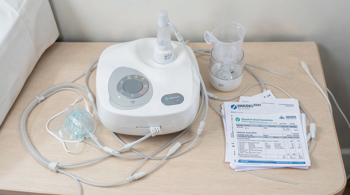
Supplies represent the most significant ongoing cost category over a multi-year treatment horizon. Annual supply expenses typically run $300 to $600, covering mask cushions, mask frames, headgear, tubing, filters, and humidifier chambers. 16 A more granular breakdown shows mask cushions requiring monthly replacement at $30 to $60 each, mask frames at $80 to $200 every three months, and tubing at $20 to $60 per quarter. Over a full year, supply costs alone can reach $500 to $1,000 on top of machine acquisition costs. 17
| Supply Item | Low | Average | High |
|---|---|---|---|
| Masks (full-face or nasal) | $120 | $210 | $350 |
| Headgear | $20 | $40 | $60 |
| Tubing | $10 | $18 | $25 |
| Filters (annual) | $3 | $8 | $15 |
| Humidifier Chamber | $20 | $40 | $60 |
| Annual Replacement Cycle | $40 | $100 | $180 |
Medicare covers CPAP supplies on a structured replacement schedule, contingent on the patient maintaining a valid prescription and demonstrating regular use as verified by device data. Coverage continues indefinitely as long as medical necessity is documented annually by a physician and compliance thresholds are maintained. 18
Hidden and Frequently Overlooked Cost Factors
Electricity consumption from running a CPAP with its humidifier represents a persistent but often invisible expense. A CPAP drawing approximately 60 watts during therapy generates annual electricity costs of roughly $21 to $41 under average usage and utility rate assumptions. 19 However, a published study found that electricity costs for DME can raise a household's monthly energy bill by up to 40% in high-rate states such as Hawaii, California, and Massachusetts, and these costs are not covered by Medicare or Medicaid. 20
Diagnostic costs preceding equipment acquisition also factor into the total financial picture. A home sleep apnea test (HSAT) typically costs $300 to $600 out of pocket, while an in-lab polysomnography (PSG) study can range from $1,000 to $3,000 without insurance. 21 Most insurance plans cover sleep studies when ordered by a physician with appropriate clinical justification. Additionally, patients combining CPAP therapy with newer GLP-1 medications for obesity-related OSA face compounded out-of-pocket burdens, as GLP-1 drugs may cost approximately $1,000 per month when coverage is absent or partial. 22
Five-Year Total Cost Projections and Financial Planning Considerations
Projecting the full cost of CPAP therapy over five years requires accounting for three primary cost buckets: machine acquisition, recurring supplies, and electricity. Total first-year costs including the machine, initial masks, and accessories typically fall between $1,000 and $2,000 for most patients. 23 In subsequent years, ongoing annual costs commonly run $300 to $700 for consumables and replacements. 24 Over a five-year period, a patient paying entirely out of pocket for a mid-range APAP machine plus supplies could reasonably expect total expenditures of $2,500 to $5,000 depending on machine tier, supply choices, and regional electricity rates.
Several factors can shift the total cost significantly. CPAP supplies qualify as deductible medical expenses under IRS rules, though the itemized deduction only yields a tax benefit when total qualified medical expenses exceed 7.5% of adjusted gross income (AGI). 25 Patients whose AGI is $80,000 face a $6,000 floor, meaning only medical expenses above that threshold generate a deductible benefit. Understanding this threshold helps determine whether HSA or FSA pre-tax payment strategies provide more practical value than itemized deductions. Patients experiencing financial hardship may also qualify for manufacturer assistance programs or nonprofit resources that reduce equipment costs, though availability and eligibility criteria vary by program and region.
Sources
- theworlddata.com - Cost of CPAP Machine Statistics in US 2026
- sleepapnea.org - How Much Is a CPAP Machine Without Insurance?
- costanswers.com - APAP vs CPAP Cost Guide
- isleephst.com - BiPAP vs CPAP Cost: Full Price Breakdown
- mygemsleep.com - GEM SLEEP CPAP Pricing Guide
- sleepapnea.org - How Much Is a CPAP Machine Without Insurance? (Refurbished)
- mattressnut.com - CPAP Machine Rental 2026: Costs, Options, When It Makes Sense
- recoverycentral.org - How Much Is a CPAP Machine: Costs, Insurance, and Rental Options
- recoverycentral.org - Insurance Coverage Mechanics
- sleepfoundation.org - How Long Will Medicare Pay for CPAP Supplies?
- dumbo.health - Is CPAP Covered by Insurance?
- mattressnut.com - CPAP Machine Rental Typical Costs Table
- mattressnut.com - Break-Even Math: Renting vs Buying
- thecpapshop.com - CPAP Therapy: Insurance vs Online Purchase
- healthequity.com - HSA/FSA Eligible CPAP Expenses
- snoringhq.com - CPAP Machine Cost: Complete 2026 Price Breakdown
- legalclarity.org - Are CPAP Supplies Tax Deductible?
- sleepapnea.org - How Long Will Medicare Pay for CPAP Supplies?
- cpapclarity.com - CPAP Therapy Cost: 5-Year Guide (2026)
- sleepreviewmag.com - The Hidden Cost Burden for CPAP and Other Common DME
- dumbo.health - Cost of Sleep Apnea Testing: What You Will Actually Pay
- sleepreviewmag.com - How to Afford CPAP + GLP-1 Polytherapy
- snoringhq.com - Total First-Year Cost Estimates
- costanswers.com - Annual Ongoing Cost Estimates
- legalclarity.org - Itemized Deduction: The 7.5% AGI Hurdle
Authored by MyTrendSpot team