Prostate Cancer Treatment Options: Surgery, Radiation, and More: An Analytical Overview of Modern Clinical Protocols
A diagnosis of prostate cancer represents a significant clinical milestone, but statistical evidence shows that the vast majority of patients survive the disease, and a growing number of men are living out their lives without ever undergoing immediate invasive treatment 17. Approximately one in eight American men will receive a prostate cancer diagnosis in their lifetime, typically after the age of 65 6. Fortunately, due to the widespread implementation of prostate-specific antigen blood tests since the late 1980s, most cases are detected early when the disease is highly treatable 17. When the cancer is localized, patients are presented with multiple evidence-based interventions, making a thorough understanding of the clinical trade-offs between Prostate Cancer Treatment Options: Surgery, Radiation, and More essential for informed decision-making.
Understanding Patient Risk Stratification
Before selecting a clinical path, medical teams categorize the disease into risk groups based on three objective measurements: the prostate-specific antigen level, the Gleason score, and the tumor stage 9. The PSA level measures prostate gland activity, with scores under 10 ng/mL classified as low, 10 to 20 ng/mL as medium, and over 20 ng/mL as high 9. The Gleason score, ranging from a low-grade 6 to a high-grade 10, indicates the aggressiveness of the cells under microscopic evaluation 3. Finally, the tumor stage, determined via physical exams, MRI, or advanced PSMA PET scans, identifies whether the cancer remains confined to the prostate 9.
These diagnostic metrics determine whether a patient falls into a low, intermediate, or high-risk category 9. For localized prostate cancer, the long-term survival metrics are exceptionally high across different treatment modalities 2. In clinical studies, the 10-year survival rate for lower-risk disease exceeded 99% whether patients underwent surgery or radiation therapy 2. Even in higher-risk localized cohorts, the 10-year survival rate remained robust at approximately 96% for both treatment pathways, demonstrating that both approaches provide equivalent long-term therapeutic efficacy 2.
Active Surveillance and Patient Monitoring
For men diagnosed with low-risk, slow-growing tumors, immediate intervention is often deferred in favor of active surveillance, which has become the standard of care 11, 25. This organized, non-invasive protocol aims to delay or entirely avoid the potential side effects associated with radical treatments while closely monitoring the tumor for any signs of progression 11, 24. Active surveillance is highly structured and requires strict adherence to regular clinical follow-ups 11.
The standard monitoring schedule under active surveillance typically involves:
- Prostate-specific antigen blood tests administered every 3 to 6 months 11.
- Digital rectal examinations performed at regular annual intervals 11, 25.
- Multiparametric magnetic resonance imaging scans scheduled every 1 to 3 years to track structural changes 11, 25.
- Repeat prostate biopsies, including MRI-targeted biopsies, performed on a personalized clinical schedule to assess grade progression 11.
Radical Prostatectomy and Surgical Innovations
Surgical intervention, known as a radical prostatectomy, involves the complete removal of the prostate gland and some surrounding tissues 2, 24. This procedure is generally recommended for patients with localized, higher-grade, or high-volume disease where definitive pathology and complete organ removal offer long-term oncological advantages 16. Modern surgical departments predominantly utilize robot-assisted laparoscopic prostatectomy techniques 2, 24. Robotic tools provide surgeons with enhanced precision and three-dimensional visualization, which helps minimize blood loss and accelerates post-operative physical recovery 2, 21.
While surgical removal offers definitive removal of the primary tumor, patients must weigh the associated functional risks. The prostate gland is located adjacent to delicate nerve bundles and the urinary sphincter, making temporary or permanent side effects a major consideration 10, 24. The primary post-operative complications include urinary incontinence and erectile dysfunction 24. Recovery of urinary control and sexual function can take several months, and outcomes depend heavily on the surgeon's experience and whether nerve-sparing techniques can be safely executed 14, 24.
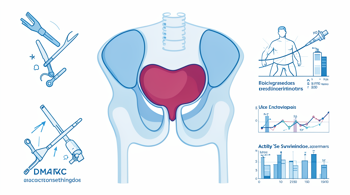
Radiation Therapy Modalities
Radiation therapy offers an equally effective, non-surgical alternative to eradicate localized prostate cancer by using high-energy beams to destroy the DNA of cancer cells 1, 2. It is highly suitable for patients who are poor surgical candidates due to underlying cardiovascular or pulmonary comorbidities, or those who prefer to avoid surgery 2, 8, 16. External beam radiation therapy is the most common delivery method, often utilizing advanced methods like intensity-modulated radiation therapy or proton beam therapy to shape the radiation to the gland and protect adjacent healthy organs 2.
Alternatively, patients may undergo brachytherapy, an internal radiation technique where doctors place tiny radioactive seeds directly into the prostate tissue to deliver highly localized, continuous doses 2, 21. To minimize radiation exposure to adjacent tissues, some health systems utilize a temporary hydrogel spacer, known as SpaceOAR, which is injected to create a physical gap between the prostate and the rectal wall 4. Radiation side effects are distinct from surgery; they typically manifest as gradual bowel irritation, rectal urgency, urinary frequency, and a slow decline in erectile function over several years 23.
Systemic and Advanced Therapies
When prostate cancer extends beyond the prostate gland or recurs after primary localized treatment, systemic therapies are deployed to treat cancer cells throughout the body 13, 20. The primary systemic approach is androgen deprivation therapy, commonly referred to as hormone therapy 13, 21. Because prostate cancer cells rely on testosterone to grow, ADT works by blocking the body's production of male hormones 13, 21. Hormone therapy is frequently combined with radiation therapy for aggressive, intermediate, or high-risk localized cancers to improve overall treatment efficacy and lower recurrence rates 10, 13.
For advanced or metastatic cases that become resistant to standard hormone therapies, medical oncologists utilize a broader array of systemic tools 13, 20. These options include:
- Chemotherapy: Docetaxel-based regimens are used to shrink tumors and extend survival in patients with metastatic castration-resistant disease 3, 21.
- Immunotherapy: Treatments such as sipuleucel-T stimulate the patient's own immune system to target and destroy advanced cancer cells 3, 21.
- Theranostics: An advanced, targeted approach combining molecular imaging biomarkers with precise radioactive drugs to find and destroy metastatic lesions 1, 13.
- Targeted Therapies: Drugs designed to target specific genetic mutations within the cancer's DNA, offering personalized disease management 13, 23.
Focal Therapy and Emerging Ablation Methods
For patients seeking an intermediate path between active surveillance and radical gland removal or full-dose radiation, focal therapy has emerged as a promising alternative 1, 15. Designed for highly localized, low-to-intermediate-risk tumors, focal therapy targets only the specific areas of the prostate containing the cancer, leaving the surrounding healthy tissue, urinary sphincter, and critical nerves untouched 1, 15. This preservation of healthy tissue dramatically lowers the risks of urinary incontinence and sexual dysfunction 15.
Common focal techniques include cryoablation, which freezes tumor cells, high-intensity focused ultrasound, and newer pulsed electric field ablation, also known as PEF or PEFA 1, 16. PEFA is a non-thermal ablation method that utilizes electrical fields to disrupt cancer cell membranes, offering rapid recovery times and minimal downtime 16. While focal therapies present a compelling, organ-sparing first-line option, they require careful patient selection and long-term surveillance, as the remaining untreated portions of the prostate gland must still be monitored for new tumor development 11, 15.
Sources
- Memorial Sloan Kettering Cancer Center - Treatments for Prostate Cancer (https://www.mskcc.org/cancer-conditions/prostate-cancer/treatment)
- Mayo Clinic - Prostate cancer treatment: Surgery vs. radiation (https://www.mayoclinic.org/diseases-conditions/prostate-cancer/in-depth/prostate-cancer-treatment-surgery-vs-radiation/art-20592862)
- University of Iowa Health Care - Prostate Cancer Treatment Options & What to Expect (https://uihc.org/health-topics/navigating-prostate-cancer-treatment-choices-radiation-vs-surgery)
- Penn Medicine - Prostate Cancer Treatment (https://www.pennmedicine.org/conditions/prostate-cancer/treatment)
- Journal of Urology - Clinically Localized Prostate Cancer: AUA/ASTRO Guideline Amendment (2026) (https://doi.org/10.1097/ju.0000000000005060)
- Cedars-Sinai - Prostate Cancer: Surgery vs. Radiation Treatment Options (https://webflow-prod.cedars-sinai.org/stories-and-insights/healthy-living/radiation-therapy-for-prostate-cancer)
- MyProstateCancerTeam - 8 Treatment Options for Prostate Cancer (https://www.myprostatecancerteam.com/resources/treatment-options-for-prostate-cancer-surgery-radiation-hormone-therapy-and-more)
- Prostate Cancer Foundation - Choosing a Treatment for Prostate Cancer: What to Consider (https://www.pcf.org/patient-support/patient-summits/2026-localized-prostate-cancer-patient-summit/choosing-a-treatment-for-prostate-cancer-what-to-consider/)
- Northeast Georgia Health System - How to choose between radiation or surgery for prostate cancer (https://www.nghs.com/2025/09/02/how-to-choose-between-radiation-or-surgery-for-prostate-cancer)
- Memorial Sloan Kettering Cancer Center - Radiation Therapy for Prostate Cancer (https://www.mskcc.org/cancer-conditions/prostate-cancer/treatment/radiation-therapy)
- Acibadem Healthcare Group - Prostate Cancer Treatment: What Are Your Options? (https://acibademinternational.com/prostate-cancer-treatment-what-are-your-options/)
- Erasmus University Rotterdam - EAU-EANM-ESTRO-ESUR-ISUP-SIOG Guidelines on Prostate Cancer (https://pure.eur.nl/en/publications/eau-eanm-estro-esur-isup-siog-guidelines-on-prostate-cancer2024-u/)
- Memorial Sloan Kettering Cancer Center - Hormone Therapy, Theranostics, and Other Systemic Therapies (https://www.mskcc.org/cancer-conditions/prostate-cancer/treatment/chemotherapy-systemic-therapies)
- Memorial Sloan Kettering Cancer Center - Surgery for Prostate Cancer (https://www.mskcc.org/cancer-conditions/prostate-cancer/treatment/surgery)
- Sperling Prostate Center - Treatment Choices for Localized Prostate Cancer (https://sperlingprostatecenter.com/treatment-choices-for-localized-prostate-cancer/)
- Atlanta Prostate Center - Prostate Cancer: What Are My Options for Treatment? (https://atlprostatecenter.com/2025/08/25/prostate-cancer-what-are-my-options-for-treatment/)
- National Cancer Center - To Treat Prostate Cancer, There Are More Options Than Ever (https://nationalcancercenter.org/to-treat-prostate-cancer-there-are-more-options-than-ever/)
- Dr. Pawan Rahangdale - Prostate Cancer Treatment Options Explained (https://www.urovision.co.in/prostate-cancer-treatment-options-explained-surgery-radiation-or-active-surveillance/)
- Memorial Sloan Kettering Cancer Center - Treatments for Metastatic Prostate Cancer That Has Spread (https://www.mskcc.org/cancer-conditions/prostate-cancer/diagnosis-types-stages/metastatic)
- Mayo Clinic - Prostate cancer explained: From antigen tests to treatment options (https://medicalxpress.com/news/2025-07-prostate-cancer-antigen-treatment-options.html)
- 247 Health Care - Prostate Cancer Treatment: Complete Guide to Options (https://247healthcare.blog/prostate-cancer-treatment/)
- My Medicine Advisor - Prostate Cancer Surgery vs. Radiation: Real Trade-Off (https://mymedicineadvisor.com/health/prostate-cancer-surgery-vs-radiation/)
- Fertile Hope - How Is Prostate Cancer Treated? Understanding Your Options (https://www.fertilehope.org/how-is-prostate-cancer-treated/)
- Urology XY - Understanding Prostate Cancer Treatment Options (https://www.urologyxy.com/post/understanding-prostate-cancer-treatment-options-current-cancer-treatment-options)
- 247 Health Care - Prostate Cancer Treatment by Stage: Complete Guide (https://247healthcare.blog/prostate-cancer-treatment-by-stage/)
Authored by MyTrendSpot team