The True Cost of Sleep Apnea Therapy
The true cost of sleep apnea therapy is not captured in any single price tag. From a $149 home sleep test to a $45,000 surgical implant, the financial landscape spans an enormous range depending on treatment modality, insurance status, geographic location, and long-term adherence patterns. According to the American Academy of Sleep Medicine, an estimated 30 million Americans have obstructive sleep apnea, yet roughly 80 percent remain undiagnosed, often because individuals assume testing and treatment are unaffordable. 1 Understanding each cost layer in sequence is the clearest path to an informed treatment decision.
Diagnosis: The First Financial Threshold
Before any therapy begins, a formal diagnosis is required, and the cost of that diagnosis varies significantly by test type. At-home sleep apnea tests (HSAT) range from $149 to $500, while in-laboratory polysomnography can reach $3,000 or more before insurance adjustments, depending on facility, location, and insurer negotiated rates. 2 In Europe, home sleep studies cost between 150 and 500 euros, and most countries reimburse this expense when a general practitioner referral is in place. 3
Insurance plans, including Medicare Part B, typically cover diagnostic sleep studies when medical necessity criteria are met, but cost-sharing obligations such as deductibles, copays, and coinsurance still apply. Prior authorization requirements are common, and a missing document, such as an absent sleep study report or an unsigned physician order, can stall or void a claim entirely. 4 Cash-pay patients without coverage can access home sleep tests at the lower end of the price range through direct-to-consumer testing platforms, reducing the diagnostic barrier substantially.
CPAP Therapy: Machine, Supplies, and Hidden Ongoing Expenses
Standard CPAP machines range from $500 to $1,000, with most current-generation models such as the ResMed AirSense and Philips DreamStation 2 landing around $700 to $800 for cash purchases. 5 Total first-year costs, including the machine, mask, initial filters, and tubing, typically run between $1,000 and $2,000 depending on setup complexity. Beyond year one, ongoing annual supply costs add $300 to $600 for replacement masks, cushions, filters, and humidifier chambers under a standard replacement schedule. 6
A frequently overlooked expense is electricity. A CPAP machine with a humidifier running draws approximately 60 watts during therapy, translating to roughly $21 to $41 per year at average U.S. utility rates. 7 In high-rate states such as Hawaii, California, and Massachusetts, electricity costs for durable medical equipment can raise a household's monthly energy bill by up to 40%, a burden that current Medicare and Medicaid policies do not cover. 7 Projecting machine cost plus supplies plus power across 60 months produces a five-year CPAP total that many patients significantly underestimate at the point of initial prescription.
Insurance Navigation and Compliance Tracking
Insurance coverage for CPAP therapy is available under most major U.S. health plans, but it operates through a structured rent-to-own model rather than an outright purchase. Medicare Part B follows a 13-month rental framework, after which ownership transfers to the patient, provided adherence requirements are continuously met. Common insurer thresholds mandate usage of at least four hours per night for 70 percent of nights during the initial 90-day evaluation period. 8 Failure to meet these thresholds can result in device repossession and denial of further coverage.
Patients with high-deductible health plans (HDHPs) often find that purchasing a CPAP machine directly online is substantially less expensive than navigating the insurance route. When a deductible has not yet been met, the inflated durable medical equipment supplier price charged to insurance can exceed the cash price by a wide margin. 9 Cash purchases also eliminate the compliance tracking requirement, removing the risk of coverage termination based on usage data. Comparing the actual out-of-pocket trajectory under both scenarios before committing to either path is a practical financial consideration.
Oral Appliance Therapy: Upfront Investment and Long-Term Ownership
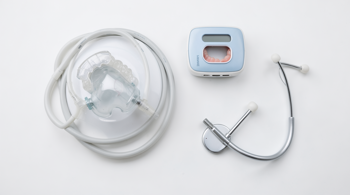
Custom-fabricated mandibular advancement devices (MADs) represent the primary alternative to CPAP for mild to moderate obstructive sleep apnea. Device cost ranges from $1,800 to $3,500 in the U.S., covering the clinical evaluation, dental impressions or digital scanning, laboratory fabrication, delivery fitting, and three to six titration visits. 10 The most commonly prescribed designs, including the SomnoMed Avant, Respire Blue series, and ProSomnus EVO, fall within the $1,800 to $3,000 range for the complete evaluation and titration package.
Medical insurance, rather than dental insurance, is the relevant coverage pathway for oral appliances, and approval typically requires a physician diagnosis of obstructive sleep apnea and documented evidence of CPAP intolerance. Five-year total cost of ownership for an oral appliance, accounting for device replacement every two to five years and annual dental follow-ups, is often comparable to CPAP over the same period, though the initial out-of-pocket amount differs meaningfully based on coverage. 10 In European markets, custom MAD devices range from 500 to 2,500 euros, with partial reimbursement available in France, Germany, and the Netherlands. 3
Surgical Options: Cost, Success Rates, and Coverage Realities
Surgical intervention represents the highest-cost tier of sleep apnea treatment. Uvulopalatopharyngoplasty (UPPP), the most commonly performed procedure, costs between $6,000 and $10,000 before insurance and achieves surgical success, defined as a 50 percent reduction in apnea-hypopnea index (AHI) with a final AHI below 20, in approximately 40 to 50 percent of cases at 12 months, with 10-year remission rates below 25 percent in most clinical series. 11 Maxillomandibular advancement carries success rates of 75 to 90 percent but requires six to eight weeks of restricted jaw movement during recovery.
Hypoglossal nerve stimulation via the Inspire device shows the highest long-term efficacy among surgical options, with a 68 percent reduction in median AHI at five years. Total procedure cost ranges from $30,000 to $65,000, with an average of approximately $45,000 before insurance. 12 Medicare and most major commercial insurers cover Inspire implantation for eligible patients, meaning those with moderate to severe OSA, a BMI under 35, and documented CPAP failure, though out-of-pocket exposure depends on plan design, facility in-network status, and whether anesthesia and follow-up providers bill separately.
The Economic Cost of Leaving Sleep Apnea Untreated
The financial calculus of sleep apnea therapy must include the cost of inaction. Undiagnosed and untreated OSA imposes an estimated $202.9 billion annual economic burden in the U.S., driven by increased hospitalizations, comorbid disease progression, motor vehicle accidents, and lost workplace productivity. 13 On an individual patient level, untreated OSA generates $2,645 to $5,288 in excess medical costs per year compared to treated patients, primarily through elevated cardiovascular and metabolic disease management expenses.
Treating all currently undiagnosed OSA cases in the U.S. would cost an estimated $67.1 billion, yielding a 3:1 return on investment through reduced healthcare utilization and improved workforce performance. 13 For patients weighing whether to initiate therapy, this data reframes the financial question: the cumulative out-of-pocket cost of CPAP or oral appliance therapy over five years is frequently lower than the incremental medical expenses generated by chronic untreated apnea events. A parallel challenge exists in the reimbursement landscape, where FDA-cleared devices such as the eXciteOSA neuromuscular stimulation device and the iNAP oral negative pressure system remain classified as investigational by many commercial payers despite established regulatory clearance, limiting access and shifting costs directly to patients. 14
Sources
- Dumbo Health Blog - Cost of Sleep Apnea Testing: What You Will Actually Pay (dumbo.health)
- Dumbo Health Blog - Cost of Sleep Apnea Testing: What You Will Actually Pay (dumbo.health)
- Back2Sleep - Sleep Apnea Treatment Cost in Europe 2026 (back2sleep.eu)
- Sleep and Sinus Centers - Does Insurance Cover a CPAP Machine? Coverage, Costs, and Requirements (sleepandsinuscenters.com)
- SnoringHQ - CPAP Machine Cost: Complete 2026 Price Breakdown and Guide (snoringhq.com)
- SnoringHQ - CPAP Machine Cost: Complete 2026 Price Breakdown and Guide (snoringhq.com)
- Sleep Review Magazine - The Hidden Cost Burden for CPAP and Other Common DME (sleepreviewmag.com)
- The CPAP Shop - CPAP Therapy: Insurance vs Online Purchase? (thecpapshop.com)
- The CPAP Shop - The Hidden Costs of Insurance: Why Buying Your CPAP Online Might Be Cheaper in 2026 (thecpapshop.com)
- Recovery Central - Sleep Apnea Oral Appliance Cost: What to Expect and Whether It Is Worth It (recoverycentral.org)
- Recovery Central - Sleep Apnea Surgery Cost, Success Rates, and Non-Surgical Options (recoverycentral.org)
- SleepApneaMatch - Inspire Cost Guide 2026 (sleepapneamatch.com)
- ResMed Sleep Institute - The Economic Value of Treating OSA with PAP Therapy (resmedsleepinstitute.com)
- ResMed Sleep Institute - The Device Reimbursement Gap in Sleep Medicine (resmedsleepinstitute.com)
Authored by MyTrendSpot team