Benign Prostate Hyperplasia vs. Prostate Cancer: What's the Difference: An Objective Comparative Clinical Guide
When men experience changes in their urinary patterns, a common and immediate concern is whether these symptoms indicate the development of a malignant condition. Understanding the difference between Benign Prostatic Hyperplasia (BPH) and prostate cancer is crucial for navigating age-related changes, alleviating health anxiety, and ensuring appropriate medical care 1. While both conditions affect the same gland, they are fundamentally distinct in their biological behavior, clinical progression, and long-term implications 2.
Understanding the Anatomy and Pathophysiology
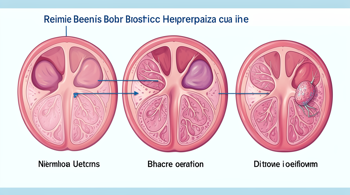
The prostate is a small, walnut-sized reproductive gland located just below the bladder and in front of the rectum, wrapping directly around the urethra 3. BPH, often referred to simply as an enlarged prostate, is a non-cancerous condition characterized by the benign proliferation of stromal and epithelial cells 4. This cell division primarily occurs in the transition zone of the prostate, which directly surrounds the urethra 5. As this tissue expands, it compresses the urethral channel, creating a mechanical obstruction that restricts the flow of urine out of the bladder 5.
In contrast, prostate cancer is a malignant neoplastic disease characterized by uncontrolled cellular mutation and division 10. While BPH tissue does not invade nearby organs or travel to distant areas of the body, prostate cancer cells have the capacity to break through the prostatic capsule and metastasize to other sites, most commonly the regional lymph nodes and skeletal system 2. Clinical data confirms that BPH is not a precancerous condition, does not evolve into cancer, and does not increase an individual's statistical risk of developing a malignancy 2. However, because both conditions are highly prevalent in aging populations, they frequently coexist within the same patient 2.
Prevalence and Demographic Variations
Both BPH and prostate cancer exhibit strong correlations with patient age, but their epidemiological profiles reveal unique statistical patterns. BPH is considered an almost universal aspect of male aging, with a predictable onset driven by natural hormonal shifts over time 3. Experts estimate that the condition affects roughly 5% to 6% of men between the ages of 40 and 64, rising sharply to affect approximately 50% of men in their 60s, and up to 90% of men by their 80s 6. It rarely presents with clinical symptoms in individuals under the age of 40 6.
Prostate cancer is also primarily diagnosed in men over the age of 50 7. However, its risk factors extend far beyond age-related hormonal cycles. Epidemiological research indicates that genetic family history and race are major indicators of risk, with African American men experiencing a significantly higher incidence and clinical severity of the disease 7. Unlike BPH, which develops uniformly as a consequence of cellular longevity, prostate cancer risk is heavily influenced by inherited gene mutations, requiring personalized screening strategies based on individual risk profiles 7.
A Side-by-Side Diagnostic Comparison
To clarify how these conditions differ, medical professionals evaluate various factors including cellular characteristics, anatomical location, and typical clinical presentation. The following table highlights the core parameters that differentiate BPH from prostate cancer:
| Feature / Parameter | Benign Prostatic Hyperplasia (BPH) | Prostate Cancer |
|---|---|---|
| Cellular Behavior | Benign hyperplasia (non-cancerous cell multiplication) 2 | Malignant neoplasm (uncontrolled, mutating cells) 10 |
| Primary Glandular Zone | Transition zone (surrounding the urethra) 5 | Peripheral zone (outer portion of the gland) 5 |
| Urinary Obstruction | Common and progressive due to direct urethral compression 3 | Uncommon in early stages; present in advanced stages 2 |
| Metastatic Potential | None; remains localized to the prostate gland 10 | High; can spread to regional lymph nodes and bones 2 |
| Physical Exam (DRE) | Symmetrical, smooth, soft, and uniformly enlarged gland 8 | Asymmetrical, hard, nodular, or irregular surface 8 |
Evaluating Overlapping and Distinguishing Symptoms
Because the prostate surrounds the urethra, any change in its physical mass can affect urination, leading to clinical overlap in lower urinary tract symptoms (LUTS) 1. Patients with either condition may report a weakened, slow, or interrupted urinary stream, a frequent and urgent need to urinate during the day, and nocturia, which is the frequent need to urinate during normal sleeping hours 3. Other shared signs include hesitancy when initiating urination and a persistent sensation that the bladder has not completely emptied 3.
Despite these similarities, key clinical indicators can point toward one condition over the other. BPH symptoms typically develop gradually over years as the transition zone slowly expands 2. In contrast, early-stage prostate cancer is almost entirely asymptomatic and is most frequently identified through routine screening before physical symptoms appear 2. Symptoms that suggest advanced prostate cancer rather than BPH include unexplained weight loss, persistent bone pain in the back, hips, or ribs, and the sudden onset of erectile dysfunction 2. Blood in the urine or semen can occur in both, but is statistically more common in malignant cases 2.
The Role of PSA Testing and Diagnostic Pathology
The Prostate-Specific Antigen (PSA) blood test is a primary tool used to monitor prostate health, but an elevated PSA level alone cannot distinguish between benign and malignant conditions 1. PSA is an enzyme produced by both normal and cancerous prostate cells. High PSA levels can be caused by the benign tissue expansion of BPH, physical manipulation, localized urinary tract infections, or malignant cell growth 1. Because PSA lacks perfect specificity, clinicians rely on secondary metrics like PSA density, PSA velocity, and advanced blood inflammatory biomarkers combined with tumor markers to refine diagnostic accuracy 9.
To establish a definitive diagnosis, urologists use a multi-step evaluation pathway 8. A Digital Rectal Exam (DRE) allows a clinician to palpate the rear surface of the prostate to check for physical abnormalities 8. If a patient presents with elevated PSA levels, suspicious DRE findings, or abnormal biomarker panels, a transrectal ultrasound-guided needle biopsy is performed 8. Pathologists examine these tissue samples under a microscope, often utilizing immunohistochemistry to identify specific positive tumor markers like AMACR or negative basal cell markers like p63 to confirm or rule out adenocarcinoma 11.
Contrasting Clinical Management and Treatment Paths
The management paths for BPH and prostate cancer reflect their differing levels of medical urgency. BPH treatment focuses strictly on improving quality of life and relieving bothersome urinary symptoms 4. Mild cases are often managed with lifestyle adjustments such as limiting evening fluid intake 3. Moderate to severe BPH is managed with medications, including alpha-blockers to relax the bladder neck muscles or 5-alpha-reductase inhibitors to gradually shrink the prostate tissue 4. Surgical procedures like transurethral resection are reserved for cases with persistent urinary retention or recurrent infections 4.
Conversely, prostate cancer therapies are designed to eliminate or control malignant cells to prevent localized invasion and distant metastasis 4. For low-risk, slow-growing tumors, active surveillance is frequently recommended to monitor the disease without immediate intervention 4. When active treatment is required, options include surgical prostatectomy, external or internal radiation therapy, chemotherapy, and hormone therapies designed to suppress androgen production 4. Regular clinical monitoring remains essential for both conditions to manage progression and prevent complications 8.
Sources
- Idaho Urologic Institute: https://idurology.com/posts/whats-the-difference-between-bph-and-prostate-cancer/
- 247 Healthcare: https://247healthcare.blog/bph-vs-prostate-cancer/
- Idaho Urologic Institute (BPH Overview): https://idurology.com/posts/whats-the-difference-between-bph-and-prostate-cancer/
- Cleveland Clinic (BPH Treatment): https://my.clevelandclinic.org/health/diseases/15630-benign-prostate-hyperplasia-bph
- London Prostate Clinic: https://londonprostateclinic.com/prostate-cancer-and-bph/
- National Institute of Diabetes and Digestive and Kidney Diseases (NIDDK): https://www.niddk.nih.gov/health-information/urologic-diseases/prostate-problems/benign-prostatic-hyperplasia
- Centers for Disease Control and Prevention (CDC): https://www.cdc.gov/cancer/prostate/basic_info/risk_factors.htm
- Urology Care Foundation (Diagnosis): https://www.urologyhealth.org/urologic-conditions/benign-prostatic-hyperplasia
- Frontiers in Medicine (Biomarkers Study): https://doi.org/10.3389/fmed.2026.1730818
- Pristyn Care: https://www.pristyncare.com/blog/difference-between-enlarged-prostate-and-prostate-cancer/
- Journal of the Faculty of Medicine Baghdad (Immunohistochemistry): https://doi.org/10.32007/jfacmedbaghdad3185
Authored by MyTrendSpot team