Varicose Veins Complications: When to See a Specialist
Many individuals identify varicose veins as primarily a aesthetic issue, characterized by twisted, purple, or dark blue superficial vessels in the lower extremities 1. However, clinical data indicates that these bulging structures are often the visible presentation of chronic venous insufficiency (CVI), a progressive vascular condition that affects approximately 35% of the adult population in the United States 8. When the delicate internal valves of the lower leg veins weaken, blood pools under high venous pressure, which can lead to serious physiological consequences 4. Understanding the clinical warning signs and potential complications is essential for knowing exactly when conservative home care is insufficient and when a clinical consultation with a vascular surgeon, interventional radiologist, or phlebologist is required to preserve long-term tissue health 2.
Understanding the Progressive Nature of Venous Insufficiency
Varicose veins develop when the tiny, one-way valves designed to pump deoxygenated blood back toward the heart become damaged or fail 1. When these valves fail to close fully, gravity pulls the blood backward, causing it to pool in the superficial vessels of the lower legs, calves, and ankles 4. This continuous pooling increases local venous pressure, stretching and contorting the vein walls until they appear as raised, rope-like bulges beneath the skin surface 4.
Because valve failure is a progressive structural issue, the underlying venous hypertension rarely stabilizes without intervention 15. Medical research shows that while early symptoms may be limited to mild heaviness, continuous hydrostatic pressure can gradually degrade surrounding tissues 15. Over time, this pressure forces red blood cells and fluid out of the vessels and into the interstitial space, initiating a cascade of inflammatory tissue damage 22.
The CEAP Classification and Clinical Stages of Vein Disease
Vascular specialists evaluate the severity of venous disease using the standardized CEAP classification system 9. This framework categorizes the progression of the disease from minor cosmetic changes to advanced, irreversible tissue damage, helping clinicians determine the necessity of specialized intervention 14:
- C2: Visible, bulging varicose veins that are at least 3 millimeters in diameter, often accompanied by mild heaviness 12.
- C3: Persistent ankle or lower leg edema caused by fluid accumulation, which typically worsens throughout the day 14.
- C4a: Skin pigmentation, brown discoloration, or localized venous eczema around the gaiter area of the ankle 14.
- C4b: Lipodermatosclerosis, which is a severe, irreversible thickening and hardening of the subcutaneous tissue 14.
- C5: A healed venous stasis ulcer that previously broke through the skin barrier 14.
- C6: An active, open venous ulcer that lacks healthy circulation and remains highly susceptible to secondary infections 14.
Severe Skin Changes and Lipodermatosclerosis
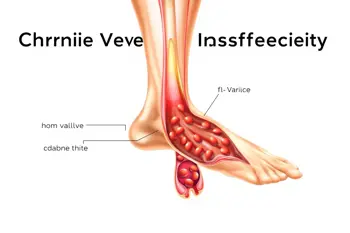
When chronic venous insufficiency reaches the C4 stage, the skin surrounding the ankles and lower calves undergoes visible structural changes 14. The high venous pressure forces iron-rich hemoglobin from the pooled blood into the skin tissues, leaving behind dark brown patches known as haemosiderin deposition 22. This is often accompanied by stasis dermatitis, an itchy, red, scaly rash that is frequently misdiagnosed as simple dry skin or a localized allergic reaction 2.
If the venous pressure remains unaddressed, the chronic inflammatory response causes the underlying fat and skin to scar and contract 22. This condition, known as lipodermatosclerosis, results in a hard, woody, and painful constriction of the lower leg, giving it an inverted champagne bottle appearance 14. Because these skin changes represent advanced tissue damage, consulting a vascular specialist is crucial to prevent permanent scarring 8.
The Risks of Venous Leg Ulcers
One of the most debilitating consequences of untreated varicose veins is the formation of open wounds called venous ulcers 2. These sores typically develop on the inner aspect of the lower leg, just above the ankle bone 22. Because the local tissues are congested with poorly oxygenated blood, the skin becomes thin and fragile, allowing even minor trauma or scratching to trigger a breakdown of the skin barrier 24.
Venous ulcers are notoriously difficult to heal, often requiring intensive wound care, specialized compression therapy, and venous ablation for 6 to 12 months to achieve closure 14. Clinical registries indicate that treating these wounds accounts for a significant healthcare burden, highlighting the clinical necessity of seeking specialist care before the skin breaks open 8.
Acute Emergencies: Bleeding and Deep Vein Thrombosis
While many venous complications develop gradually, certain acute events require immediate emergency medical evaluation 14. Spontaneous bleeding occurs when a high-pressure varicose vein directly beneath thin, paper-like skin ruptures 14. This can result in significant, rapid blood loss; immediate first aid requires elevating the leg above the heart and applying direct pressure to the wound with a clean cloth before seeking emergency care 24.
Another dangerous complication is deep vein thrombosis (DVT), a condition where a blood clot forms in the deep venous system 2. Research shows that individuals with varicose veins are over five times more likely to develop a DVT than those without venous disease 18. If a clot detaches, it can travel to the lungs and cause a life-threatening pulmonary embolism, making sudden calf pain, warmth, redness, or shortness of breath critical warning signs 2.
| Complication | Clinical Signs & Symptoms | Urgency Level |
|---|---|---|
| Persistent Edema | Ankle swelling that worsens by evening and improves overnight 2 | Moderate (Vascular Consult) |
| Hyperpigmentation | Brown, rusty discoloration or dry, itchy eczema around the ankle 14 | Moderate (Vascular Consult) |
| Superficial Thrombophlebitis | A red, warm, hard, and painful cord-like vein along the leg 14 | Urgent Medical Care |
| Venous Ulcers | Open, slow-healing sores or raw wounds in the gaiter area 2 | Urgent Medical Care |
| Spontaneous Bleeding | Profuse external bleeding from a ruptured surface vein 14 | Immediate Emergency Care |
| Deep Vein Thrombosis (DVT) | Sudden, unilateral leg swelling with intense calf pain and warmth 2 | Immediate Emergency Care |
When to Seek Professional Vascular Evaluation
Clinical guidelines from the American Vein and Lymphatic Surgery Society recommend that any patient experiencing symptomatic varicose veins seek a professional medical evaluation 1. While mild symptoms like occasional leg fatigue can sometimes be managed with regular exercise, weight management, and daily wear of graduated compression stockings, symptoms that interfere with daily activities or sleep warrant diagnostic testing 13.
A vascular specialist will perform a physical exam and a non-invasive venous duplex ultrasound 9. This diagnostic tool visualizes blood flow in real-time, allowing the specialist to pinpoint the exact location of the faulty valves and map the severity of the venous reflux 9. Modern treatment strategies have shifted away from surgical ligation and stripping to minimally invasive, outpatient techniques such as endovenous laser ablation (EVLA), radiofrequency ablation (RFA), and medical adhesives, which offer high success rates and rapid recovery times 14.
Sources
- Cleveland Clinic: Varicose Veins Overview (https://my.clevelandclinic.org/health/diseases/4722-varicose-veins)
- Penn Medicine: Varicose Veins Symptoms and Causes (https://www.pennmedicine.org/conditions/varicose-veins)
- American Medical Association (AMA): Chronic Venous Insufficiency (https://www.ama-assn.org/public-health/population-health/what-doctors-want-patients-know-about-chronic-venous-insufficiency)
- CACVI: When to See a Doctor About Varicose Veins (https://cacvi.org/when-to-see-a-doctor-about-varicose-veins/)
- Merck Manual Professional Edition: Varicose Veins Cardiology (https://www.merckmanuals.com/professional/cardiovascular-disorders/peripheral-venous-disorders/varicose-veins)
- Harvard Health: Varicose Veins A to Z (https://www.health.harvard.edu/heart-health/varicose-veins-a-to-z)
- Vein Treatment Clinic: When Should You See a Vein Specialist? (https://www.veintreatmentclinic.com/conditions/when-to-see-a-vein-specialist)
- Fabio Komlos MD: Varicose Veins and Treatment Options (https://fabiokomlosmd.com/varicose-veins-when-to-see-a-specialist-and-what-treatment-options-are-available/)
- NCBI Bookshelf: Venous Insufficiency (https://www.ncbi.nlm.nih.gov/books/NBK430975/)
- UK Vein Clinic: When to Worry About Varicose Veins (https://www.ukveinclinic.com/blog/when-should-you-seek-varicose-vein-treatments)
- MSD Manual Consumer Version: Varicose Veins (https://www.msdmanuals.com/home/heart-and-blood-vessel-disorders/venous-disorders/varicose-veins)
- Hope Medical PC: Stages and Signs of Varicose Veins (https://hopemedicalpc.com/when-to-worry-about-varicose-veins/)
- Cypress Cardiovascular Institute: When to See a Vein Doctor (https://cypresscardiovascularinstitute.com/when-to-see-a-vein-doctor-for-varicose-veins-spring-tx/)
- Dr. Raja Veins Clinic: Varicose Vein Complications (https://drrajaveinsclinic.com/varicose-vein-complications)
- United Vein Centers: When to Worry About Varicose Veins (https://unitedveincenters.com/blog/ask-the-doc-when-to-worry-about-varicose-veins/)
- United Vein Centers: Warning Signs Your Varicose Veins Are Getting Worse (https://unitedveincenters.com/blog/ask-the-doc-warning-signs-varicose-veins-getting-worse/)
- MSD Manual Professional Edition: Chronic Venous Insufficiency (https://www.msdmanuals.com/professional/cardiovascular-disorders/peripheral-venous-disorders/chronic-venous-insufficiency-and-post-thrombotic-syndrome)
- USA Vein Clinics: Do I Need to See a Doctor for Varicose Veins? (https://www.usaveinclinics.com/blog/how-do-i-know-my-varicose-veins-need-treatment/)
- Sun Vein and Vascular: When to See a Specialist (https://www.sunveinandvascular.com/when-to-see-a-specialist-for-varicose-veins)
- UK Vein Clinic: Serious Complications of Untreated Varicose Veins (https://www.ukveinclinic.com/blog/consequences-of-untreated-varicose-veins)
- International Journal of Angiology: Chronic Venous Insufficiency Updates (https://doi.org/10.1055/a-2874-9114)
- The Whiteley Clinic: CEAP C4 Skin Damage (https://thewhiteleyclinic.co.uk/news-articles/ceap-c4-skin-damage-complications-varicose-veins-venous-reflux/)
- My Patient Advice: When is Surgery Needed for Varicose Veins? (https://mypatientadvice.co.uk/knowledge-base/body-systems-specialties/heart-circulation/venous-disease-varicose-veins-dvt-pulmonary-embolism/when-is-surgery-needed-for-varicose-veins/)
- Dr. Darryl Lim: Can a Varicose Vein Burst? (https://drdarryllim.com/blog/can-a-varicose-vein-burst/)
Authored by MyTrendSpot team