Hypertension Early Detection: A Clinical and Evidence-Based Guide to Identifying High Blood Pressure Before Complications Arise
The Scale of Undiagnosed Hypertension Worldwide
According to the World Health Organization, approximately 1 in 3 adults globally, roughly 1.28 billion people, are living with hypertension, and nearly half remain unaware of their condition. 1 In the United States alone, the Centers for Disease Control and Prevention estimates that about 1 in 3 American adults have hypertension, with the condition frequently progressing for years without any noticeable symptoms. 2 In India, the burden is particularly acute: over 220 million people live with the condition, with detection and follow-up rates especially low among younger adults and rural populations. 3
Thailand presents a comparable scenario. Data from the Health Data Center database for fiscal year 2022 identified 5.1 million cases of blood pressure readings at or above 140/90 mmHg from 31 million valid visits, representing 16% of the total. Among this group, approximately one million, or 20%, were classified as undiagnosed hypertension patients. 4 In Jordan, a community screening study of 932 adults in Amman found that 45% had elevated systolic readings, 15% were at stage 1, and 5.5% at stage 2, with 61% reporting a family history of hypertension and 62% reporting insufficient exercise. 5 These figures collectively underscore why passive reliance on symptom onset is a clinically inadequate detection strategy.
Diagnostic Thresholds and Current Guideline Standards
The 2025 joint guideline from the American Heart Association and American College of Cardiology, which retires and replaces the 2017 version, reaffirms the core recommendation that adults should achieve a blood pressure target of less than 130/80 mmHg. 6 The updated guidelines also call for earlier and more aggressive treatment of hypertension, with new emphasis on abstaining from alcohol and closer surveillance of blood pressure during and after pregnancy. The NICE guideline for hypertension in adults covers identifying and treating primary hypertension in people aged 18 and over, including those with type 2 diabetes, aiming to reduce cardiovascular events such as heart attacks and strokes. 7
The U.S. Preventive Services Task Force recommends screening for hypertension in adults aged 18 years or older using office blood pressure measurement, with confirmation outside the clinical visit when necessary to exclude white coat hypertension. 8 Ambulatory blood pressure monitoring and home blood pressure monitoring are recognized as complementary tools that can identify masked hypertension, a condition where readings appear normal in clinical settings but are elevated in daily life. Research published in Frontiers in Physiology demonstrated that machine learning models applied to clinical data from a single outpatient visit could predict masked hypertension in young adults aged 20 to 30, addressing limitations in the feasibility and accessibility of current ambulatory monitoring methods. 9
Risk Stratification and the Optimal Age to Begin Screening
A cross-sectional study using data from India's fifth National Family Health Survey, which included over 101,000 men and 724,000 women aged 15 and above, found that hypertension prevalence increased linearly with age, with a significant rise observed in the 35 to 39 years age group. Receiver Operating Characteristic analysis identified 35 years as the optimal age for initiating routine hypertension screening in both men and women, offering balanced sensitivity and specificity for early detection. 10 Factors significantly associated with hypertension in that study included marital status, religion, education, wealth index, alcohol consumption, and waist-hip ratio.
A prospective cohort study from the Tohoku Medical Megabank involving 9,001 hypertension-free individuals found that during a mean follow-up of 4.3 years, 2,822 participants, representing 31.4%, developed hypertension. High genetic risk alone significantly increased hypertension incidence even among those with an ideal lifestyle and no family history, with a relative risk of 1.28. Participants with low polygenic risk scores but a positive family history also showed elevated risk, with a relative risk of 1.32, demonstrating that both heritable and behavioral factors independently contribute to hypertension onset. 11
Consequences of Late Detection: Organ Damage and Long-Term Risk
Research presented at the American Heart Association's EPI/Lifestyle Scientific Sessions 2026 confirmed that higher blood pressure during young adulthood is associated with increased risk of heart disease and kidney disease later in life. The findings, drawn from the Korean National Health Insurance Service database, indicate that long-term cumulative exposure to elevated blood pressure from early life may accumulate organ damage over time, even when short-term 10-year cardiovascular risk scores appear low. 12 A separate correspondence in Hypertension Research documented unexpectedly rapid chronic kidney disease progression within 10 years of follow-up in individuals with early-onset hypertension. 13
Subclinical organ damage can also be detected through emerging clinical tools. A 2026 study published in Frontiers in Cardiovascular Medicine evaluated an AI-enhanced electrocardiography algorithm for identifying subclinical left ventricular dysfunction in hypertensive individuals. Subclinical dysfunction was identified in 38.5% of 348 participants, and the AI-ECG probability score showed robust diagnostic ability with an area under the curve of 0.86. 14 Additionally, a study of 124 newly diagnosed hypertensive patients found microalbuminuria present in 21% of cases, most commonly in the 41 to 50 year age group, indicating early kidney involvement that would be missed without active biochemical screening. 15
Emerging Technologies in Hypertension Screening
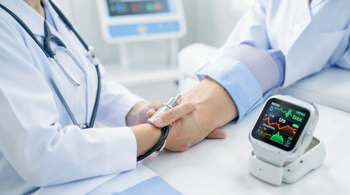
A 2025 preprint from Google Research and Beth Israel Deaconess Medical Center demonstrated that a consumer smartwatch could opportunistically detect signs of hypertension in individuals unaware of their condition. The study noted that over half of affected adults are unaware they have hypertension, reinforcing the potential of passive wearable monitoring to bridge the detection gap. 16 Separately, Omron Healthcare and the University of California San Francisco launched the OMRON-AF randomised controlled trial enrolling approximately 1,900 hypertension patients aged 60 and older to evaluate whether daily home blood pressure monitoring equipped with an AF-detection algorithm can identify atrial fibrillation early within existing hypertension care pathways. 17
Artificial intelligence is also being applied to predict new-onset hypertension at the population level. A Japanese study analyzed 2,610,286 individuals without hypertension who underwent annual health check-ups from 2005 to 2015 and were followed for five consecutive years. Using a combinatorial data-mining framework, researchers identified 4,802 combinations of clinical factors predictive of hypertension onset, with hypertension incidence increasing stepwise with the number of matching predictive combinations. 18 A separate AI model for morning hypertension, developed using a prospective cohort of 1,850 patients, achieved an AUC of 0.92 with 87% sensitivity and 89% specificity, and could predict subjects at risk approximately two weeks before the event with 82% accuracy. 19
Primary Aldosteronism and the Risk of Secondary Hypertension Being Missed
A significant detection gap exists for secondary causes of hypertension. Research presented at the Endocrine Society's 2026 annual meeting in Chicago, based on a real-world cohort of over 2.5 million adults, found that only 0.76% of individuals newly diagnosed with hypertension were screened for primary aldosteronism. Among those who were tested, nearly 9% were confirmed positive, indicating a substantial proportion of patients receiving standard hypertension management when a distinct underlying and treatable cause exists. 20 Primary aldosteronism arises from excessive aldosterone production by the adrenal glands, disrupting sodium and potassium balance and markedly elevating the risk of stroke, heart disease, and kidney dysfunction.
Current clinical guidelines recommend screening all hypertensive patients by measuring aldosterone and renin levels to calculate the aldosterone-to-renin ratio. Treatment options differ substantially from standard hypertension management and range from mineralocorticoid receptor antagonists such as spironolactone to surgical removal of adrenal tumors. These distinctions make early and accurate detection of the underlying cause clinically important, as misclassification can result in suboptimal treatment outcomes and continued cardiovascular damage over time. 7
Modifiable Risk Factors and the Role of Lifestyle in Early Intervention
Early detection carries meaningful clinical value only when followed by evidence-based intervention. A study from Padjadjaran University evaluating a community nursing program in Indonesia found that hypertension education significantly increased knowledge scores from 5.33 to 7.69 (p=0.000), while structured hypertension exercise reduced systolic blood pressure from 129.47 mmHg to 122.73 mmHg and diastolic pressure from 83.53 mmHg to 81.13 mmHg among participants. 21 These findings reinforce the value of combining screening with structured behavioral interventions.
Cardiologists have also highlighted the two-minute walk test as a low-cost tool for spotting early signs of cardiovascular dysfunction, particularly in asymptomatic or newly diagnosed hypertensive individuals. Short activity breaks taken every 30 to 60 minutes have been associated with reductions in average blood pressure and improvements in vascular health. 3 Modifiable risk contributors documented across population studies include high sodium intake, sedentary behavior, alcohol consumption, smoking, obesity, and chronic psychological stress. The SPRINT trial, which informed the 2025 AHA/ACC guideline, found that an intensive systolic blood pressure target below 120 mmHg reduced cardiovascular events by 25% and mortality by 27% compared to a standard target of below 140 mmHg, supporting the case that earlier, more aggressive management following early detection produces measurable clinical benefit. 6
Sources
- World Health Organization - Hypertension Key Facts (who.int)
- Centers for Disease Control and Prevention - High Blood Pressure Facts (cdc.gov)
- The Hindu - How a simple two-minute walk can help both prevent hypertension and detect it early (thehindu.com)
- Disease Control Journal - Factors associated with Undiagnosed Hypertension in Thailand, Fiscal Year 2022 (tci-thaijo.org)
- PLOS One - Prevalence of undiagnosed hypertension and risk assessment in Amman, Jordan (journals.plos.org)
- Healthline / AHA - New Hypertension Guidelines Emphasize Earlier Treatment (healthline.com)
- NCBI Bookshelf / NICE - Hypertension in adults: diagnosis and management, NICE Clinical Guidelines No. 136 (ncbi.nlm.nih.gov)
- U.S. Preventive Services Task Force - Screening for High Blood Pressure in Adults (uspreventiveservicestaskforce.org)
- Frontiers in Physiology - Machine learning model for detecting masked hypertension in young adults (frontiersin.org)
- PLOS One - Hypertension screening across different age groups in Indian adults, NFHS-5 (journals.plos.org)
- Nature / Hypertension Research - Associations of family history, genetic, and lifestyle risks with incident hypertension (nature.com)
- News-Medical.net - Early adulthood hypertension linked to heart and kidney disease later in life (news-medical.net)
- Nature / Hypertension Research - CKD progression from early-onset hypertension within 10 years of follow-up (nature.com)
- Frontiers in Cardiovascular Medicine - AI-enhanced electrocardiography for subclinical LV dysfunction in hypertensive individuals (frontiersin.org)
- Zenodo - Prevalence of Microalbuminuria in Newly Detected Hypertensive Patients (zenodo.org)
- medRxiv / Google Research - Opportunistically Detecting Signs of Hypertension on a Consumer Smartwatch (medrxiv.org)
- Cardiac Rhythm News - Omron and UCSF launch randomised trial assessing early AF detection via at-home blood pressure monitoring (cardiacrhythmnews.com)
- Nature / Hypertension Research - Interpretable combinatorial data-mining framework for predicting new-onset hypertension (nature.com)
- Zenodo - AI-driven prediction models for early detection of morning hypertension (zenodo.org)
- Daily Healthways - AI Model Boosts Early Detection of Hypertension-Related Primary Aldosteronism (dailyhealthways.com)
- Jurnal Keperawatan Profesional - Effectiveness of Hypertension Management through Early Detection, Education, and Exercise (jkp.v13i2)
Authored by MyTrendSpot team